The Ultimate Artist Apron Guide: Studio Armor for Focus, Comfort & Creativity
Unlock your creative potential with the perfect artist apron. This ultimate guide delves into materials, ergonomic designs, specialized types, and care tips to boost your focus, comfort, and creativity in the studio.

The Ultimate Artist Apron Guide: Your Studio's Essential Armor for Focus, Comfort & Creativity
The memory of it still stings a little: that distinct, permanent bloom of cadmium red oil paint stubbornly clinging to my favourite vintage denim shirt. "I'll be careful," I'd always tell myself, confidently stepping into the studio, only to confront the inevitable, abstract expressionist stain later. It was in those frustrating, garment-ruining moments that a profound realization dawned on me: the humble artist apron wasn't just a quaint accessory; it was, quite literally, my studio armor. And when I say "studio armor," I'm thinking far beyond mere physical protection from wayward acrylic paint and grime. It's about mental preparedness, sustained comfort, and the kind of seamless organization that truly liberates your creativity. This is a truth artists have understood intuitively for centuries, from the Renaissance master shielding his precious doublet (a type of fitted jacket worn in earlier centuries) to the modern painter protecting their streetwear from an errant splash.
I remember once starting a portrait session, feeling completely overwhelmed by a looming deadline, my mind a chaotic mess of concerns. The simple act of tying on my sturdy canvas apron, feeling its familiar weight and the promise of protection, was like a physical switch flipping inside me. The external noise faded, and a quiet focus settled in. That's the real magic, isn't it? It’s a silent signal to your brain: "Okay, it's time to create." This isn't just an article you've stumbled upon; it's the culmination of years of gloriously messy studio sessions, countless trial-and-error moments with every apron style imaginable, and a deep, sometimes obsessive, dive into what truly makes a difference. We’re going to look beyond basic splash guards to explore how the right apron can fundamentally transform your entire artistic process. It becomes your unofficial uniform, a second skin, and over time, a visual diary that tells the unfiltered story of your artistic journey. So, let’s dive deep into finding the perfect studio partner for you, the one that makes your art truly shine. In this ultimate guide, we'll journey through its history, delve into the perfect materials and ergonomic designs, uncover specialized options, and share crucial care tips, ensuring you find the studio companion that makes your art truly shine.
Why an Artist Apron is Your Studio's Secret Weapon: More Than Just a Bib
You might initially dismiss an artist apron as merely a glorified bib – that simple protective garment primarily designed to cover your chest and lap, keeping mess off your clothes. And yes, that's a huge, undeniable part of its job – especially when you're grappling with the glorious mess of applying gesso to a canvas. But trust me, a truly exceptional artist apron, or painter's smock as some fondly call it, does so much more. It profoundly elevates your entire creative process, becoming an indispensable piece of art studio wear and a surprisingly effective mobile command center for your tools and mind.
The Ritual: Priming Your Mind for Creation
For me, the simple act of slipping into my artist apron isn't just about covering up; it's a deeply ingrained ritual. It's akin to a knight donning their armor before battle, or a chef pulling on their crisp whites—a clear, physical demarcation between my everyday self and my intensely focused studio persona. The moment those straps are tied, it's an unspoken, almost Pavlovian signal to my brain: "Okay, it's time to create." This isn't just my personal eccentricity; research suggests that wearing a specific 'uniform' for a task can actually prime your mind for that activity, ushering you into a state of 'flow' where distractions melt away, and creativity takes over. You know, like how a musician might always adjust their chair a certain way before playing. This uniform also acts as a powerful psychological boundary, protecting your mental space from external worries and allowing you to fully immerse yourself in the artistic process itself. I vividly recall a session where I was utterly stuck on a complex abstract composition. My mind was buzzing with external noise. The moment I pulled on my trusty canvas apron, it was like a physical switch had flipped – my focus immediately narrowed, the problems on the canvas started untangling themselves, and I entered that almost meditative state where hours feel like minutes. It’s permission to get gloriously messy, to experiment without fear, and to embrace the inevitable "failures" that ultimately pave the way for breakthroughs.
Your Mobile Toolkit: Artful Accessibility
Beyond the mental fortification, the apron's practical design also transforms it into an indispensable mobile toolkit. Oh, the pockets! They are an absolute game-changer, transforming your apron into a highly efficient, wearable tool belt for artists. I've wasted far too many precious creative minutes, and probably a few hours, frantically rummaging through chaotic drawers or across my perpetually cluttered workbench for that one elusive palette knife, or the specific brush I just had in my hand. Having your essential tools literally right at your fingertips means fewer frustrating interruptions to your creative flow and significantly more time actually making art. It’s about creating a seamless workflow where your tools feel like a natural extension of your hand, not a treasure hunt.
When you're choosing, look for deep, varied pockets: long, narrow sleeves are perfect for individual brushes or pencils; wider, reinforced pockets are ideal for rags, a small sketchbook, or even a tube of oil paint. Some truly well-designed aprons even feature dedicated loops for larger tools like a small hammer (essential for stretching canvases or prepping panels) or a roll of artist's tape. Think about your most-used tools. Do you always need your best acrylic paint brushes close? A well-placed loop or reinforced pocket designed for them can be a game-changer. I once had an apron with pockets so shallow my pencils would fall out every time I bent over – utterly infuriating! A truly great apron has intelligently designed pockets that anticipate your movements. This makes your studio gear truly mobile and intuitive, transforming your body into a living command center where everything you need is always within reach.

Studio Health & Ergonomics: An Investment in Your Body
This is a benefit I can't stress enough, and one that is alarmingly often overlooked by new artists. A poorly designed apron can actually cause significant discomfort and strain over long, intense studio sessions, especially if you're carrying even a modest selection of tools. Think about it: a thin neck loop can dig into your skin, concentrating all the weight directly on your cervical spine (that's your neck and upper back), leading to that dreaded 'painter's hunch,' persistent tension, or aching shoulders. Even a few tools can add significant weight, exacerbating fatigue and highlighting why material choice and design are paramount. If you typically sit for long hours, say at a drawing desk or low easel, the way an apron bunches can also put pressure on your lower back or restrict leg movement.
The right artist apron, however, is a foundational investment in your long-term studio well-being. It ingeniously distributes weight evenly across your shoulders and back (we'll deep dive into how the 'Fit' section tackles this crucial weight distribution!), preventing that debilitating neck and shoulder fatigue. Look for wider straps, ideally with some padding, and an overall design that allows for a full, unrestricted range of motion without pulling, bunching, or riding up. It supports your natural posture, allowing you to focus completely on your art, not on your aching muscles. To further counteract potential strain and prevent repetitive strain injuries, I always recommend taking short, mindful breaks for gentle stretches – simple shoulder rolls, wrist flexes, neck tilts, or even a quick walk around the studio can make a world of difference during those marathon painting sessions. An apron that actively supports good posture makes these small, self-care efforts even more effective.
Your Apron: A Living Canvas of Your Creative Journey
Beyond the sheer practicality of protection, your artist apron becomes a living, breathing canvas in its own right—a tangible, evolving record of your creative journey. Over the years, my own collection of studio aprons has transformed into a series of fascinating artifacts. I have one adorned with a vibrant streak of iridescent teal, a memento from a large abstract piece that challenged my patience for weeks; another bears a subtle smudge of earthy umber, a whisper from a series of intense landscape studies by the sea; and there's even a faint, ghostly imprint of charcoal from an intense drawing period. Each splatter of paint, every smudge of clay, every stray glitter particle (yes, even glitter finds its way onto everything!) is a tiny, indelible memory—a specific project, a color palette I was obsessively exploring, a particular mood, or even a creative struggle finally overcome. It’s a visual diary of my journey with mixed media, often more honest and unvarnished than any sketchbook could ever be. It tells a silent story, your story, without a single spoken word.
A History of Protection: From Medieval Workshops to Modern Studios
As I delved into the history, I was fascinated to realize that the concept of an art smock or apron isn't a modern invention; it's a practice as old as craftsmanship itself, deeply woven into the fabric of artistic and manual labor history. For centuries, workers across diverse trades have donned protective garments to shield their clothing from grime, stains, and the relentless wear and tear of their craft. Imagine the practical concerns of a medieval illuminator, meticulously applying gold leaf, needing to protect their costly robes from errant ink splashes, or a Renaissance sculptor shielding fine doublets from marble dust. Artists, inherently hands-on creators, were quick to adopt this practical piece of apparel. We see its presence from medieval times to the 19th-century Impressionists, who, painting en plein air with vibrant, often fluid colors, undoubtedly relied on robust smocks to protect their more formal street clothes. Even figures known for messy mediums like Toulouse-Lautrec, deeply involved in lithography, would have found such protection indispensable. How do we know? Beyond the occasional glimpse in a painting (like a hint of protective covering in a Rembrandt studio scene, or the practical attire of a Degas dancer in rehearsal), historical studio inventories often listed protective garments, confirming their practical necessity, much like they might list easels or pigments.
Early aprons were typically simple, utilitarian coverings crafted from plain linen or durable wool and cotton. While their attire was often more formal than ours today, the need to protect expensive garments from lampblack inks or ground mineral pigments was paramount. These early materials, often coarse and tightly woven, offered a pragmatic barrier against the staining properties of historical art mediums. Some of these, like corrosive acids used in etching or the strong solvents in early oil painting, presented not just a staining risk but a direct hazard to clothing integrity and even skin. Interestingly, some artists might have even dyed their own aprons using natural pigments, making the apron a canvas even then! The evolution of textile manufacturing in the 18th and 19th centuries, making fabrics more accessible and varied, directly contributed to the wider adoption and diversification of protective garments for all trades, including artists. Think of the humble domestic aprons seen in Dutch Golden Age paintings like Vermeer's The Milkmaid – a clear sign of practical daily wear evolving into specialized craft attire.
As artistic mediums became more diverse and techniques grew in complexity, so too did the artist's need for more specialized studio protection and attire. From the humble cloth coverings of early artisans to the robust, multi-pocketed designs favored by modern sculptors, printmakers, and painters, the basic form and function of the artist apron remain remarkably consistent. This enduring utility, virtually unchanged across centuries, is a testament to its timeless design and continuous dedication to both practicality and the preservation of the artist's focus, allowing them to truly get lost in their work.

The Anatomy of a Great Apron: What Truly Matters
I’ve been through my fair share of aprons, believe me. There were the cheap ones that seemed to disintegrate mid-project, the impossibly stylish ones that proved utterly useless, and then, thankfully, the truly fantastic ones that eventually felt like a seamless extension of my body. It was a long road of trial and error, but I’ve painstakingly learned what actually matters when choosing your essential studio armor. So, let’s cut to the chase and understand the anatomy of a truly great apron.
Material Matters: Your Fabric, Your Art
The choice of material isn't just a detail; it dictates everything from your apron's protection level to its overall comfort and longevity. Each fabric possesses its own unique personality, much like the diverse paint types for artists. But what specifically makes a material 'right' for your artistic needs? Let’s meticulously break it down, because I once tried a sketchpad-thin linen for an oil painting session, and let's just say my favorite sweater now sports a permanent Van Dyke Brown masterpiece... which it definitely didn't ask for. Remember, a flimsy, thin material is a false economy; it won't offer adequate protection and will disintegrate quickly under the rigorous demands of a working studio. You're looking for durable studio armor, not a disposable paper towel. Below is my comprehensive guide to apron materials.
Material  | Look & Feel | Pros | Cons | Best For... | Ease of Cleaning | Sustainability Note |
|---|---|---|---|---|---|---|
| Cotton Canvas/Duck | Rugged, classic, softens beautifully with age into a personalized drape. | Extremely durable (especially heavier weights like 10oz+), excellent all-around protection against most wet and dry media. Tight weave resists paint penetration. Good breathability (you can feel the air circulating). | Can feel stiff initially, can be heavy, conventional cotton is resource-intensive. | Ideal for acrylic and oil painters (imagine tackling a large abstract piece with bold strokes), sculptors with clay/plaster, large-scale mural painting, general heavy-duty studio work. | Scrape dry paint, machine wash cold. Spot clean oil paint (avoid washer). For charcoal/pastels, shake vigorously outdoors first. | Look for organic cotton (grown without harmful pesticides) or recycled canvas for eco-friendlier options, and OEKO-TEX certified for responsible production. |
| Denim | Feels like your most trusted pair of jeans – rugged, comfortable, and always reliable. Gets softer with wear. | Inherently comfortable, incredibly strong, offers good abrasion resistance. Helps prevent fine dust particles from embedding and handles most studio grime. | Can potentially bleed dye when new (wash separately!), might be heavy. | A fantastic all-rounder for almost every artist (whether you're throwing paint or carefully drawing). Handles paint, charcoal, wet/dry media with ease. | Wash separately cold initially. Machine wash cold thereafter. | Often cotton-based; consider recycled denim or brands with responsible production and reduced water usage. |
| Waxed Canvas | Robust, rugged, develops a unique, attractive patina (a rich, characterful sheen that ages with use) over time. Stiff initially. | Inherently water-resistant, incredibly durable. Excellent barrier against liquids like inks, clay slip, or thin paints. Superior protection against some solvents (e.g., mineral spirits, turpentine). Excellent against plaster dust or fine wood shavings. | Heavier than standard canvas, less breathable (can feel a bit stifling on a hot day). Strictly spot-clean only. Can feel stiff. | Potters, ceramicists, printmakers, or anyone regularly working with water-based solutions, inks, or very messy, liquid-heavy mediums (imagine deflecting splashes from a pottery wheel), sculptors, woodworkers. | Never machine wash. Spot clean with damp cloth, mild soap. Re-wax as needed. | Durable material reduces waste; consider plant-based waxes and brands that use sustainably sourced cotton. |
| Leather | Professional, luxurious, ages beautifully, gains character. Initially stiff, softens over time. | Ultimate protection against punctures, cuts, and heavy abrasions. Natural barrier against many solvents and chemicals (e.g., strong etching acids, resin hardeners). Unbeatable for structural integrity and longevity. | Expensive, very heavy, can be hot and less breathable during strenuous activity (can feel quite warm). Requires specific maintenance. Chrome-tanned leather has higher environmental impact. | Sculptors with sharp tools, woodworkers, printmakers using strong solvents (liquids used to dissolve substances like oil paint or inks), or artists needing maximum chemical resistance (imagine protecting against chisel slips or corrosive etching acids). | Wipe with damp cloth. Use specialized leather cleaner and conditioner designed for art studio use. | Source from ethical tanneries; vegetable-tanned leather has lower chemical impact and often lasts longer. |
| Linen | Elegant, light, airy, soft drape. Natural texture, wrinkles easily (adds character). | Exceptionally lightweight, highly breathable (you can feel a breeze), offers a comfortable, almost luxurious feel. Dries quickly. Great for warmer climates or if you tend to sweat. | Less protective against heavy spills, wrinkles easily, can be less durable than heavy canvas. | Perfect for sketching, drawing with dry media (charcoal, pastels), or light-duty painting sessions where breathability and comfort are paramount (imagine a light, airy shield for delicate charcoal work). Great for digital artists. | Machine wash cold, air dry or low tumble. Iron if desired. | Linen is a highly sustainable fiber, requiring less water and pesticides than conventional cotton. It also has natural UV resistance. |
| Synthetics (Nylon/Polyester) | Smooth, sometimes slick. Can feel utilitarian rather than luxurious. | Very lightweight, often inexpensive, extremely easy to wipe clean, quick-drying. Good chemical resistance. Less prone to static cling than some natural fibers (useful for digital artists). | Can feel less premium, not very breathable (can feel clammy), can melt near heat sources, less durable in the very long run. Often petroleum-derived. | Kids' crafts, very wet and messy projects (e.g., fluid art), temporary protection, or when frequent, easy cleaning is paramount (think rapid-fire cleaning between messy pours). | Machine wash cold, hang dry. | Look for recycled polyester (rPET) to reduce plastic waste and energy consumption. rPET is made from recycled plastic bottles, transforming waste into durable fabric with a significantly smaller environmental footprint. |
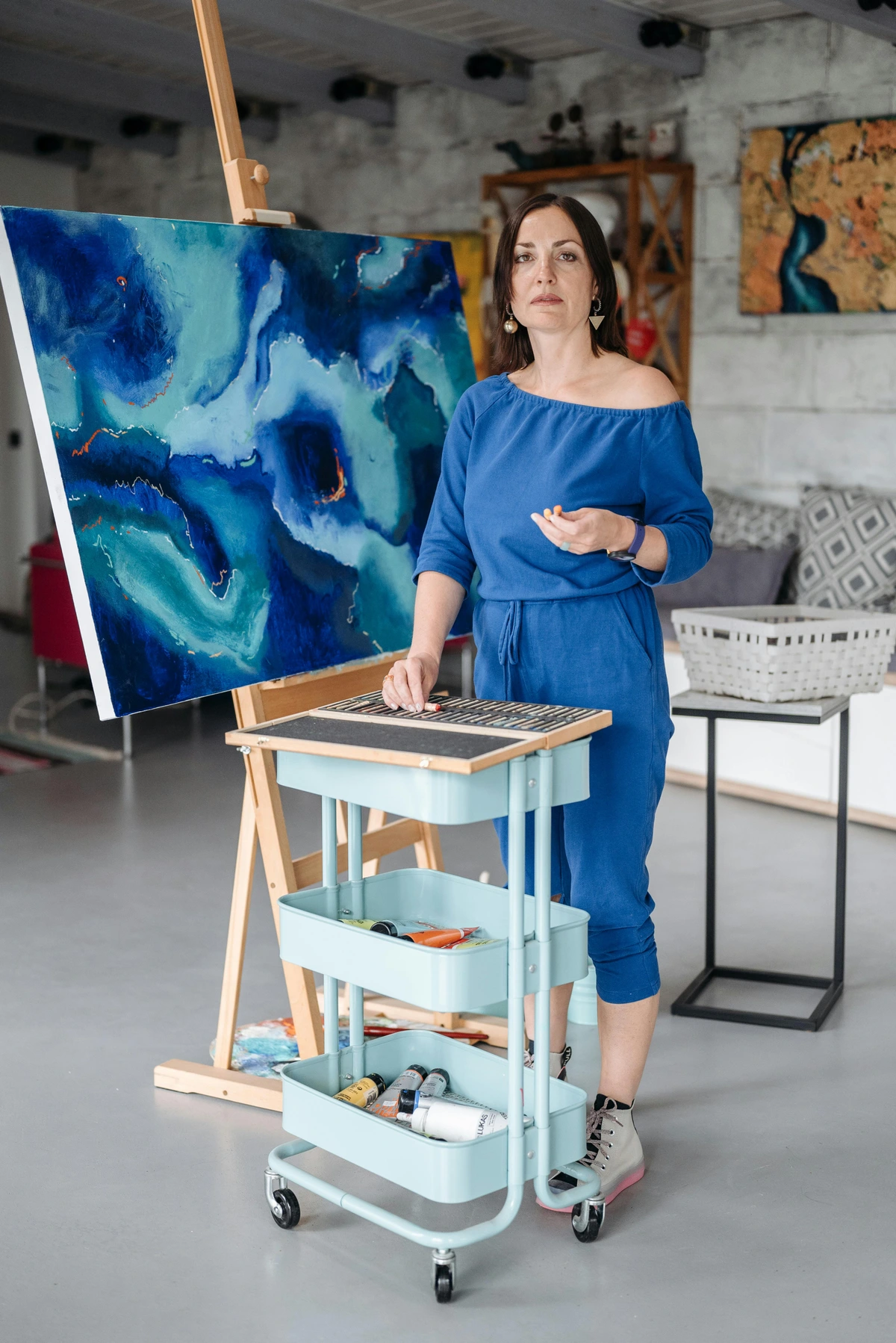
Choosing the right material is a dance between protection, comfort, and how you work. Do you sweat buckets in the studio? Linen or a breathable cotton might be your savior. Are you constantly battling aggressive oils, fine dust, or sharp tools? Leather or waxed canvas steps up. It's about empowering your process, not hindering it.
Fit for Purpose: Comfort, Movement, and Thoughtful Design
The fit of an apron is absolutely critical for your comfort during those long, intense studio sessions. I've learned this lesson the hard way – a nagging neck ache or constantly readjusting fabric is the absolute last thing you want distracting you from your masterpiece. I once had an apron where the neck strap felt like a tiny vise, and I'd find myself unconsciously hunching my shoulders, trying to escape its relentless grip. No fun! A truly well-fitting apron feels like an extension of your body, an enabling second skin, not a burdensome obstacle. When buying an apron online, where you can't try it on, measure from your collarbone to your desired hem length, and around your waist for tie-strap length. Compare these to the product's dimensions. Always look for ample adjustability; an apron marketed as 'one-size-fits-all' with minimal adjustment points is highly likely to be 'one-size-fits-none well,' leading to awkward draping, restricted movement, insufficient coverage, and constant discomfort. Similarly, weak stitching, cheap plastic buckles, or flimsy metal adjusters will inevitably fail quickly – inspect these areas for reinforced stitching (like bar-tacks, which are small, dense stitches used to strengthen stress points, or double stitching) and sturdy, high-quality metal hardware.
Let's break down the design elements that truly make a difference – and the common pitfalls to sidestep.
- Cross-Back Straps (My Non-Negotiable!): This, my friends, is the holy grail of apron design. Instead of looping around your neck, the straps cross over your back and then loop through the sides before tying securely at your waist. This ingenious design evenly distributes the apron's weight across your shoulders and back, completely eradicating that dreadful neck strain that traditional neck loops inevitably cause. You can genuinely wear it all day, with pockets brimming with your best acrylic paint brushes and other tools, and honestly forget it's even there. It's a true game-changer for long-term studio health and a vital weapon against repetitive strain injuries.
- Neck Loop: The traditional, simpler, and unfortunately, often irritating design. While undeniably easy to slip on, it concentrates all the apron's weight directly on the delicate cervical spine. After just a few hours, especially with even a modest collection of tools in the pockets, this can lead to serious discomfort, tension headaches, and even chronic shoulder pain. I emphatically recommend avoiding this style for any serious, prolonged studio work; trust me, your neck will thank you profusely.
- Split Leg: A true lifesaver for specific disciplines. Imagine trying to throw a pot at the wheel with an apron bunching awkwardly and restrictively around your lap. No fun at all! If you’re a potter or ceramicist, an artist who frequently sits down to work (like I do when painting larger canvases on an easel), or even a woodworker who needs leg mobility, a slit up the middle of the apron’s lower half allows each leg to be covered and move independently. This design, sometimes called a split-leg apron or pottery apron, offers unparalleled freedom of movement and comfort, especially when seated.
Beyond just strap design, the overall cut and adjustability of an apron should accommodate your unique physique. Artists come in all shapes and sizes, and your apron should feel custom-made. If you have broader shoulders, ensure the cross-back straps are long enough to offer a comfortable spread, not pulling tightly. For artists with longer torsos, a longer apron length is crucial to ensure adequate lap coverage when standing or sitting, preventing splashes on your knees. Conversely, a shorter torso might benefit from an apron that isn't excessively long, preventing bunching or tripping. The key is to find an apron that adjusts sufficiently at the waist and shoulder/neck to fit you without restriction, allowing you to move freely, bend, stretch, and reach without constant readjustment. It should feel like a natural extension, not a costume. Poorly designed pocket placement that is too shallow, too high, or haphazardly positioned will be more frustrating than helpful; you want pockets that are easy to access, deep enough to secure various tools, and logically laid out for your typical workflow. Also, look for reinforced pocket openings, as these are high-wear areas prone to tearing. Finally, always check the apron's hemline – does it drag on the floor or get caught on studio furniture when you move? Choose a length that suits your most common working postures.
Specialized Aprons for Every Artistic Pursuit
While a good, robust all-rounder apron is certainly an excellent starting point, some specific art forms and unique working styles genuinely call for more specialized features. Taking a moment to consider your primary medium, and even your unique working style, can dramatically help narrow down your choices when seeking the perfect piece of artist protective gear. Many of these specialized aprons also, thankfully, offer excellent sustainable alternatives. A great fit is universal, but certain artistic disciplines benefit from aprons with even more tailored features.
For the Potter or Ceramicist
Your paramount concerns are robust water resistance, exceptional flexibility, and complete freedom of movement. Imagine the frustration of clay splattering everywhere when you're on a roll at the wheel – your apron becomes your steadfast defender. Look for a dedicated pottery apron crafted from waxed canvas or a heavy-duty, water-shedding synthetic blend that allows clay, glazes, and water to be easily wiped away. A split-leg design is, without exaggeration, non-negotiable for working comfortably and efficiently at the wheel, allowing each leg to move freely without obstruction. Imagine deftly shaping a delicate pot, your legs moving unhindered, your tools secure in deep pockets, without a single glob of clay soaking through to your jeans. Deep, wide pockets are invaluable for holding essential tools like ribs, sponges, wire cutters, and a small rag, becoming an integral part of your studio protection. For an eco-conscious choice, consider a recycled synthetic blend or a durable plant-waxed canvas.
For Painters (Oil & Acrylic)
Durability, absorbency, and resilience against pigments and mediums are key here. Cotton canvas or a sturdy denim are exceptional choices for a painter's apron, as they are robust enough to withstand significant wear and can absorb minor spills without allowing them to soak through to your clothes. Pockets specifically designed for brushes, rags, and perhaps even a small tube of paint or a palette knife are invaluable. Imagine confidently experimenting with bold strokes, knowing your thick canvas apron is a steadfast barrier, absorbing errant splashes and keeping your most-used brushes just a fingertip away. For oil painters, a thicker, tightly woven canvas offers superior protection against potentially harsh solvents (like mineral spirits or turpentine) which might otherwise penetrate thinner fabrics – a crucial consideration for your safety and garment integrity. For acrylic painters, while easy washability is a bonus, remember that permanent stains simply become part of your apron's unique charm! An organic cotton canvas apron makes an excellent, long-lasting, and eco-friendly choice.
For Printmakers or Sculptors (and Woodworkers)
Your studio life will frequently involve sharp tools, heavy materials, and potentially corrosive or staining substances like inks, carving debris, or even plaster dust. Leather or a heavy waxed canvas apron offers unparalleled protection against punctures, accidental cuts, and chemical splashes, making it a robust piece of studio gear. Leather, especially ethically sourced, vegetable-tanned varieties, provides a natural, formidable barrier against many common studio solvents and impacts. Imagine the satisfying precision of carving, your sharp tools safely stored in reinforced loops, your body shielded from flying debris, allowing complete focus on the intricate details. Specialized tool loops or deeply reinforced pockets are immensely useful for securely holding sculpture armatures, carving tools, chisels, rollers, or even small clamps. For woodworkers, an apron helps protect from sawdust and splinters while keeping essential measuring tools or pencils close. Opting for responsibly tanned leather or a durable, re-waxable canvas offers a more sustainable and long-lasting path for these demanding crafts.

For Digital Artists, Illustrators, or Writers
While perhaps less physically messy (unless you're famously prone to coffee spills and snack crumbs!), a lightweight linen, soft denim, or even a sleek synthetic apron can still provide that crucial mental shift into 'work mode.' For digital creators, the ritual of donning an apron can be just as powerful in signaling the brain it's time to focus, a clear boundary between life and concentrated work. Plus, it offers a subtle layer of protection against dust and static cling, which are often attracted to screens and can then transfer to clothing. Imagine seamlessly transitioning from digital sketching to writing, your stylus, charging cables, and even a small notebook all organized and within reach, maintaining your flow without ever breaking concentration. Pockets here are ideal for holding styluses, small sketchpads, charging cables, portable hard drives, your phone, or even a carefully chosen collection of colored pencils, effectively transforming it into a mobile, organized workstation. Comfort, breathability, and organizational capacity are paramount, as heavy physical protection isn't typically needed for this form of creative apparel. A linen apron, being a highly sustainable fiber, is an excellent, environmentally conscious choice for these artists.
Aprons with Integrated Sleeves or Full-Body Suits
For those working in extremely messy or hazardous environments, such as large-scale muralists dealing with spray paint, heavy-duty industrial artists, or those working with toxic resins, aprons with integrated sleeves or full-body smocks offer maximum, head-to-toe protection. These garments shield more than just your front; they protect your arms and often wrap around your entire torso, preventing splashes and dust from reaching any part of your clothing. While they can be less breathable and might feel more restrictive, the peace of mind they offer in highly demanding situations, where thorough studio protection is non-negotiable, can be invaluable. Think of them as the ultimate hazmat suit for the seriously messy artist – not for everyday use, but a lifesaver when the project demands it.

Personalizing Your Studio Companion: Your Apron, Your Identity
Beyond simply acquiring the inevitable, glorious stains (which, let's be honest, are the best kind of personalization!), your artist apron can truly become a vibrant reflection of your artistic identity and journey. I've seen artists add embroidered patches commemorating exhibitions, hand-paint abstract designs directly onto their canvas aprons, or even adorn them with carefully chosen pins collected from art events. One of my own aprons proudly sports a perfectly preserved, shimmering drip of iridescent green paint from a truly chaotic abstract piece I created years ago – it’s a tiny, permanent monument to that intense creative burst, a physical memory of a particular challenge overcome.
Think of your apron as another small canvas, waiting to tell a part of your story even before you begin your next painting on easel. You could easily sew on small fabric swatches to remember favorite color palettes or textures, attach a custom-made elastic loop for a specific paint tube or cleaning brush you always misplace, or even modify pockets by adding custom dividers or a secure flap from an old pair of jeans. Consider using fabric paints or markers to create unique patterns, adding hand-stitched details, or even embellishing it with found objects that resonate with your artistic themes. For instance, a minimalist painter might choose subtle, clean embellishments that speak to their refined aesthetic, while an abstract expressionist might embrace bold, chaotic additions that mirror their energetic canvases. For a truly unique visual diary, consider documenting significant stains or projects with a fabric marker on an inconspicuous inside patch! The possibilities are endless for making it uniquely yours, a true companion that evolves with your art. This continuous evolution means your apron isn't just a static piece of gear; it's a living artifact, a silent witness to every success, every struggle, and every joyful mess along your unique creative path. It becomes a subtle yet powerful extension of your artistic statement.
Apron Care & Longevity: Beyond Just Cleaning
While the glorious splatters and smudges are badges of honor, knowing how to properly care for your artist apron will significantly extend its life and maintain its protective qualities. This isn't about making it pristine (a truly clean apron is a sad apron, in my humble opinion!), but about respectful maintenance of a treasured tool. Remember, if a stain doesn't tell a story, are you even truly creating?
Smart Cleaning Practices for Each Material:
- Cotton Canvas/Denim:
- For acrylics: Let any wet paint dry completely, then meticulously scrape off as much as possible with a palette knife or stiff brush. For particularly stubborn dried acrylic, some artists have success with isopropyl alcohol (test a small, inconspicuous area first!). Then, machine wash cold with similar colors. Be realistic; permanent stains are simply cherished 'battle scars' and part of its unique character!
- For oil paints: Never put oil-stained fabric directly into your washing machine. This is crucial for environmental reasons (oil paint + plumbing = bad news) and can damage your machine. Instead, spot clean with a very small amount of an appropriate solvent like mineral spirits, turpentine, or an eco-friendly citrus-based remover (test a small, inconspicuous area first!) applied to a rag. Gently dab, avoiding soaking the fabric. Always work in a well-ventilated area, and consider wearing gloves and a mask to minimize exposure to fumes. For pre-treatment of oil stains before a dedicated spot clean, some artists swear by a small amount of eco-friendly dish soap applied directly, allowed to sit, then gently scrubbed before wiping away.
- Waxed Canvas:
- Strict rule: Never, ever machine wash or use hot water! This will strip the essential wax coating and irreversibly ruin its water resistance.
- Cleaning: Instead, use a stiff brush to remove any dried debris (like clay dust or dried pigment). For liquid spills, wipe immediately with a damp cloth. For tougher spots, a mild, diluted soap and cold water can be used sparingly, but avoid aggressive scrubbing. Check if the wax type is resistant to specific solvents if you're working with them often.
- Maintenance: To prolong its exceptional water-repellency, re-waxing might be necessary every 1-2 years, or as needed, using a specialized fabric wax (often beeswax-based for natural options). It's like conditioning a good pair of boots.
- Leather:
- Daily care: Treat it like a good leather jacket or quality boots. Wipe down promptly with a damp cloth to remove any surface grime or dust. Avoid letting paint or ink dry on it.
- Deeper cleaning: For more thorough cleaning, use a specialized leather cleaner, always followed by a high-quality leather conditioner. Natural alternatives like a beeswax-based leather balm can also be excellent. This keeps the material supple, prevents cracking, and maintains its protective qualities. Ensure your chosen cleaner/conditioner is suitable for the specific leather type.
- Optimal Storage: Store it properly, hanging it on a sturdy, wide hook or padded hanger to maintain its shape and prevent creasing. Keep it away from extreme heat, cold, or direct sunlight to prevent drying and damage. Allow it to air dry completely if it gets wet before storing.
The "Buy It For Life" Philosophy:
Investing in a high-quality, durable apron that is designed to last a lifetime (and can be repaired if needed) is one of the most sustainable choices you can make. It combats fast fashion and minimizes waste. A well-made apron is a commitment, a true partner in your studio practice, designed to age gracefully alongside your artistic journey. This sustainable approach also means looking for brands with transparent supply chains and ethical manufacturing processes, ensuring your cherished studio companion not only lasts but aligns with your values. Think of it: a sturdy canvas apron can be patched and re-stitched countless times, extending its life for decades.

Frequently Asked Questions (FAQ) about Artist Aprons
Over the years, many of you have asked me about aprons, delving deep into the fascinating world of apronology. So, let's tackle some of the most common questions. Consider this your mini masterclass, helping you choose and care for the best artist apron for your unique needs and practice.
Can I just use a kitchen apron for art?
Of course, you can! Anything is unequivocally better than nothing, especially when you're just starting out, dabbling in light crafts, or working with less intense mediums like pencils or watercolor. However, you'll very quickly notice a significant difference in both protection and functionality. Kitchen aprons are typically made of thinner material, lack the robust, varied pocket systems essential for art tools, and simply aren't engineered for the abrasive, heavy-duty, or chemical demands of a bustling art studio. For instance, the tighter weave of a canvas artist apron is far more effective at preventing fine charcoal dust or stubborn oil paint pigments from embedding into the fabric compared to the looser weave of many kitchen fabrics. While they're perfectly fine in a pinch for light crafts, a dedicated artist apron will profoundly elevate your creative experience and offer superior, long-term creative apparel and studio protection. Think of it this way: you could use a butter knife to cut a steak, but a proper steak knife makes the experience infinitely better.
What's the real difference between a shop apron and an artist apron?
They are indeed very similar, and the lines often blur! A shop apron, typically designed for trades like woodworking, metalworking, or mechanics, usually prioritizes ultimate durability, sheer toughness, and extreme puncture resistance. They often feature very thick waxed canvas or heavy leather and might have large, open pockets for screws, nails, or robust tools like wrenches and calipers, or even specialized loops for larger, heavier implements like hammers or saws. Their primary focus is raw, unadulterated protection in demanding physical environments.
Artist aprons, while equally durable in many cases, tend to focus more on specific, varied pocket configurations tailored for brushes, pencils, smaller, more delicate tools, and rags, or specific needs for mediums like clay. You might find long, narrow pockets for individual brushes, smaller reinforced pockets for erasers, or specific loops for palette knives. Their design often balances protection with accessibility and comfort for nuanced, often repetitive, movements. But honestly, many high-quality, thoughtfully designed shop aprons make absolutely fantastic artist aprons, especially if you need maximum studio protection and don't mind a perhaps less 'artistic' aesthetic. The best choice ultimately depends on your specific tools and workflow and the kind of protection you need.
Is a really expensive apron worth it for an artist?
Ah, the age-old question of value! This is where personal value truly comes in. A well-made apron, crafted from quality, durable materials like heavy canvas, premium denim, or full-grain leather, isn't just clothing; it's a significant investment, a foundational piece of your studio gear. Such an apron can easily last for decades, providing consistent comfort, robust protection, and developing a unique character that tells your story. Think of it less as a consumable item and more as a crucial 'tool' for your craft, akin to a high-quality easel or a set of professional brushes. When you factor in the cost of constantly replacing cheaper, flimsy aprons (which often fail at the stitching, hardware, or tear easily), or worse, the emotional and financial cost of damaging cherished clothing, a high-quality apron quickly proves its worth. Moreover, the long-term benefits of preventing physical strain or discomfort cannot be overstated. If it genuinely makes you feel more professional, keeps you comfortable, prevents distractions, and truly aids your creative process by fostering focus, then yes, it absolutely can be worth every single penny. It's an direct investment in your artistic practice itself, allowing you to create with fewer physical and mental barriers, ultimately making your artistic journey more joyful and productive.
What about sustainable or eco-friendly artist aprons?
This is a question incredibly close to my heart, as I'm constantly seeking ways to integrate conscious, ethical choices into my studio practice. And the answer is a resounding 'Absolutely!' The market for eco-friendly artist wear is wonderfully growing, with many brands now focusing on sustainable practices.
Here's what to look for:
- Organic Materials: Seek out aprons made from organic cotton, which is grown without harmful pesticides and synthetic fertilizers, or linen, a naturally sustainable fiber requiring minimal water and pesticides.
- Recycled/Upcycled Materials: Many innovative brands use recycled materials (like plastic bottles transformed into durable rPET fabrics) or upcycled denim and other textiles, diverting waste from landfills.
- Ethical Production: Look for transparency in the brand's supply chain, fair labor certifications, and local artisan makers who often use natural dyes or repurpose vintage fabrics, making each apron truly unique and reducing its carbon footprint.
- Care for Longevity: Remember, the most sustainable apron is often the one you already own or one that is built to last. Choosing a durable, high-quality apron and caring for it properly extends its lifespan, reducing the need for frequent replacements and minimizing your overall environmental footprint.

What makes a good "all-rounder" artist apron?
For the vast majority of artists who enjoy dabbling in a few different mediums, a heavy-duty denim or cotton canvas apron with cross-back straps and a thoughtful variety of deep, well-placed pockets is unequivocally your best bet. These materials offer exceptional all-around protection and remarkable durability, while the cross-back design ensures superior comfort for extended wear. It's an incredibly versatile piece of creative apparel that can confidently handle most typical studio challenges, from painting to light sculpting or intricate drawing. It's the kind of apron you'll reach for again and again because it balances protection, comfort, and accessibility so effectively.
How long should an artist apron last?
A well-made artist apron, especially those meticulously constructed from durable, high-quality materials like heavy canvas, robust denim, or premium leather, should last for many, many years – often decades, with even just basic, proper care. Think of it not as a fleeting garment, but as a steadfast tool that ages and gains character right alongside you and your art. While cheaper, mass-produced synthetic options will naturally have a shorter lifespan, a quality apron is deliberately built to withstand the rigors of your entire artistic journey, becoming a trusted, silent companion in your studio, evolving with every project and every creative burst. It's an investment that truly pays dividends in comfort, protection, and inspiration, ultimately enhancing your artistic longevity.
Should I make my own artist apron?
If you have some sewing skills and a clear vision, absolutely! Making your own apron can be a wonderfully personal project, allowing you to customize every detail – from material choice and pocket configuration to strap design and overall length – to perfectly suit your unique body and artistic workflow. It's an opportunity to create a truly bespoke piece of studio wear that no off-the-rack option can match. Plus, it's a creative act in itself, adding another layer to your artistic journey. You might even find it's more sustainable, using upcycled fabrics or choosing materials with a lower environmental footprint. Just be sure to use sturdy materials and reinforce those stress points, especially around pockets and strap attachments, for longevity! It's an artistic challenge that yields a supremely practical and deeply personal reward.
What to do with a retired apron?
Even the most durable apron eventually reaches the end of its practical life, perhaps becoming too thin, torn beyond repair, or simply too saturated with history to comfortably wear. But that doesn't mean its story ends! A retired apron can live on in many creative ways. Consider cutting the usable fabric into smaller cleaning rags for your studio – perfect for wiping down surfaces or initial brush cleaning. Sturdy patches can be salvaged to repair other garments or even used as unique lining for handmade sketchbooks or art journals, adding a personal, textured touch. Some artists transform particularly expressive sections into small mixed media collage elements or frame a particularly meaningful swatch as a miniature abstract piece. You could even integrate it into a performance art piece, or simply hang it in your studio as a visual reminder of your journey, a silent testament to countless hours of creative work. It's a beautiful way to honor its service and continue its story.
Your Apron, Your Story
In the grand scheme of things, the best artist apron is ultimately the one that truly calls to you, the one you'll instinctively reach for and actually wear, session after session, year after year. It should feel less like something you put on, and more like an extension of you – a silent, steadfast partner that protects your clothes, thoughtfully organizes your essential tools, and quietly bears witness to your entire creative process, from the first gesso layer to the final, triumphant brushstroke. My own apron, now a tapestry of colors and textures, is literally covered in the ghosts of hundreds of paintings, a living testament to my personal journey as an artist, each mark a whisper of inspiration, a memory of discovery, a challenge overcome. It's a testament to a life lived creatively, to the beautiful, chaotic dance of making art. What stories will your apron tell?
So please, don't be afraid to let it get gloriously messy. That, after all, is its job, its purpose, its very essence. A clean apron is, in my book, a sad apron. A paint-splattered, clay-dusted, charcoal-smudged apron is a badge of honor, a vibrant sign of a life lived creatively, passionately, and perhaps, delightfully chaotically. Go find yours, embrace its inevitable transformation into a unique masterpiece of its own, and then, go make something beautiful (or beautifully messy). Let your apron tell your unique story, one splatter, one smudge, one creative breakthrough at a time.
And when you've finished that masterpiece, you can find some of mine available to buy online.