title1
description

The Complete Guide to Artist Inks: From Ancient Scrolls to Your Sketchbook
I have to be honest with you: I'm a color junkie. There's something about the smell of a freshly opened bottle of ink that sends a little jolt of possibility through me. It’s that specific shade of Payne’s Gray, the dense opacity of a good white… it just feels like potential. But for years, I treated all inks as basically the same—a colorful liquid that makes marks. I was so, so wrong.
So today, let's unpack artist inks together, and perhaps a bit more importantly, what it means to choose, use, and respect these powerful little bottles of pigment. We'll go from hieroglyphics to modern illustrations, covering the essential stuff—questions you might Google, mistakes I've made (so you don't have to), and a few things you probably never thought to ask. Consider this your new go-to, most comprehensive source for everything ink.
What Exactly is Artist Ink? Breaking Down the Components
Imagine you take the finest, most vibrant pigment you can find—a powder so fine it feels like silk. Now, suspend that powder in a liquid carrier, add a binder to make it stick, and maybe a humectant to keep it from drying out in the bottle. That, in its simplest form, is artist ink.
- Pigment vs. Dye: This is the big one. Ask any seasoned artist and they'll tell you this distinction is non-negotiable.
- Pigment-based inks are made from tiny, solid particles floating in suspension. Think of it like mud in water—if you let it sit, it'll settle. That's why you shake ink bottles. These inks are generally more resistant to fading because the light hits the pigment particles on the paper's surface.
- Dye-based inks are like making tea. The colorant dissolves completely into the liquid, creating a stain. They're often more transparent and can produce incredibly vivid, even fluorescent colors. However, they're notoriously prone to fading over time, especially when exposed to light. I learned this the hard way with a brilliant red that turned pink in under a year.
- Liquid Carrier: This is the solvent that keeps everything fluid. For traditional India ink, it's water. For alcohol inks, it’s—you guessed it—alcohol, which makes them incredibly fast-drying and great for non-porous surfaces like ceramic or plastic.
- Binder: This is what glues the pigment to the paper. It’s usually a shellac (common in waterproof India inks, making them a nightmare for your calligraphy nibs if they dry), acrylic polymer (which is why acrylic inks are often called “liquid acrylic paint”), or gum arabic (used in many watercolor-style inks, making them wonderfully rewettable).
- Additives: This is where the magic gets refined. Surfactants help the ink flow smoothly. Humectants fight off dreaded bottle crust. And preservatives keep your ink from turning into a science experiment.
Understanding these ingredients isn't just academic; it directly explains why certain inks bleed on hot-press watercolor paper, why you can layer one ink but not another, and why some feel slick while others feel velvety.
A Brief History of Ink: A Tale of Soot, Shellac, and Innovation
Every time I dip a pen, I'm participating in a ritual that’s thousands of years old. It’s a humbling thought. Let's take a quick tour of ink's surprisingly global history.
- Ancient Origins (c. 2500 BCE): The story starts in both Ancient Egypt and China, almost simultaneously. The Egyptians used a mix of carbon black (soot), gum, and water for their papyri, while the Chinese perfected a lampblack ink (also soot-based) bound with glue or tannin from tree bark. This Chinese ink, often formed into solid sticks, became the foundation for East Asian calligraphy and ink painting—a tradition of focused artistry I deeply admire.
- Iron Gall Ink (c. 400-1800 CE): If you've ever seen an old manuscript with faded brown ink, chances are it's iron gall. It was the workhorse ink of Europe for over a millennium, made from tannic acid (from oak galls) and iron salts. It's incredibly archival and permanent, but there's a dark side: it's acidic and can eventually “burn” through the paper over centuries. It’s the ink equivalent of a high-maintenance masterpiece.
- The Industrial Revolution & Mass Production (18th-19th Century): This era saw the birth of modern, bottled India ink. Ironically, it wasn't from India, but the name stuck. This is when carbon black ink bound with shellac became widely available, offering artists a reliable, waterproof black.
- The Modern Revolution (20th Century Onward): The invention of acrylic polymers in the mid-20th century was a game-changer. Suddenly, we had inks that weren't just colored fluids but acrylic paint in a liquid form—water-resistant when dry, flexible, and brilliantly pigmented. This opened the floodgates for the explosion of color and versatility we have today.
Having this context in the back of your mind transforms ink from a simple tool into a material with a deep, rich story.

Types of Artist Ink and Their Personalities
The world of ink is wonderfully diverse, but it can feel a bit like picking a character for a video game. Each type has its own special moves and weaknesses. Here’s the rundown.
- India Ink: The classic, the OG. Made primarily from carbon black and a shellac binder, it’s intensely black, waterproof, and incredibly permanent. It's my go-to for inking comic panels or mixed-media work where I need sharp, crisp lines that won’t smudge when I add watercolor on top. Just be warned: because of the shellac, wash your nibs or brushes immediately
- Acrylic Ink / Liquid Acrylic: Think of this as liquid acrylic paint. The pigment is suspended in an acrylic polymer emulsion. This means it’s lightfast, water-resistant when dry, and you can build it up in layers without disturbing the one underneath. Brands like
LiquitexandDaler-Rowneymake fantastic acrylic inks that come in a stunning range of opaque, transparent, and even iridescent colors. - Alcohol Ink: These are dye-based and use alcohol as a solvent. They are wild, unpredictable, and utterly thrilling. You use them on non-porous surfaces—glass, plastic, metal, and specially coated papers like Yupo. They dry in seconds, creating beautiful, ethereal blooms and cells. They’re not for control freaks, but they are pure magic for creating abstract backgrounds and effects that feel alive.
- Fountain Pen Ink: This is a whole subculture. Formulated specifically for delicate fountain pen mechanisms, these inks are usually dye-based (though pigmented versions exist, like the excellent
Platinum Carbon Black). They offer an incredible range of colors and unique properties, like shading (where a single stroke goes from light to dark) and sheen (where ink pools create a secondary metallic-looking color). They are generally not waterproof. - Dip Pen & Calligraphy Inks: These are formulated for use with nibs. They tend to have a lower viscosity than acrylic inks, so they flow beautifully from a dip pen. You’ll find pigment-based and dye-based varieties, and some, like walnut ink, are made for a specific, beautiful brown hue.
Here’s a quick cheat sheet to keep it all straight:
Type of Ink  | Binder | Key Characteristic | Waterproof? | Best For |
|---|---|---|---|---|
| India Ink | Shellac | Deep, permanent black | Yes (very) | Comic art, precise line work |
| Acrylic Ink | Acrylic Polymer | Paint-like, versatile | Yes, when dry | Mixed media, illustrations |
| Alcohol Ink | Resin | Fast-drying, unpredictable | Yes | Non-porous surfaces, abstracts |
| Fountain Pen | Varied | Flowing, often for shading | No (usually) | Writing, sketching, journaling |
| Dip Pen | Gum Arabic / Varied | Low viscosity, crisp lines | Varies | Calligraphy, technical drawing |
Understanding Key Properties: Your Ink's Personality Traits
Beyond the type, there are key properties you need to understand to truly master an ink. Think of these as its stats in a role-playing game.

- Lightfastness: Simply put, this is its resistance to fading in UV light. If you want your art to last for generations, this is the most important property. Look for inks that have an ASTM (American Society for Testing and Materials) rating. I only buy inks that are rated Excellent (I) or Very Good (II). Anything less is for practice, not for art you plan on selling or keeping.
- Opacity: This is how well an ink covers what’s underneath it.
- Opaque: Blocks the paper or underlying layer completely. Great for highlights (using white ink on top of dark washes) or graphic, poster-like effects.
- Transparent: Allows the paper and lower layers to show through. Essential for glazing, watercolor-like techniques, and building depth.
- Semi-Opaque / Translucent: A happy medium, offering some coverage but with a softer edge.
- Viscosity (Consistency): Is it thin like water or syrupy like honey? Low-viscosity inks flow easily from technical pens, while higher viscosity inks are better for brush work where you want the stroke to hold its shape. If you've ever felt like an ink is “fighting” your nib, you’ve experienced a viscosity mismatch.
- Waterproof vs. Water-Soluble: This is decided by the binder. Can you add a wet wash on top of a dry line without it smearing?
- Waterproof (e.g., India ink, Acrylic ink): Your dry line is a rock. It’s not going anywhere. This is crucial for any multi-layered technique.
- Water-Soluble (e.g., many fountain pen inks): Your dry line can be re-activated with water. This is either a feature or a bug, depending on your goal. It's great for soft, hazy backgrounds but a disaster if you want to color inside clean lines.
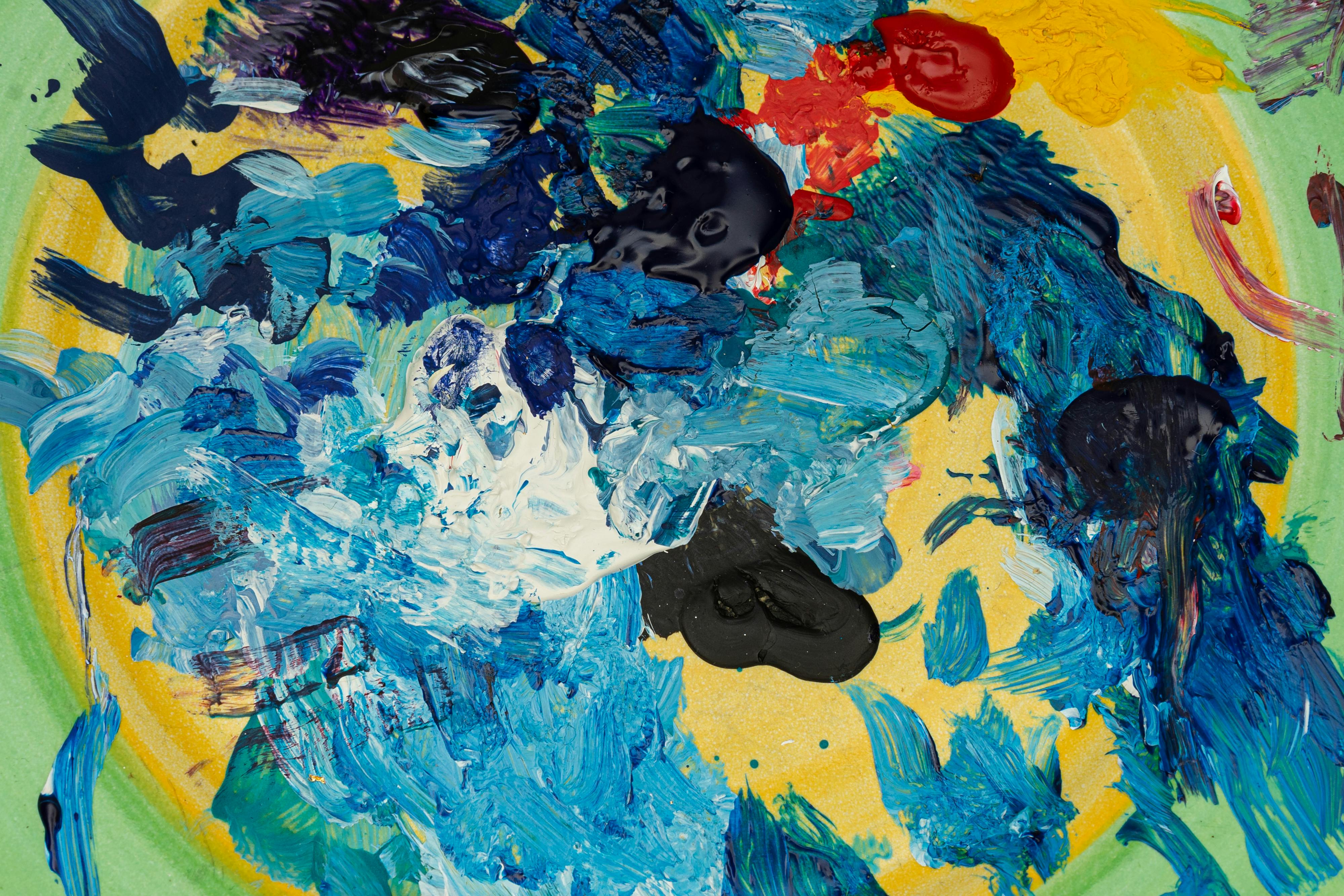
Check out my available contemporary, abstract works if you're looking for inspiration on what's possible with a bold application of color. You might find some ink-based pieces in there from time to time.
Essential Tools of the Trade: Picking Your Weapons
You wouldn't use a butter knife to perform surgery. Similarly, your tools need to match your ink and your intent. The synergy between ink, tool, and paper is what creates the final result.
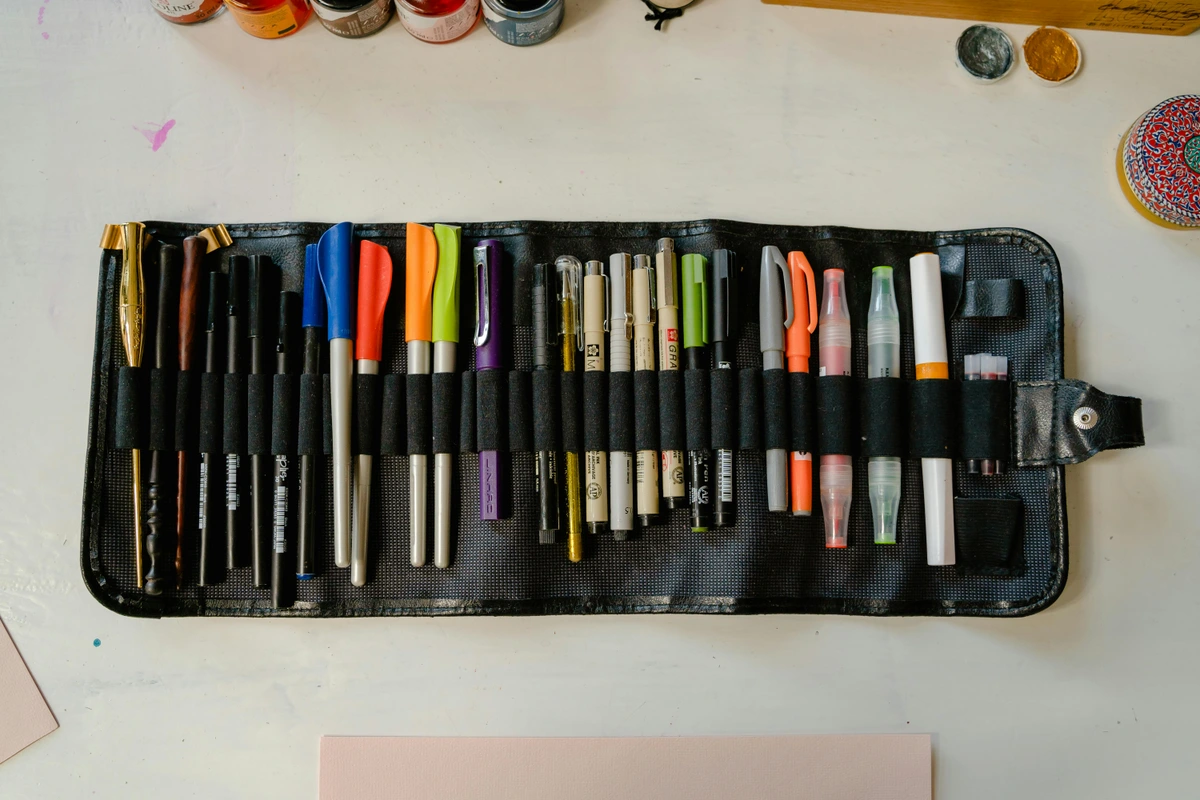
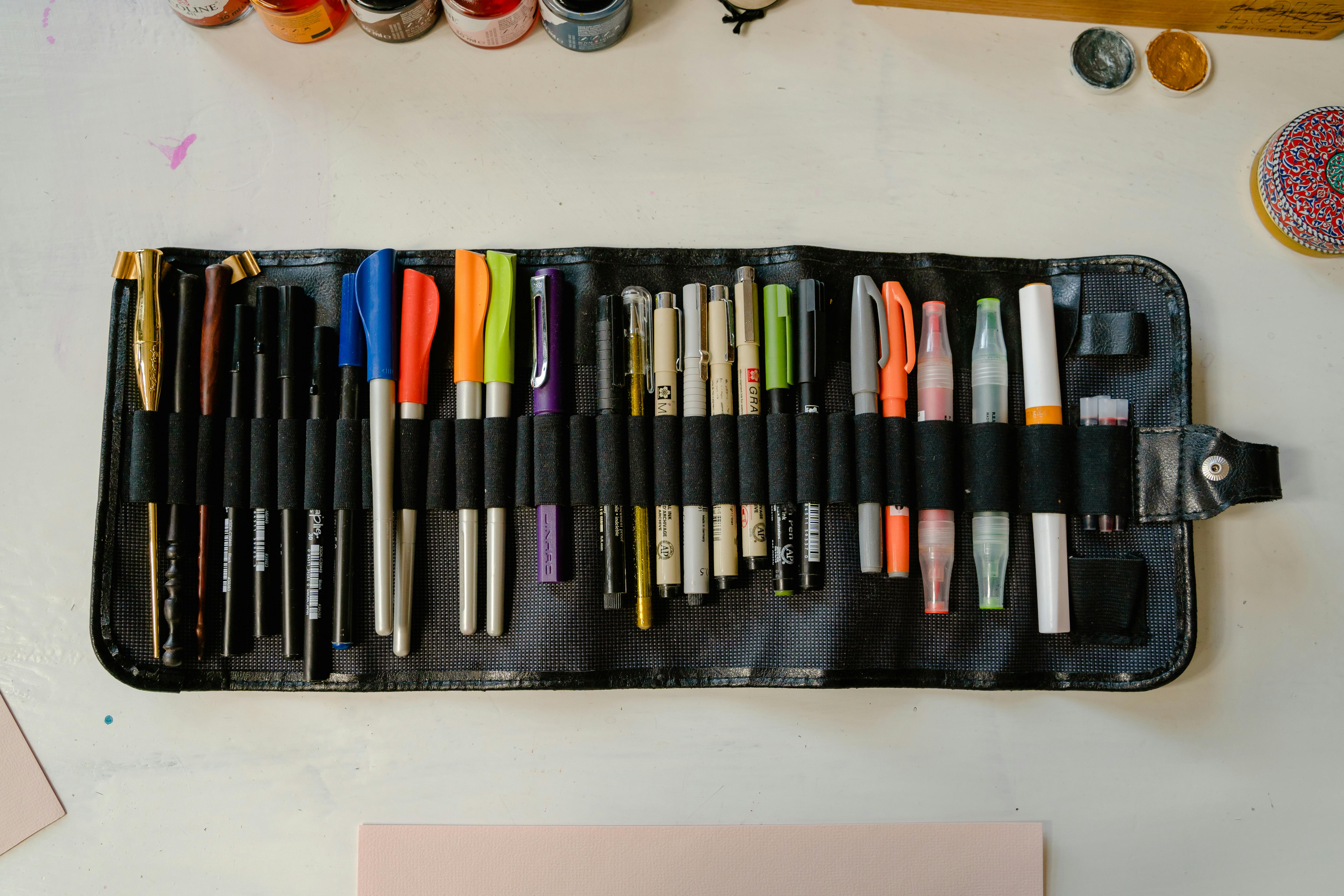
- Dip Pens & Nibs: This is the most direct and expressive way to use ink. You get incredible line variation—from a whisper-thin hairline to a thick, bold stroke—just by changing the pressure. You need a holder and a selection of nibs. My personal favorite for drawing is the timeless
G-nibfor its springiness; for lettering, aBrausenib for its sharp, crisp edges. The rule is simple: clean your nib every single time you’re done. - Brushes: A good round synthetic sable brush is your best friend. Size 2, 4, and 8 will cover 90% of your needs. They can hold a massive amount of fluid, allowing for long, expressive strokes. For larger areas, a mop brush or a flat wash brush is essential.
- Fountain Pens & Technical Pens: For consistent, unwavering lines, nothing beats a technical pen like a
Rotring Isograph. They are finicky and require meticulous cleaning, but the precision is unmatched. Fountain pens are lovely for sketching, but be mindful of the ink you use—pigment particles can clog the feed if not cleaned regularly. - Paper: The Unsung Hero: The paper makes or breaks the ink. I can’t stress this enough.
- Hot-Press (Smooth): Gives you crisp lines and sharp edges. Perfect for detailed pen work.
- Cold-Press (Textured): Has a tooth that grabs the ink. Great for brush work and creating texture, but can be hard on delicate nibs.
- Papers for Alcohol Inks: You need a synthetic, non-porous surface like Yupo. Regular paper will just drink the ink and leave a dull blot.
- Absorbency Matters: On highly absorbent papers, inks will bleed and feather. On sized papers (like most watercolor papers), the ink sits on the surface, giving you more time to work and resulting in more vibrant colors.
Advanced Techniques and Creative Applications: Pushing the Boundaries
Once you understand the basics, the real fun begins. This is where you can develop a unique voice with ink.
- Wet-on-Wet: Dropping ink onto wet paper and watching it bloom into unpredictable, organic shapes. It’s a beautiful way to create ethereal backgrounds. The key is to control the level of wetness—a sopping wet page gives you soft edges, a slightly damp page gives you more control.
- Dry Brush: Using a brush with very little ink on it to create a scratchy, textured mark. It’s fantastic for suggesting rough surfaces like wood, stone, or fur.
- Sgraffito (Scratching): Apply a wash of ink, let it dry, and then scratch lines back into it with a sharp tool like a craft knife, an old pen, or even a fingernail. It's a great way to add fine white lines or texture. I often use it to suggest light hitting hair.
- Layering and Masking: This is where waterproof inks are essential. You can build up layers of color, letting each one dry before adding the next. To preserve a lighter area, use masking fluid before you start your ink washes. It's like a game of chess with your paper.
- Color Mixing: While you can mix inks on a palette, be cautious. Mixing too many colors or brands can lead to a dull, muddy result. Some inks just don't play well with others. The safest bet is to mix within a single brand's line. For a wide spectrum, it’s often better to buy more colors.
Health, Safety, and Studio Etiquette: A Non-Negotiable PSA
This is the boring but absolutely essential part. Taking safety shortcuts is for amateurs. Pros take care of their health.
- Ventilation is Key: Solvent-based inks, especially alcohol inks, release fumes. You absolutely must work in a well-ventilated area. Open a window. Use a fan. Your brain cells will thank you.
- Skin Contact: Some dyes and solvents can be skin irritants or worse. Avoid direct contact. If you have sensitive skin, wearing nitrile gloves is a smart move, especially when doing large pours or washes.
- Ingestion: Never, ever, put your brush tip in your mouth to shape it. It's a terrible habit. Lick a finger to turn a page instead of using a wet one, and always, always wash your hands thoroughly before eating or drinking.
- Clean Up: Dispose of your rinse water responsibly. Don't pour large quantities of ink or solvents down the drain. Let sediment settle, decant the clear water, and dispose of the sludge in the solid waste. It's a small step that makes a difference for the environment.
Frequently Asked Questions (FAQ) about Artist Inks
Q: Can you use India ink with a fountain pen?
A: Generally, no. The shellac binder in traditional India ink will destroy a fountain pen by clogging its feed and mechanism. It is not worth the risk. Use a dip pen or a brush. There are special fountain pen inks labeled "waterproof"—like Platinum Carbon Black—that are shellac-free and designed for this purpose.
Q: What's the difference between acrylic ink and liquid acrylic paint? A: Semantics, mostly. "Acrylic ink" is just a more fluid version of acrylic paint. They share the same acrylic polymer binder. The main difference is consistency—inks are designed to flow from a pen or be used in washes, while fluid paints are generally a bit thicker but are often interchangeable with inks.
Q: What is the best way to clean ink out of my brushes? A: For water-based inks (India, acrylic): Rinse thoroughly in cool water immediately after use. Gently work soap into the bristles with your fingers, rinse again until the water runs clear, and reshape the tip. For alcohol inks, a quick rinse in rubbing alcohol followed by a soap and water wash will do the trick.
Q: Can I use alcohol ink on canvas? A: You can, but it will behave differently. A regular canvas will absorb the ink and may look dull. To get the vibrant, blooming effects, you need to prepare the canvas with a base coat of a sealing medium or use a canvas board that's been treated for use with alcohol inks.
Q: Why is my ink changing color as it dries? A: This can happen for two reasons. One is
simply that the liquid carrier is changing the apparent color; as the water or alcohol evaporates, the true color of the concentrated pigment emerges, often becoming darker or more saturated. The second reason can be a chemical reaction, most commonly seen when using iron gall ink, which oxidizes from a pale grey to a dark black as it dries.




Q: Will my artwork fade over time? A: This is one of the most important questions. The answer depends entirely on the ink's lightfastness. A dye-based ink on a page hung in direct sunlight will fade very quickly. A highly pigmented, lightfast acrylic ink kept out of direct UV light can last for centuries. Always check the lightfastness rating (if available) before committing to a piece you want to last.
Q: Can you mix ink with other mediums like watercolor or gouache? A: Yes, but carefully. Waterproof India ink is fantastic under watercolor washes. You can also mix acrylic inks directly with your water-based paints like gouache or watercolor since they share a similar acrylic or gum arabic base. Just test on a scrap piece of paper first to make sure the result is what you want.
Q: How do you deal with a clogged technical pen? A: Patience. First, try flushing with water. If that doesn't work, an ultrasonic cleaner is your best friend. For stubborn shellac-based ink, you might need a specialized pen cleaner. Avoid using needles or other hard objects to poke the nib—you'll likely damage the precision mechanism.
The Final Brushstroke
So that's ink—a universe contained in a small glass bottle. It’s where chemistry meets history, and where your own creativity gets to make a mark. I hope this guide feels less like a lecture and more like a shared discovery. These are the things I wish someone had told me when I was first starting out, staring at a wall of bewilderingly beautiful bottles in the art store.