
Unleashing Emotion: The Bold and Wild World of Kirchner-Style Painting Techniques
Discover how to transform raw emotion into dynamic art with Kirchner's expressive techniques, textures, and vibrant chaos—your ultimate guide to creating visceral masterpieces.

Unleashing Emotion: The Bold and Wild World of Kirchner-Style Painting Techniques
Have you ever stared at a canvas and felt a riot of colors and shapes screaming at you? That’s the electric power of Ernst Ludwig Kirchner’s brushwork—a volcanic eruption of emotion distilled into paint. Kirchner wasn’t just an artist; he was a conduit for primal energy, channeling anxiety, urban alienation, and raw passion onto his canvases with a ferocity that still feels shockingly modern. If your soul vibrates with the need to feel art—not just see it—Kirchner’s techniques are your north star. Let’s dive into the wild, unapologetic techniques that make his style unforgettable. You’ll find exercises, principles, and maybe even a few sparks for your own creative rebellion.
The Kirchner Philosophy: Painting as Emotional Seismograph
Kirchner approached art as a form of psychological documentation. He once said, "I want to paint what I see, not what others see." This desire for visual truth went beyond mere representation—it was about capturing the experience of seeing, the emotional resonance of visual perception.
Kirchner and the broader Brücke (Bridge) movement treated painting less as depiction and more as an emotional exorcism. Forget gentle landscapes—these were visceral responses to a rapidly industrializing world. Kirchner’s Berlin street scenes pulse with neurotic energy, his dancers twist like tangled ribbons, and his portraits stare back with haunting vulnerability. Why? Because art, for him, was a truth serum: unfiltered, subjective, and brutally honest.
His genius lay in translating abstract feelings into concrete visual language. Anxiety became jagged lines, ecstasy exploded in saturated oranges, and longing stretched elongated figures. This isn’t just technique—it’s alchemy.
Core Techniques: Breaking Down the Kirchner Toolkit
Let’s get practical. What did Kirchner actually do? His methods were a blend of deliberate rebellion and fearless experimentation.

1. The Color Assault: Vibrant Discord
Kirchner's color choices weren't random—they were deeply psychological and culturally informed. During his Berlin period (1911-1915), he developed a color vocabulary that mirrored the city's psychological landscape:
Kirchner’s palette was a war cry against muted realism. He didn’t just use color—he weaponized it.
- Primary Punch: He favored acid yellows, blood-reds, and electric blues, often clashing them intentionally like a visual argument.
- Comedy of Contrasts: Complementary colors (e.g., purple and yellow) slammed into each other to create tension and vibration. Think of his 1913 Berlin street scene: a cacophony of jarring greens and reds mimics the city’s sensory overload.
- Dramatic Shading: Forget subtle gradients. Shadows were often rendered in cold purples or blues, amplifying the scene’s emotional intensity.
Tip for Artists: Start an emotion board. Assign colors to feelings (e.g., rage = crimson, calm = cerulean). Paint a scene using only your "feeling palette." Chaos is encouraged.
2. Distortion and Deformation: The Body Electric
Kirchner's approach to the human figure was revolutionary. He rejected the Renaissance ideal of perfect proportional harmony, instead seeing the figure as a vessel for psychological truth. His distortions followed specific emotional logics:
Kirchner elongated, fragmented, and contorted figures to make them scream. This wasn’t accidental; it was a language.

- Elongated Limbs: Arms and legs stretched into rubbery extensions, conveying movement or psychological unease. His dancer paintings (e.g., Dancer with Raised Skirt) look like they could snap or melt any second.
- Facial Abstraction: Eyes become vacant voids or wild slashes; noses are carved into angular planes. Expressions aren’t realistic—they’re emotional hieroglyphs.
- Compression and Crowding: Figures crammed into tight spaces, forcing a claustrophobic energy. Think of his Street, Berlin—bodies overlap and press into each other like a panicked mob.
Exercise: Paint a self-portrait. Now, stretch your neck by 50% or make your eyes triangular. Does it evoke a new emotion?
3. Brushwork: The Dance between Control and Violence
Kirchner's brushwork reveals his psychological state in every mark. During his most productive periods (1913-1915), his application was both controlled and explosive—a paradox that mirrored his own mental state.
Kirchner’s brush was an extension of his nervous system. You see every mark—the hesitation, the fury, the calculation.
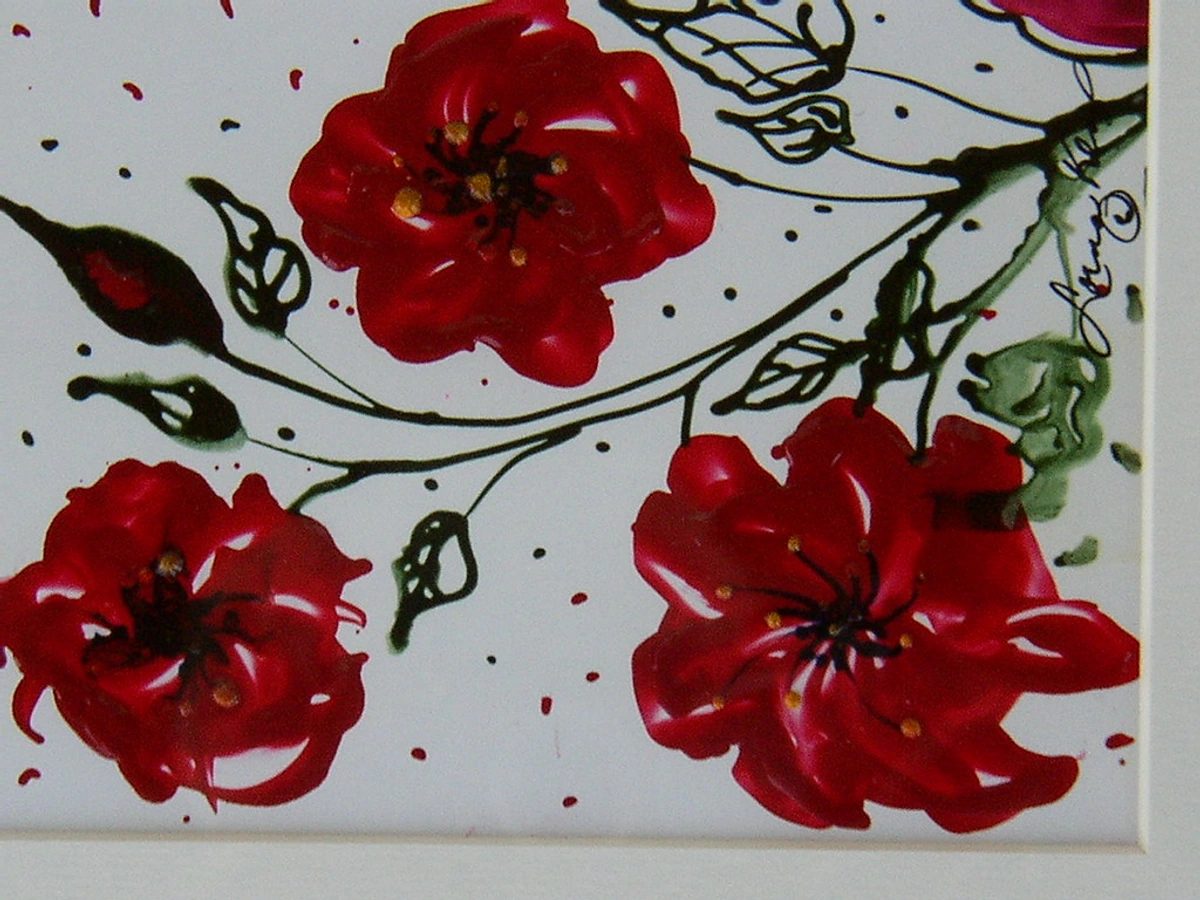
- Heavy, Chunky Textures: Impasto everywhere. Paint piled high on canvases like geological debris, forcing you to see the tactile history of the artwork.
- Directional Strokes: Thick, directional lines create motion. A vertical slash = anxiety. A horizontal scrape = fatigue. Diagonals? Pure agitation.
- Graffiti-like Spontaneity: He mimicked street scrawls and woodcut roughness, making even highly worked pieces feel urgent and unpolished.
Table: Kirchner Brushwork at a Glance
Technique  | Visual Result | Emotional Impact |
|---|---|---|
| Thick Impasto | 3D texture, visible clumps | Rawness, physicality |
| Angular Lines | Sharp, aggressive edges | Conflict, instability |
| Quick Scratches | Light, fluttering marks | Nervous energy, fragility |
4. Composition: Framing the Unsettling
Kirchner's compositional genius lay in his understanding of how spatial relationships create psychological tension. He manipulated traditional compositional principles to serve emotional ends rather than aesthetic ones.
Kirchner’s compositions are designed to unnerve you. Balance was boring; chaos was truth.
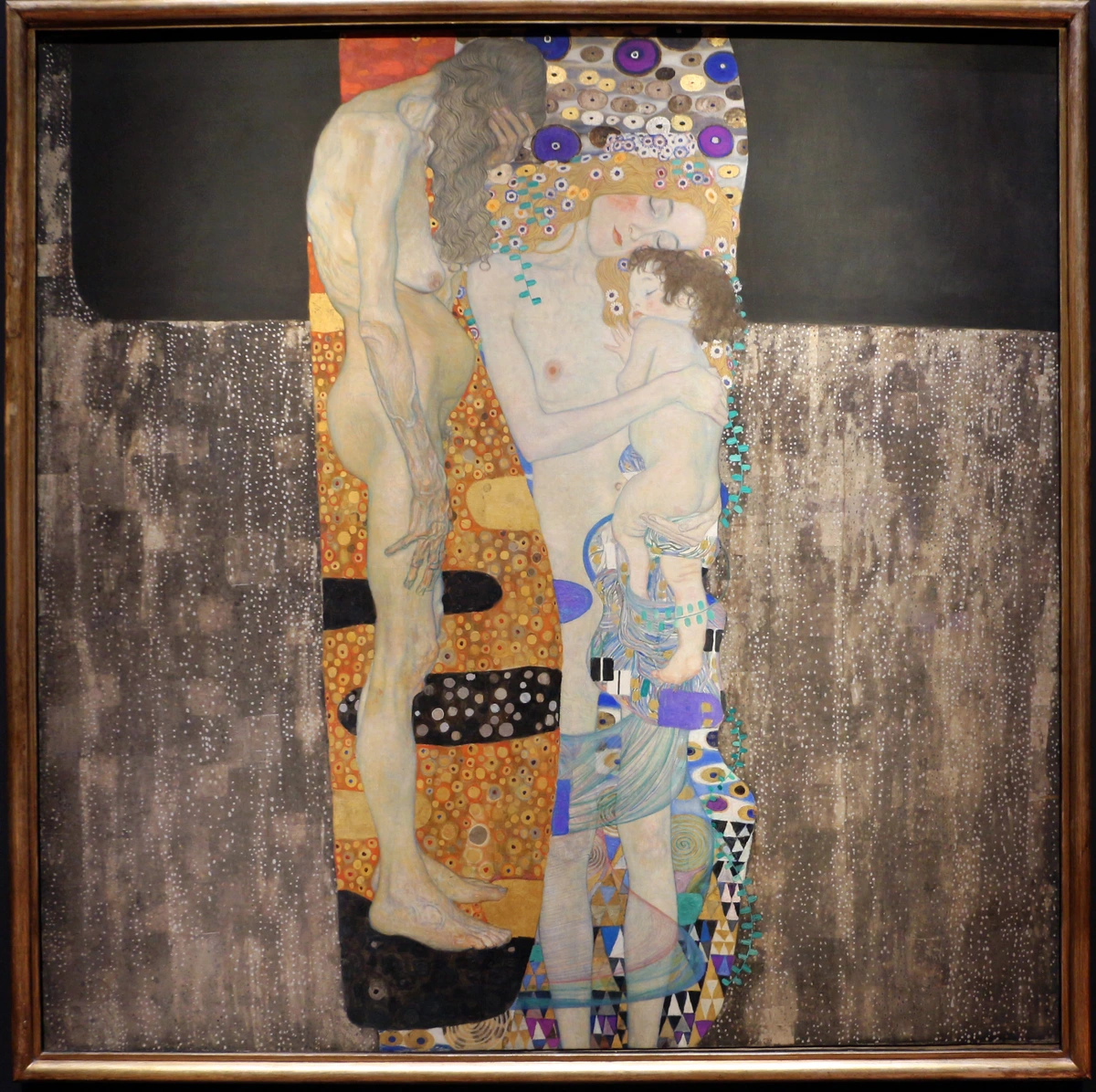
- Asymmetry and Juxtaposition: Buildings tilt, figures are cropped mid-motion, empty spaces feel charged with absence.
- Deep, Diagonal Perspectives: Crowded streets plunge into distorted vanishing points, sucking the viewer into the scene’s turmoil.
- Layering and Overlap: Figures and architecture overlap obscenely, creating a sense of suffocating density.
Example: In Frieda and Erna Schilling, the two women are locked in an embrace so angular it seems threatening. The background dissolves into a nightmare of color. There’s no escape from the canvas.
Modern Applications: Kirchner for Today’s Artists
Kirchner’s techniques aren’t relics—they’re tools for your own visual vocabulary. How to adapt them for contemporary work?
Step-by-Step: Creating a Kirchner-Inspired Study
- Emotional Catalyst: Pick a feeling (e.g., isolation). List what it smells, tastes, feels like.
- Color Mapping: Assign 3-5 colors to your emotion. Ignore “realism.”
- Gesture First: Scribble 5-10 chaotic lines on canvas. Where do they lead? Build a figure around them.
- Attack the Surface: Apply thick paint with palette knives, cardboard—anything but brushes. Let the texture do the work.
- Distort Relentlessly: Stretch a neck, flatten a nose, crop a limb. If it’s calm, make it unsettling.
Pro Tip: Study Kirchner’s woodcuts. See how his lines translate to paint. Then, carve a simple block print and paint over it. The blend of methods is electrifying.
When to Use These Techniques
Kirchner's techniques work best when responding to genuine emotional or psychological content. They're not stylistic tricks to be applied arbitrarily—they're tools for visualizing inner states.
- Kirchner for catharsis: When you need to scream on canvas. Perfect for abstract expressionism, psychological portraits, or capturing urban anxiety.
- Kirchner for vibrancy: Want colors that hum? His palette works for lively still lifes or dreamy, nightmarish landscapes.
- Kirchner for storytelling: His distorted figures excel at communicating complex emotions without words. Ideal for graphic novels, animation, or protest art.
Contemporary Artists Using Kirchner Techniques
Many contemporary artists continue to build on Kirchner's legacy:
Figurative Expressionists: Artists like Dana Schutz, Wangechi Mutu, and Julie Mehretu use distortion and emotional intensity in ways that echo Kirchner's approach, though with contemporary concerns.
Urban Landscape Painters: Artists like Peter Doig and Chris Ofili capture the psychological weight of urban spaces, using color and composition to evoke mood rather than literal representation.
Abstract Expressionists: While different in approach, artists like Cy Twombly and Jean-Michel Basquiat share Kirchner's emotional directness and aggressive mark-making.
Street and Graffiti Artists: Artists like Banksy and KAWS use similar techniques of public confrontation and emotional immediacy, though in different mediums.
Kirchner's Influence Across Mediums
Film and Animation: Directors like Tim Burton and Wes Anderson use similar color palettes and compositional techniques to create distinctive emotional atmospheres.
Fashion Design: Designers like Alexander McQueen and Rick Owens use distortion, dramatic color, and psychological tension in their runway presentations and garment design.
Music Videos: Artists like Billie Eilish and Travis Scott use similar visual language of anxiety, distortion, and emotional intensity in their visual work.
Video Games: Games like Control and Death Stranding use similar techniques to create psychological atmosphere and emotional immersion.
Challenges and Caveats: The Kirchner Tightrope
The irony of Kirchner's approach is that the very techniques that create emotional intensity can also become clichés if used without depth. His most profound works achieve a balance between technical innovation and genuine psychological insight.
Kirchner’s style is addictive, but it’s also a tightrope walk. Without discipline, it descends into mess.
- Avoid chaos-as-excuse: Every mark must serve an emotion. Random splatter is a cop-out. Ask: Why does this line exist?
- Color overload: Too many clashing colors become visual noise. Limit your palette to 3-4 dominant hues.
- Emotional burnout: Channeling raw feelings is exhausting. Take breaks. Kirchner’s own tragic life is a cautionary tale about the cost of creative intensity.
FAQ: All Your Burning Questions Answered
Q: How did World War I affect Kirchner's technique? A: The war profoundly changed his approach. His post-war work became more introspective, with softer colors and less aggressive compositions. His famous self-portrait as a soldier (1915) shows the psychological toll of his experience.
Q: What's the single most important Kirchner technique to master? A: The ability to use distortion not as an end in itself, but as a means to emotional truth. Technical mastery without emotional intent is just decoration.
Q: How did Kirchner develop his unique style? A: It emerged from his study of non-Western art (particularly African and Oceanic), his architectural background, and his personal psychology. His move to Berlin was the catalyst that brought all these elements together.
Q: Can Kirchner techniques work with watercolor? A: Absolutely! While he primarily used oils, the principles translate. Use watercolor with bold, saturated applications, allow for dramatic textural contrasts, and don't be afraid to distort forms for emotional effect.
Q: Do I need to paint distorted, angsty figures to channel Kirchner? A: Absolutely not! His techniques are about energy, not subject matter. Apply thick impasto and color discord to a cat nap scene—it’ll still feel "Kirchneresque."
Q: What medium most embodies Kirchner’s style? A: Oil paint is his core medium for layering and texture. But his woodcuts reveal his graphic soul. Mixed media (oils + collage + ink) is perfect for modern explorations.
Q: Is it possible to be "too happy" with Kirchner-like techniques? A: Surprisingly, yes! His style thrives on tension. If you use vivid colors and harsh distortion, even a joyful scene (e.g., a festival) can evoke a bittersweet energy.
Q: How do I avoid my work looking like a pastiche? A: Inject your own symbols. If Kirchner used urban architecture, use natural forms twisted nervously. Make the technique yours.
Q: What brushes should I buy? A: Ignore delicate rounds! Get palette knives, large bristle flats, and hog-hair brushes. The rougher, the better.
Q: How do I know when a painting is "finished" using Kirchner techniques? A: When every mark feels purposeful and the emotional intent is clear. Kirchner often worked in layers, building intensity until the painting "spoke" to him. If it feels like there's still something unresolved emotionally, keep working.
Conclusion: Chaos is Your Compass
Kirchner’s techniques aren’t just a historical footnote—they’re a permission slip to be human on canvas. His brushwork asks us to stop tiptoeing around emotions and start shouting them. The next time you’re paralyzed by a blank canvas, remember: emotion is your raw material, and the techniques are your tools. Now go make some noise. Or better yet—make some beautiful noise.


[See how emotion translates into art in my own journey] (/timeline) | [Explore works born of similar fire] (/buy) | [Visit where art lives and breathes] (/den-bosch-museum) | [Join our creative community] (/community) | [Get personalized art coaching] (/coaching)