Art Conservation: An Expert Guide to Preserving Art with Extreme Caution
An artist's deep dive into the surprisingly dramatic world of art conservation. From why museum guards follow you to the real cost of light, learn how to protect your art with extreme care.

The Art of Doing Absolutely Nothing: A Painter's Guide to Extreme Caution in Art Conservation
You know that feeling when a museum guard seems to follow your every move? I always thought they were just suspicious of my oversized coat. Turns out, they're in the business of extreme caution—a principle that, I've learned, applies just as much to the art on my own walls as it does to a priceless Rembrandt.
We spend so much time thinking about creating art, about the splash of color and the flow of a line. We agonize over the perfect brush, the right paper, the most vibrant pigments. But what happens the moment after the paint dries? That’s when another, quieter art begins: the art of preservation. The art of doing almost nothing, so that something can last forever.
Here’s the uncomfortable truth I had to confront: a drawing left in a sunny spot can be irrevocably damaged in less time than it takes to binge a season of your favorite show. It's terrifying, when you think about it. We pour our souls onto a canvas, and then the universe wages a slow, invisible war against it.
So, let's talk about that war. Not as a dry, technical manual, but as a survival guide for the things we create. Because your art—whether it's a cherished family portrait or an original print you bought on a whim (/buy)—deserves a fighting chance. This isn't just about protecting an asset; it's about honoring the creative impulse that brought it into being. And that survival, paradoxically, begins with the profound discipline of non-action. Of learning to step back, to observe, to provide the right conditions, and then... to simply let it be. It's a practice that feels counterintuitive in our action-oriented world, yet it's the very foundation of longevity for any artwork.
The Enemies of Art: Understanding the Science of Decay
Think of art conservation as a heist movie, but instead of a charismatic thief, the villains are silent, patient, and everywhere. They don't wear masks; they're elements we live with every single day. Understanding them isn't about memorizing a list of rules; it's about understanding the science of why things fall apart. It's about recognizing that every piece of art is in a constant, quiet negotiation with its environment, and our job is to be the diplomatic peacekeeper in that negotiation.
When you look at a painting, you're seeing a delicate balance of organic and inorganic materials. The canvas, the paper, the wood of a panel, the hide glue—they were all once living things, each with its own memory of expansion and contraction. The pigments are minerals ground to a fine powder or complex synthetic dyes. They exist in a state of suspended animation, a fleeting ceasefire in an ongoing chemical war. Our job isn't to win that war—matter naturally tends toward entropy—but to broker a lasting peace by controlling its environment. We're not stopping time, we're just slowing it down to a barely perceptible crawl, buying the artwork a few more centuries of vibrant existence.
This entire field—preventing the rebellion of molecules—isn't some arcane magic. It's a tangible discipline rooted in chemistry, physics, and material science. It's the accumulated wisdom of centuries of custodians, observing what works and what leads to ruin. To protect our art, we first must become fluent in the language of its potential demise, learning to read the subtle signs of distress long before they become catastrophic failures.
1. Light: The Beautiful, Necessary Villain
Light is the ultimate frenemy. It allows us to see, to create, to appreciate. It also packs more destructive energy than a toddler with a juice box. The damage it causes is called photochemical degradation, which is a fancy way of saying that light’s energy literally breaks down the chemical bonds in pigments and paper. Understanding this process is key to demystifying why museums are so dimly lit. I often think of light exposure like a bank account for your art: every moment of illumination is a withdrawal. The goal is to make very small, strategic withdrawals so the account—the artwork’s structural and chromatic integrity—lasts for generations.
The science is simple and brutal. A photon of light hits a pigment molecule, transferring its energy. It's like poking a sleeping bear. The molecule gets excited, vibrates violently, and its chemical bonds can snap. For some pigments, like the common and beloved Azo Yellow (PY74), this can happen with terrifying speed. Others, like the ancient earth pigments (umbers, siennas, ochres), are far more stoic and resistant. But no pigment is truly immortal. Modern synthetic dyes, especially certain vibrant reds and yellows like Alizarin Crimson, and even some modern acrylics, are particularly susceptible to this process, often fading long before their traditional counterparts show any sign of wear.
What's worse, the damage is cumulative and irreversible. It's not a "timer" that starts when you turn on the light. Every second of exposure adds to a slow, invisible tally. A work can seem perfectly fine for years, and then one day you'll notice a subtle shift, a slight chalkiness, a loss of vibrancy in a specific color. By then, it's far too late. The relationship between light and longevity can be expressed roughly as: Damage $\propto$ Intensity $\times$ Time. Halving the light intensity doubles the artwork's potential lifespan. I keep a mental map of my home’s daily sun-path, treating direct sunlight like a temporary but dangerous spill that needs to be avoided at all costs.
I once saw a vibrant fuchsia in a print I owned slowly turn into a pale, sickly pink. The blue underneath, shielded by a different chemical structure, remained bold as ever. The artist never intended for it to be a two-tone piece, but light decided it should be. It was a sobering lesson. It taught me that conservation is not just about preserving the 'artwork', but specifically preserving the precise relationship between colors that the artist so carefully established. When one color shifts, the entire dialogue of the piece is irrevocably altered.
- UV Radiation: The real culprit. It's the part of sunlight that causes sunburns and, incidentally, turns your precious watercolor into a faded ghost of its former self. If you hang art where direct sunlight can hit it, you're essentially slow-roasting it. UV is the bull in the china shop—direct, powerful, and destructive. Even indirect, diffuse sunlight streaming through a window contains harmful UV, which bounces around the room, so positioning is critical. It’s an unseen force whose effects only reveal themselves in the long, slow regret of faded glory.
- Visible Light: Even the "safe" light we use to see, at high enough intensity and duration, causes fading. It's the tortoise to UV's hare—slower, less obvious, but it wins the race of ruination over the long term. Different pigments have different sensitivities—reds and yellows are notoriously fragile—so you might see uneven fading where one color holds fast while another withers away. This is why dimmer switches aren’t just an aesthetic choice; they’re a core preservation tool.
- Heat and Infrared (IR): Light rarely travels alone. It brings heat. This heat accelerates chemical reactions, dries out organic materials, and can cause thermal expansion and contraction, leading to structural damage like cracking paint or warping panels. Ever notice how an old lead-white paint can become more transparent? That’s heat and time working together to re-crystallize the pigment. This is why you should never use unshielded halogen spotlights near your art; they are miniature radiant heaters.
2. The Climate Within: Humidity and Temperature
If light is the archenemy, then unstable humidity is the quiet saboteur. Most art materials are hygroscopic, a fantastic word that means they act like tiny sponges, constantly absorbing and releasing moisture from the air. This ongoing, invisible dance of moisture exchange is why stable environments are paramount. When the air is dry, the art dries; when the air is wet, the art swells. It’s this constant physical stress that does the real damage. Think of it like breathing: materials need to find an equilibrium, but when the environment is constantly gasping or holding its breath, the materials get exhausted from the effort of constant adjustment.
The ideal relative humidity (RH) for most art is a steady 40-50%. Deviate from that, and you're in for trouble. Think of it like a seesaw. The goal isn’t to hit a single number perfectly every day, but to minimize the wild swings. Art is far more resilient to a slow, gradual seasonal change than it is to daily fluctuations. For highly sensitive works, particularly those involving multiple materials like a mixed-media collage, keeping the RH within a narrow band (45% ±5%) year-round can be the difference between a piece lasting decades or developing cracks and delamination within just a few years.
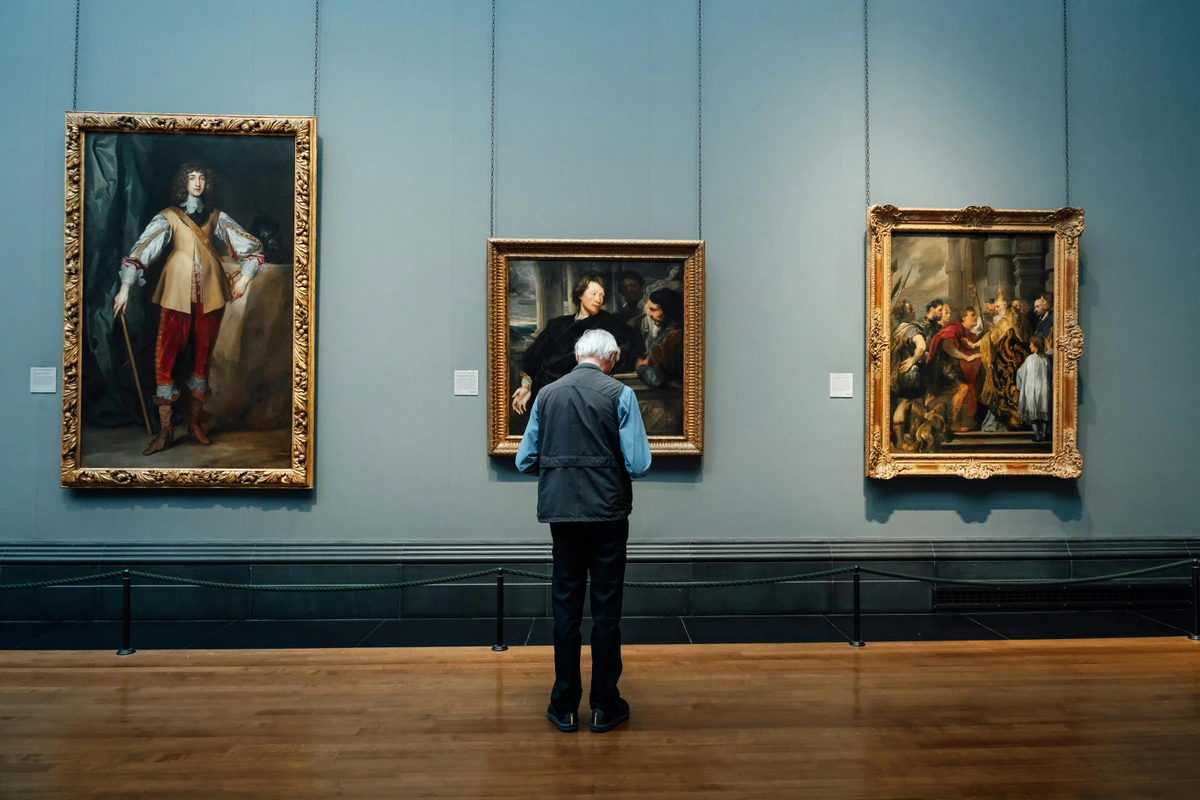
- High Humidity (The Swamp): When the air is damp, paper and canvas absorb that moisture. They swell. Stretched canvas gets tighter and risks slackening once dried, paint films become stressed and can even develop mold. I've seen the ink from a ballpoint pen bleed into a once-pristine drawing because it was stored in a damp basement. Fungal growth isn't just ugly; it can literally consume paper and canvas, leaving behind a web of brown foxing stains that are impossible to fully remove. It's a biological invasion that turns a cherished piece into a science experiment gone wrong.
- Low Humidity (The Desert): When the air is dry, those same materials desiccate, shrink and become brittle. Wooden panels can crack along the grain, paint can flake off in tiny, heartbreaking chips, and paper can literally crumble at the edges. It's death by a thousand paper cuts, on a microscopic scale. The tension becomes too much for the layers of glue and gesso to bear, leading to what conservators call 'insecure' paint—paint that is just waiting for the slightest vibration to fall off.
- Fluctuating Humidity (The Worst of Both Worlds): This is the real killer. A cycle of swelling and shrinking is like forcing your art to do calisthenics it never signed up for. Each cycle fatigues the materials. This is what causes the "cockling" of paper, that wavy, rippled effect you see on old prints. The paper fibers expand and contract at different rates, and over time, they lose their structural integrity. A classic example of this stress is visible in the crackle patterns of old master paintings, where the paint and ground layers have moved at different rates over centuries.
Temperature plays a supporting role. Heat speeds everything up—it makes chemical reactions run faster, dry things out, and exacerbates the effects of humidity swings. A cold environment isn't necessarily bad (museum storage is often quite cool), but the journey between hot and cold is what's dangerous. Imagine a hot summer day: if the indoor temperature shoots up, the relative humidity plummets, creating a dry, desiccating environment. Then, when the AC kicks in, the temperature drops and humidity can spike, leading to a swelling cycle. It’s this constant, dramatic fluctuation that does the most harm over time. This is why a poorly insulated attic or a room above a garage, with its wild temperature swings, is one of the worst places you can store art. The ideal is a space where the temperature is as consistent as a subterranean cave, cool and unwavering.
3. The Air We Breathe: Pollution and Acidity
We don't often think of air as a corrosive substance, but it can be. The very air in our homes contains enemies. It's a chemical soup of volatile organic compounds (VOCs) from paints, furnishings, and cleaning products, all of which can slowly attack and degrade your artwork. I think of this inescapable atmosphere as a kind of "slow fire," a low-level corrosive haze that is constantly working away at the surface of things, a process that becomes visible only after years of accumulated damage.

- Acidic Pollutants: Fumes from cleaning products, tobacco smoke, and even the off-gassing from modern furniture and carpets can create a mildly acidic environment. Over time, these acids weaken paper and textiles, causing them to yellow and become brittle. Newsprint paper, infamous for its rapid decay, is a prime example of acid self-destructing its own fibers—a process called acid hydrolysis. Another common source is wooden frames or storage boxes made from non-archival wood pulp (like standard cardboard), which leach acid over time. Even touching paper with bare hands leaves behind trace acids and oils that can accelerate this decay.
- Particulate Matter: Dust isn't just dirt. It's a grinding paste of tiny, sharp particles of skin cells, textile fibers, and outdoor pollutants. If you let dust accumulate and then try to wipe it off, you're essentially giving your artwork a micro-sanding. This abrasion slowly degrades the surface. For a textured oil painting, this can mean slowly grinding down the very impasto that gives it life. For a delicate pastel drawing, it's a catastrophe waiting to happen.
- Ozone: A less-discussed villain, ozone ($O_3$) is a highly reactive gas. It's produced by laser printers, some types of air purifiers, and even thunderstorms. It aggressively breaks down organic materials like rubber, leather, and certain pigments and textiles, effectively "rusting" them from the inside out.
There's a reason archivists wear white cotton gloves. It's not just for show—it's to protect paper from the oils and acids naturally present on our skin. An unprotected fingerprint can, over decades, become a visible, permanent stain. The art is that sensitive.
The Art of Strategic Neglect: Handling with Extreme Prejudice
All this information can be paralyzing. It sounds like you need a Level 4 cleanroom just to hang a poster. But preservation isn't about creating a sterile bubble; it's about strategy. It's about knowing when to act decisively and when to simply do nothing. The most important skill you can develop is the art of the non-touch. It’s about cultivating a mindset of minimal intervention, where restraint is the highest form of care. This philosophy of "look, don't touch" is the bedrock upon which all other conservation practices are built. It’s about training your instinct from "how can I fix this?" to "how can I prevent the need for fixing in the first place?"
The default setting for any art you own should be "look, don't touch." Every single time you handle a piece, you are engaging in a high-risk activity. It can be dropped, flexed, creased, smudged, or contaminated. Think of it this way: each sheet of paper, each layer of paint, is a historical document. A fingerprint can be as permanent a record as ink. This principle of non-touch is founded on a deep respect for the object's fragility and its history. It takes years to create a work, but only a moment to damage it. Here's how to handle anything with the extreme caution it deserves. This isn't paranoia; it's a practical acknowledgment of the physics of fragile objects.
Before You Begin: Setting the Stage
Never handle art in a chaotic environment. Clear a large, clean, flat surface to work on—a kitchen table is usually better than a cluttered desk. The dining room table, wiped clean, often trumps a studio desk simply because it's less likely to harbor unseen sharp objects that can scratch or cut. Remove any potential hazards, like potted plants that could spill or overhead shelves that might shed dust. I've learned this the hard way, after a near-miss with a precariously placed cup of coffee.
Make sure there are no open drinks, no crumbs, and definitely no leaky pens nearby. Lay down a clean sheet of foam board or even a large piece of acid-free paper to create a safe zone. Think of this space as a surgical theater for your art—the cleaner and more prepared it is, the less likely you are to inflict an accidental wound. Everything you do before you touch the art is a form of insurance against regret. Wear clean, lint-free cotton gloves if you have them, especially for susceptible works. If you don't, wash and dry your hands thoroughly, scrubbing away all traces of lotion and natural oils. This is non-negotiable. The lipids in your fingerprints, over decades, can migrate into paper and cause permanent staining known as 'sweat corrosion'. It’s also smart to tie back long hair to avoid any stray strands falling onto a delicate surface.
How to (Actually) Touch Art
Once your hands are clean and your space is prepared, you need to think about how to touch the piece. Your fingers are no longer just fingers; they're tools, and you need to know their precise function. It’s a conscious act of mindful interaction, where you are no longer just a person holding an object, but a custodian ensuring its safe passage from one state to another.
- For Small, Unframed Works on Paper (Drawings, Prints): This is the most nerve-wracking scenario. The paper is vulnerable, and the media (pencil, charcoal, pastel) is often just sitting on the surface.
- Lift from underneath: Slide a piece of stiff, clean card (like mat board) underneath the artwork to support it. Never pinch it at the corners, as this can crease it irreparably. The weight of the paper itself is often the most challenging aspect to manage; a 300gsm watercolor paper can be deceptively heavy and flop without adequate support. Think of it less as 'picking up' and more as 'sliding', a gentle transfer from one surface to another.
- Never touch the image: Your goal is to handle the paper, not the drawing itself. If it's a uniform size, hold it by the very edges where there's no media. This is especially crucial for works in pastel or charcoal, where the pigment is only sitting on the surface and can easily be displaced by the gentlest touch. I've ruined a perfectly good charcoal sketch with a single, thoughtless brush of a finger; it's a mistake you only make once. For very large sheets, a second pair of clean hands is not a luxury, it's a necessity.
- For Canvases and Framed Works: These are more robust, but come with their own dangers.
- Use two hands, always: Never pick up a canvas or frame with one hand; it's like trying to carry a pane of glass by its edge. Always use two hands, positioned on the sides of the frame or stretcher bars. This prevents flexing, which can craze a brittle paint layer. Think of yourself not as carrying, but as transporting a pane of glass. Your grip should be firm but gentle, like holding a baby bird—secure enough to not drop it, but with an awareness of its fragile nature.
- Think "rigid": Keep the piece flat and parallel to the floor. Avoid rotating it around its vertical axis, a motion that can put surprising stress on old joints. Don't tilt it, as a loosened painting can slide out of an old frame. Carry it perpendicular to your body, never leaning it against your hip where it can be bumped. Keep your elbows slightly bent to absorb any shocks from walking; think of yourself as a shock absorber.
- Beware the wire: If it has a hanging wire, be mindful of it. It can swing and scratch the back of the frame or even the wall next to it. Pinching the wire against the back of the frame while you walk is a good habit. For very large or heavy pieces, consider it a two-person job, with clear communication about every step and turn. If a piece is particularly heavy or valuable, wearing clean cotton or nitrile gloves not only protects the frame from oils but also provides a more secure, non-slip grip.
The Unbreakable Rules of the Non-Touch
- Never lean a framed piece face-down: The pressure from the frame can transfer directly to the surface of the art, causing new cracks or 'cupping' of the paint layer. The cumulative physical stress is immense. Lay it face-up. If you absolutely must place it face-down (like for changing a wire), place soft, clean padding (like a folded cotton towel or multiple layers of bubble wrap) on the table first to create a buffer and protect the frame from pressure points.
- No Windex (ever): Do not, under any circumstances, spray glass cleaner on a framed piece to clean the glass. The liquid is engineered to seep into microscopic crevices, and that's precisely what it will do, migrating under the mat and onto the artwork itself, where solvents can cause bleeding, discoloration, and irreversible water staining. If you must clean the glass, spray the cleaner onto a cloth first, away from the artwork, and then gently wipe.
- Resist the urge to "fix" it: You are not a conservator. Do not try to flatten a crease, remove a stain, or reattach a flake of paint yourself. The likelihood of making it ten times worse is almost 100%. I've seen too many "minor issues" become catastrophes because of good intentions and bad technique. The first rule is 'do no harm.' The second rule is 'if in doubt, do nothing.' Doing nothing is often the most skilled action you can take. It's about channeling your care into the environment, not into direct intervention on the object.
The Ideal Home: Creating a Sanctuary for Your Art
You can't control the climate outside, but you can become a master of the micro-environment inside your home. Creating a safe place for art doesn't require a museum-grade climate control system; it just requires some thought, a few simple tools, and a shift from passive ownership to active stewardship. We aren't just hanging a picture; we're curating a small piece of the future. This is where theory becomes practice, where understanding the enemies of art translates into building a fortress of stability around the things we value.
The Grand Rule of Placement
Never, ever hang your best artwork on an exterior wall, especially one that gets a lot of sun. Exterior walls are the battlegrounds where the outside climate meets the inside. They are often colder in the winter, hotter in the summer, and more prone to condensation and damp. Hanging a precious piece there puts it on the front lines of a physical war. An interior wall is almost always a safer bet, particularly in a room with stable, central climate control. Avoid hanging works directly above radiators, fireplaces, or in steamy kitchens and bathrooms, as the local climate swings in these areas are far too extreme. If you must hang something on an exterior wall, consider using a protective backing like Marvelseal, a special laminate that acts as a vapor barrier, to create a micro-climate buffer between the art and the wall.

Lighting: The Delicate Balance
We want to see our art, but we must do so with respect. Treat light like a finite resource that you are carefully rationing. It's a precious medicine—necessary for life, but fatal in overdose. The challenge is to satisfy our human need to see and be moved by the art, while simultaneously becoming its guardian against the very thing that makes it visible. This means every decision about lighting should be a compromise weighted heavily in favor of the art's longevity.
Museum-Quality Light Levels
Museums operate on strict light budgets to ensure their collections last centuries. We can, too. By adopting these principles, you're essentially turning your home into a small-scale museum, making preservation a seamless part of your daily life. Here is a simple guide to safe light levels for different artworks.
Artwork Type  | Recommended Light Level (Lux) | Ideal Properties |
|---|---|---|
| Oils & Acrylics (sturdy pigments) | 150-200 lux | Low UV, Cool, Indirect |
| Watercolors, Pastels, Drawings | 50 lux or less | Minimal UV, Cool, Dimmable |
| Textiles, Tapestries, Natural Dyes | 50 lux or less | UV-filtered, Very low heat (IR shielded) |
| Works on Paper (prints/books), Photographs | 50 lux or less | UV-filtered, Stable, preferably dimmed when not viewed |
| Light-Sensitive Works (Cyanotypes, some inks) | Minimal to no light | Store in dark, view only occasionally under very low light |
- The 40-Watt Rule: For most indoor spaces, imagine the intensity of a 40-watt incandescent bulb from a few feet away. That's the kind of gentle, ambient light levels you should aim for. If you can feel warmth on your hand from the light source (like a halogen spotlight), it's too close and too bright.
- Turn It Off: When you leave a room, turn off the lights, especially if they are directed at artwork. Reducing cumulative exposure is the single most effective thing you can do. Install motion sensors or timers on lights in rooms where you display art—it removes the burden of memory and makes preservation an automatic process.
- Embrace the Filter: UV-filtering film on windows (like 3M's ScotchTint series) is a worthwhile investment for any room with significant art. Museum glass, while more expensive, is the gold standard for frames, filtering out up to 99% of harmful UV light. For unframed works, using UV-filtering acrylic sheets is a lighter, safer alternative to glass.
- Choose Your Bulbs: LED bulbs are your friend. They produce very little heat and, if you choose the right ones, very little UV. Look for LEDs with a high Color Rendering Index (CRI), preferably 95+, which mimics natural daylight and lets you see the true colors without needing excessive brightness. Avoid halogen spotlights, which are heat-generating monsters. The investment in high-quality, museum-grade lighting pays for itself in the extended life of your art.
I've rearranged entire rooms to accommodate a single piece of paper. That vibrant abstract work you love might look stunning on the bright, south-facing wall. But that wall is a radiation zone. Choosing a different spot is an act of love for its long-term survival.
Climate Control: Your First Line of Defense
The simplest and most effective tool you can buy for art conservation is a combination thermometer-hygrometer. They're cheap, readily available, and tell you everything you need to know about the environment you're creating. I think of them as tiny environmental guardians, and I have one discreetly placed in every room where I keep art, checking them periodically becomes a mindful ritual. Place one in every room where you keep art, and check it periodically to understand the rhythm of your home's climate.
Your goal isn't to hit a magic number every day. Your goal is consistency. Art can adapt to a slow, seasonal change in humidity (as long as it's not extreme), but it cannot handle wild, daily swings. Think of it like a person: a gradual change in seasons is fine, but rapid, drastic temperature changes are a shock to the system. Aim to keep your home between 40-60% relative humidity year-round, with minimal fluctuation.
- If you live in a dry climate: A humidifier is essential in the winter. Forced-air heating is murder on paper and wood. Be careful not to over-humidify, as this can lead to condensation on cold windows, creating its own problems. The goal is gentle, consistent moisture, not a tropical rainforest. Using a humidifier with a built-in hygrostat that shuts it off at a set humidity (e.g., 50%) is ideal.
- If you live in a humid climate: A dehumidifier running in the basement during the summer can prevent a mold catastrophe. Ensuring good air circulation with fans is also critical to prevent pockets of stagnant, humid air. Remember to empty and clean your dehumidifier regularly to prevent it from becoming a source of mold and bacteria.
- The Goldilocks Zone: For most of us, a well-insulated and climate-controlled home is sufficient. Just be mindful. That beautiful sunroom you love might be heaven for you, but it's a hostile environment for a painting. Storage on an interior wall, away from vents, windows, and direct heat sources, provides the most stable environment. Pay special attention to the corners of rooms, which can have significantly different humidity levels than the center—these are often the first places you'll see condensation or mold.
Framing as Fortification
A good frame isn't just decoration; it's a suit of armor. It's the first and most critical line of defense against the environmental enemies we've discussed. A poorly chosen frame can actively harm a piece, while a properly constructed one provides a stable, isolated micro-climate that can extend its life exponentially.
- The Mat is Your Ally: Never let your art touch the glass in a frame. A mat board, made of 100% cotton rag (often called "museum board"), creates a crucial air gap. It prevents condensation and physical sticking. It's the buffer zone your art desperately needs. For very delicate works like pastels, adding a "spacer"—a thin strip of archival foam board between the mat and the glazing—creates an even deeper buffer, ensuring no part of the work can ever contact the glass, even if jostled.
- The Back is a Fortress: The back of the frame should be sealed against the elements. A simple dust cover of acid-free kraft paper and framer's tape is good. Even better is to use a layer of Marvelseal, a special plastic laminate that acts as a true vapor barrier, protecting against sudden humidity spikes. It's like putting your art in an impermeable raincoat. This backing also protects from pests and reduces the influx of airborne pollutants, making it an all-around essential shield.
The Ultimate Safe Haven: Proper Storage
Most of the art we own will spend more of its life in storage than on a wall. How you store it is, therefore, even more important than how you display it. The principles of good storage are simple but non-negotiable: darkness, stability, and support. It's not just about putting things away; it's about creating a time capsule where your art can hibernate in perfect health. This is where your role as a custodian becomes most active, orchestrating an environment of perfect stillness.

The Enemies of Storage
Before we discuss where to store, let's identify the danger zones—places where entropy accelerates at an alarming rate.
- The Damp Basement: This is where art goes to die. Never, ever store art in an unconditioned basement or garage. Fluctuating temperatures and extreme damp will destroy it. The residual moisture in concrete foundations, even in finished basements, can be enough to trigger mold growth. It's a slow, biological siege on the cellulose fibers of paper.
- The Hot Attic: The opposite problem. An attic can become a scorching oven in the summer, reaching temperatures that would melt some plastics. This heat bakes and desiccates everything inside. This extreme aridity makes paper brittle and causes the animal-based glues holding a painting's layers together to fail.
- The Dark, Sealed Closet (that never gets opened): Any space that is sealed and unventilated can become a perfect petri dish for mold if there's any hint of moisture. A lack of air circulation allows pockets of stagnant, humid air to settle, creating microclimates of decay. A little bit of air circulation is vital to prevent this.
- Directly on the Floor: Never place any art or storage box directly on a concrete floor, even if it's in a conditioned space. Ground moisture can migrate upwards, and cold from the slab can create a microclimate of condensation within the box. Elevate everything at least 4-6 inches off the ground.
The ideal storage space is an interior closet in a climate-controlled part of your home, preferably on an intermediate floor, away from external walls, water pipes, and heat sources. A spare bedroom closet is often perfect. If your home has wide temperature and humidity swings, consider using silica gel packets (reusable ones are available) in your storage boxes to buffer minor fluctuations, but be sure to recharge them regularly.
How to Actually Store Your Art
- Flat is Best (for Paper): If at all possible, store works on paper flat in a large, shallow drawer or a purpose-built flat file cabinet. This prevents them from getting bent and relieves them of the stress of gravity. Over time, hanging vertically can cause fibers to weaken along folds or creases. For valuable works, consider Solander boxes, which are museum-standard, drop-front, clam-shell boxes designed specifically for this. If you don't have a dedicated flat file, a large, shallow artist's portfolio box on a sturdy shelf is an excellent alternative. Regardless of the method, the goal is to support the full sheet, removing any point of unsupported stress.
- When Flat isn't Possible (Vertical Storage): If you must store things vertically, like in a portfolio or a filing cabinet, they need to be fully and properly supported. The art must not be able to lean or buckle. Even the slightest lean can cause the paper to flex, leading to permanent creasing over time.
- Interleaving: Place a sheet of acid-free tissue or glassine paper between each piece. This prevents inks or media from transferring to the piece below it—a process called "offsetting." For charcoal or pastel works, this is absolutely critical. Glassine is a smooth, non-stick, and pH-neutral paper that is the gold standard for this purpose.
- The Right Box: Use an archival box or portfolio case. These are made from acid-free, lignin-free materials (buffered or unbuffered, depending on the artwork's medium) that will not, over time, leach acids or peroxides into your art. Look for boxes and portfolios specifically labeled as "museum board" or "archival quality", meeting the PAT (Photographic Activity Test) standard.
- Packing it Right: Artworks should be snug, but not tight. They should not be able to slump or bend. Think of it as packing them in a custom-fit cradle. An over-full portfolio is worse than an under-full one. If needed, add acid-free foam board cut to size to take up extra space and keep the contents vertical and perfectly aligned.
- For Framed Works or Canvases: Never stack framed works on top of each other without protection. The frame of one will dig into the back of the next. Place a piece of acid-free foam board or a thick sheet of undyed felt between each piece. Store them vertically, leaning against a wall, just like a book on a shelf. This prevents pressure and distributes the weight evenly. If you must stack them due to space constraints, ensure the frames are perfectly aligned by size, largest on bottom, and that the separation material is thick enough to prevent any pressure points. For unframed canvases on stretcher bars, store them like framed works—upright, never stacked, and ideally in a breathable, acid-free plastic sleeve to protect them from dust and scuffs.
FAQs: Your Burning Questions, Answered
Q: How do I clean dust off my framed art? A: Gently is the name of the game. Use a soft, clean, natural bristle brush (like a sable watercolor brush) to flick the dust off the top of the frame. For the glass, use a soft, clean, dry microfiber cloth. Do not use any liquid cleaners on the glass of a framed piece; the risk of it seeping through is too high. For very delicate, textured surfaces like impasto oil paintings, consider using a can of compressed air, holding it upright and at a safe distance to blow dust away without any physical contact. For dust on the bare canvas of an unframed painting, a very soft, dry, and clean microfiber cloth with the lightest possible touch is the only acceptable method.
Q: I think my art has mold. What should I do? A: Do not panic, and do not try to clean it yourself. Mold is a serious health hazard, and its roots (hyphae) can penetrate deep into paper fibers. Immediately isolate the piece by placing it in a sealed plastic bag to prevent the spores from spreading to other works. Then, your only call should be to a professional paper conservator. They have the tools, biocides, and expertise to safely mitigate mold without destroying the art. To prevent future outbreaks, address the source of the moisture immediately—use a dehumidifier, improve air circulation, and ensure the piece is kept away from exterior walls or other damp environments.
Q: Is it true that I should 'air out' my art by taking it out of storage periodically? A: This is a common misconception. "Airing out" only exposes the stored art to more light and unstable environmental conditions. If your storage is good—dark, cool, and stable—the best thing you can do is leave your art alone. Just check on it once every few months to ensure no new problems have arisen, such as signs of pests or a shift in humidity. An annual visual inspection under stable lighting conditions is more than sufficient for most collections. The less you handle it, the better. Think "controlled hibernation," not "periodic airing."
Q: My print has a small tear. Can I just use some regular scotch tape on the back? A: Absolutely not. This is one of the most common and heartbreaking mistakes. The adhesive in regular household tape will, over time, dry out, turn brown, and become extremely difficult to remove without damaging the paper. It's a "fix" that becomes a permanent disfigurement. If a tear needs mending, only use archival-quality materials like Japanese tissue paper (known as washi) and wheat or rice starch paste, which a conservator would use. Better yet, consult a conservator. If you must store a torn piece temporarily, place it carefully between two sheets of acid-free tissue in a flat file; the goal is to prevent the tear from worsening, not to repair it yourself.
Q: What's the one thing I'm probably doing wrong that's damaging my art right now? A: For most people, it's location, location, location. Hanging a cherished piece on a sun-drenched wall is the equivalent of slow-roasting it. The damage from UV and visible light is cumulative, irreversible, and happening every single second the light is on it. The second most common mistake is assuming a frame is just a decoration; a poor-quality frame with acidic materials (like MDF backing or non-rag mats) will actively destroy the art it's supposed to protect from the inside out. The third is touching unframed paper with bare hands; the oils from your skin are a corrosive agent over long periods.
When to Call in the Cavalry: Recognizing a Job for a Professional
We have limits. Knowing them is a sign of wisdom, not weakness. There comes a point when our well-meaning intervention becomes part of the problem, and the most responsible thing we can do is step back and acknowledge our own limitations. A professional art conservator is like a surgeon for your art. They diagnose unseen problems with a forensic eye, perform procedures that require immense precision, and have a profound understanding of the materials they are working with—right down to the molecular level. You call them in when the problem is beyond a simple bandage.
You should consult a conservator when:
- You see any kind of structural damage: a tear in the support, a flaking paint layer (a condition known as cupping or insecure paint), a cracked panel.
- There are signs of pest infestation: small holes in paper or canvas (from booklice, silverfish, or beetles), or frass (insect droppings) on the frame. Different pests leave different types of damage; a conservator can identify the specific culprit.
- There is active mold growth. This requires immediate professional attention due to health risks and the high probability of causing permanent staining and fiber damage.
- An old, yellowed varnish on a painting has become disfiguring and you want to see the original colors restored through a meticulous varnish removal process.
- You have an inherited piece in poor condition that holds great sentimental or financial value. They can provide a thorough condition assessment and a treatment plan to stabilize the piece for the future.
- You discover a work on paper has foxing (rust-colored spots), which is difficult to remove safely without professional expertise.
- The layers of a painting are beginning to separate (a condition called delamination), which requires consolidation techniques far beyond a DIY approach.
Finding a conservator is easier than you think. Organizations like the American Institute for Conservation (AIC) in the US or the Institute of Conservation (Icon) in the UK have searchable "Find a Conservator" databases on their websites. These directories allow you to search by specialization and location.
Look for a professional who specializes in the medium of your artwork (e.g., a paper conservator for a drawing, a paintings conservator for an oil painting, an objects conservator for sculpture). HIP (Health Insurance Portability and Accountability Act) principles, while for healthcare, touch on an important concept: you're looking for a professional.
A good conservator will act ethically, adhering to a strict code of conduct: they will never perform an irreversible treatment, will be transparent about their process and costs, and will always document their work with "before and after" photographs and a detailed report. This report, which outlines the condition, the work performed, and the materials used, is a vital document that itself becomes part of the artwork's history, often called its "provenance of care." Seek out a conservator who is a member of a professional body like the American Institute for Conservation (AIC) or the equivalent in your country, as this ensures they adhere to high ethical and technical standards.
A Case Study in Caution: Protecting Delicate Works
Let's get practical. It's one thing to talk about light and humidity in the abstract, but what do you do when you have a pastel drawing, a delicate charcoal sketch, or a work made from ephemeral materials? These pieces are the ultimate test of conservation discipline, where every breath and bump is a potential disaster. They feel like they're actively trying to self-destruct, and in a way, they are. A pastel is fundamentally millions of tiny pigment particles just sitting on a surface, held only by friction. A silverpoint drawing is an incredibly thin layer of metal rubbed onto a prepared ground. These aren't just artworks; they're assemblies of fugitive materials held together by hope and static electricity. They require a specific kind of vigilance, bordering on reverence.
For works with loose media (pastels, charcoal, unfixed graphite, some silverpoint drawings), the frame is their entire defense system. It is not just a decorative border; it is a sealed micro-environment, a quarantine chamber, a suit of armor. The moment the frame is compromised, the art is in immediate, tangible danger. Any vibration can dislodge particles; any change in air pressure or humidity can cause them to shift. This is where "museum framing" goes from a luxury to a non-negotiable necessity, an essential investment in the work's long-term survival.
- The "Full Package" Frame: This is a multi-layered defense system, built like a ship-in-a-bottle where each component is critical.
- Art: The piece itself.
- Spacer/Riser: A small, invisible plastic or wood strip that creates a gap (or "reveal") between the art and the glazing. Why? Because any vibration can cause loose media to transfer to the glass, or even worse, moisture can cause it to stick permanently.
- Mat Board: The surrounding frame of colored paper. It must be made of 100% cotton rag board. Anything else is acidic and will eventually stain the art. The mat's job is to keep the art from touching the glass and to provide a stable, neutral border. For some pastels, a "floater" mat that allows the deckled or textured edge of the paper to be visible can be used, but it requires expert framing.
- Glazing: This is the glass or acrylic. For delicate works, UV-filtering, anti-reflective "museum glass" is the gold standard. Acrylic (like Plexiglas) is lighter and safer for shipping, but it can hold a static charge, which can actually lift the media right off the paper if you're not careful. For this reason, glass is often preferred for very loose media. For acrylic, specialized anti-static cloths are used by professionals during framing.
- Backing Board: A rigid, acid-free board that gives the whole package structural integrity.
- Dust Cover: A final layer of acid-free kraft paper taped to the back of the frame with archival framer's tape, sealing it from dust and minor humidity fluctuations. For an even greater level of protection, a layer of Marvelseal can be applied before the dust cover.
When you handle such a piece, you handle the frame, never the art. If you absolutely must remove it from the frame for some reason, you need a conservator. It is not a DIY job. The risk of destroying it with a single misplaced breath is too great. Consider the frame a permanent, one-way vessel.
The Digital Eye: Using Technology as a Conservation Tool
What if I told you that your smartphone could be one of the most powerful preservation tools you own? It sounds counterintuitive in an article preaching the virtues of doing nothing, but here's the thing: the "doing" happens once, and then the record itself becomes a passive, incredibly useful tool for future inaction. We can use technology not just for creation, but for vigilance. In the palm of our hands, we carry a device that can be a portable conservation lab's worth of documentation, allowing us to monitor the health of an artwork without ever having to disturb it physically again.
Think of it as creating a "digital twin" of your art collection. This digital doppelgänger is immune to the physical ravages of time, and it can be an invaluable tool for tracking the health of its physical counterpart. It's the perfect way to satisfy our desire to interact with our art without ever touching it.
- Document the Moment (The "Born-Digital" Record): As soon as you acquire a piece, photograph it. Take several high-resolution shots in good, even, natural light (but not direct sun). Use the photo settings to capture any surface texture, impasto, or visible flaws. Get a close-up of the texture. Get a shot of the back, showing the signature, any gallery labels, or the type of stretcher bars. This is your "before" photo, a forensic record of its condition at the time of purchase. Store these high-resolution files in the cloud with a clear naming convention (e.g., ArtistName_Title_DateOfAcquisition_Condition.jpg). This simple act transforms your phone from a communication device into an archival tool.
- Create a Condition Report: Keep a simple digital log for your more valuable pieces. Store it in the Cloud. A note on your phone or a dedicated spreadsheet is perfect.
- Date of acquisition: When you got it.
- Source of acquisition: Where you bought it, or if it was a gift.
- Condition at acquisition: "Excellent. No visible flaws. Colors vibrant. Minor scuff on lower right corner of frame, present at purchase." Be specific.
- Check-ins: Annually, or every six months for delicate pieces, pull the piece out and compare it to your original photos. Sight along the surface under raking light to look for new cracks or deformations. Use your digital log: "Checked: May 2025. No noticeable change in color when compared to reference photos. No new dust accumulation. One small paint crack identified at lower right, consistent with natural aging of the medium."
This isn't just busywork. If you ever need to make an insurance claim, sell the piece, or consult a conservator, this documentation is invaluable. It allows you to prove the condition of the work over time, protecting you and the artwork. It turns you from a casual owner into a serious custodian. In fact, some insurance companies require this kind of documentation for high-value artworks, so you're not just being diligent, you're being financially prudent.
A Philosophy of Impermanence and Presence
All this talk of doing nothing, of strategic inaction, might seem counterintuitive in our hyperactive, solution-oriented world. We live in a culture that values action, intervention, and fixing things. We're programmed to 'do something' when faced with a problem or an object that seems fragile. But true preservation is a form of deep respect that runs contrary to this impulse. It's the understanding that our role is not to dominate the object, but to create a stable, quiet sanctuary for it. This practice of strategic neglect is part of a larger mindset shift from 'owner' to 'custodian'—a subtle but profound change in how we relate to the objects we love. An owner possesses; a custodian facilitates. That's the core distinction.
The irony is profound: by learning to do nothing—by not touching, not "fixing," not fussing—we actually create the conditions for something to endure. This painting, this drawing, this print is a physical object with a life of its own. It will change and age, as all things do. To fight this natural process is futile and often destructive; to manage it, to slow it down with patient, passive care, is an act of wisdom. It's the difference between yelling at a river to stop and learning to build a gentle dam.







Our goal is not to trap it in an impossible state of perfect, frozen youth. It's to give it a long, healthy life. To protect it from unnecessary harm so that future generations can experience the same thrill of seeing that splash of color, feeling the flow of that line, understanding the thought that was poured onto that canvas. We are not its jailers; we are its guardians, facilitating its journey through time as gracefully as possible. This is the ultimate form of respect for the artist, the work, and the future.
It's an act of profound optimism: the belief that what we create, and what we choose to care for, can outlast us. It's the quiet, humble art of allowing something beautiful to simply be. It's a pact we make with the future, a promise that we will pass on the things we find meaningful, not as faded relics, but as vivid, living testaments to the human impulse to create.