Max Ernst's Frottage & Decalcomania: Unlocking Subconscious Art & Creative Freedom
Unlock creative freedom with Max Ernst's frottage & decalcomania. This comprehensive guide delves into these Surrealist automatic art techniques, tapping into the subconscious to transform textures and chance into profound art. Discover practical steps, their enduring legacy, and how they inspire contemporary abstract artists to embrace the unpredictable. Dive in to find your unique artistic voice.

# Max Ernst's Frottage & Decalcomania: Unlocking Subconscious Art & Creative Freedom Have you ever looked at a weathered wall and seen a face, or stared at a cloud and imagined a soaring dragon? That flash of recognition, that sudden story in the random, is the magic [Max Ernst](/finder/page/max-ernst-surrealism-and-biography) harnessed. It’s the captivating promise of **frottage** and **decalcomania**, two of the most liberating and playfully profound techniques in [modern art](/finder/page/history-of-modern-art). When I first encountered the term *frottage* in an art history book, I have to confess, my brain went straight to the gutter. I pictured someone aggressively scrubbing floors, or worse! It just sounded a bit... well, you know. But once I got past that initial, frankly childish, giggle, I discovered not just a technique, but a powerful gateway to unlocking the subconscious, a true collaboration with chaos. It was a revelation, showing me a direct path to the kind of raw, unfiltered creativity I constantly strive for in my own [abstract work](/finder/page/qa-with-an-art-insurance-specialist-protecting-your-abstract-art-collection), where the initial mark or an unexpected texture often dictates the entire narrative of a painting. It’s about letting the art *emerge*, rather than forcing it – a subtle but monumental shift in the [creative process](/finder/page/my-creative-process-sketchbook-to-canvas). These aren't just methods for making marks; they represent a profound shift in artistic philosophy, valuing intuition, accident, and the hidden over deliberate control and conscious planning. For me, they're about letting go, allowing the unexpected to guide your hand, and discovering that [the power in imperfection](/finder/page/the-power-of-imperfection-embracing-accidents-and-evolution-in-my-abstract-art) is where true originality often lies. This pursuit of the authentic, often accidental, mark is a core tenet of what it means to truly engage with the canvas. 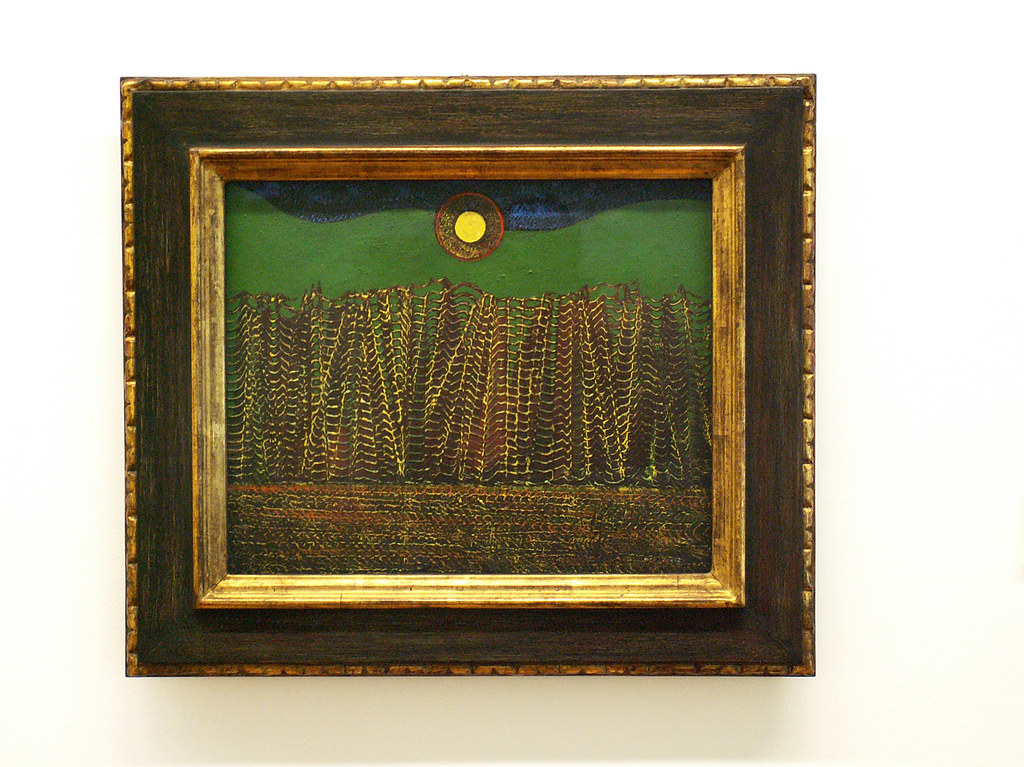 [credit](https://live.staticflickr.com/3539/3425621735_6e3ca15ab2_b.jpg), [licence](https://creativecommons.org/licenses/by-nc-nd/2.0/) So, let’s open that portal and dive into the enthralling world of Max Ernst’s **automatism**, where the unconscious mind becomes your closest collaborator. You don't need to be a master painter. You just need to be curious, and maybe a little willing to embrace the beautiful, chaotic unknown. --- ## Max Ernst: The Alchemist of Chance and Unconscious Art Before we get our hands dirty, let's talk about the man himself. Max Ernst (1891-1976) was a German painter, sculptor, graphic artist, and an artistic rebel through and through. Born into a world grappling with the aftermath of [World War](/finder/page/how-world-war-1-changed-art) I, he was profoundly disillusioned with the perceived rationality and traditional structures that led to such devastation. He saw the rational world as broken, believing its rigid adherence to logic and convention had failed humanity, culminating in widespread destruction. This sentiment fueled radical [art movements](/finder/page/famous-art-movements-timeline) like [Dadaism](/finder/page/the-enduring-influence-of-dadaism-on-contemporary-art-and-its-legacy), which sought to dismantle conventional art through absurdity and anti-logic. Ernst became a key figure in both [Dadaism](/finder/page/what-is-dadaism) and its more dream-oriented successor, [Surrealism](/finder/page/ultimate-guide-to-surrealism) – a movement I find endlessly fascinating in its quest to map the interior landscape of the human psyche. He wasn't interested in painting a perfect bowl of fruit; he wanted to paint the dreams, anxieties, and bizarre thoughts bubbling beneath the surface of reality. He yearned for art that was raw, honest, and free from the constraints of conscious control, believing that true creativity lay beyond the rational mind. For Ernst, the artist's conscious mind was often a barrier to true originality, prone to censorship and convention. It's a sentiment I understand deeply; sometimes, my own deliberate planning feels like it chokes the life out of a painting, and only by stepping back and allowing the material to lead do I find that unexpected spark. This deep-seated desire to bypass rational control and access a more primal creative force led Ernst to develop and champion revolutionary artistic techniques. His solution? **Automatism** – a revolutionary artistic method that emphasized creating art without conscious thought or deliberate control. It was a protest against rationalism and bourgeois control, a search for pure, unfiltered expression. This quest led directly to his groundbreaking exploration of **frottage** and **decalcomania**, techniques designed to turn chance and accident into powerful artistic tools, rather than obstacles. He was, in essence, trying to catch the fleeting images of dreams and the raw energy of the unconscious mind on canvas, or in rubbings, or on paper. 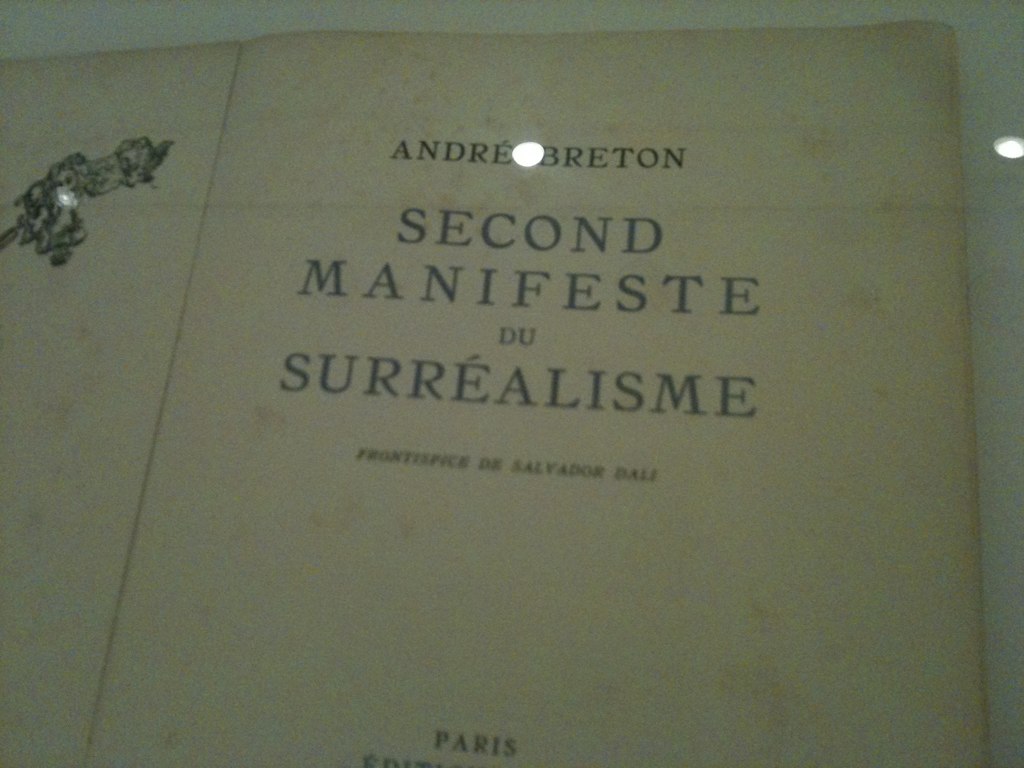 [credit](https://live.staticflickr.com/4112/5184960011_7c0bcce5ff_b.jpg), [licence](https://creativecommons.org/licenses/by-nc/2.0/) ### The Surrealist Quest for the Subconscious & Automatism Max Ernst, along with fellow Surrealists like [René Magritte](/finder/page/who-is-rene-magritte) and the often-overlooked Hans Bellmer, was heavily influenced by Sigmund Freud's theories of the subconscious mind. Freud's groundbreaking work on dream analysis, free association, and the hidden desires of the unconscious provided Surrealists with a powerful framework. They believed that by bypassing rational thought, they could access a deeper, more authentic wellspring of creativity – a primal source uncorrupted by societal expectations or conscious censorship. They even drew inspiration from Carl Jung's concept of the collective unconscious, seeing the subconscious as not just personal, but also a reservoir of universal symbols and archetypes that could enrich [artistic expression](/finder/page/the-history-of-acrylic-painting-from-industrial-innovation-to-artistic-medium). André Breton, the movement's chief theorist, advocated for **automatic writing** as a path to this same subconscious realm, and Ernst extended this principle into [visual art](/finder/page/the-influence-of-jazz-on-visual-art) with his textural explorations. This quest was a profound rebellion, a declaration that true meaning and beauty often reside in the illogical, the unsettling, and the deeply personal, much like the unexpected connections I find myself making in my own abstract compositions. Beyond Ernst, other Surrealists like Yves Tanguy used similar automatist approaches to conjure vast, barren landscapes, while Joan Miró (though not explicitly a frottage/decalcomania user) channeled a playful automatism into his biomorphic forms. They all sought to bring the hidden depths of human experience to the forefront of art, making the invisible visible.  [credit](https://images.pexels.com/photos/5684803/pexels-photo-5684803.jpeg), [licence](https://creativecommons.org/public-domain/) --- ## Frottage: Unearthing the World's Hidden Narratives At its core, **frottage** is a **subtractive** technique where you capture *existing* texture from a surface by rubbing a [drawing](/finder/page/definitive-guide-to-drawing-techniques) tool over paper, revealing patterns that were already there. It's about discovery in the external world – like an archaeologist uncovering a lost artifact, or a detective finding a hidden clue. Remember doing that as a kid with a coin under a piece of paper, excitedly watching the monarch's profile emerge? That's frottage. Congratulations, you were a secret [surrealist](/finder/page/symbolism-of-time-in-surrealist-art) and didn't even know it! The term *frottage* itself, while sounding cheeky, simply means "rubbing" in French, which demystifies it a bit, doesn't it? Historically, rubbings have been used for centuries – from preserving ancient tomb inscriptions to documenting natural specimens. Ernst's genius was in transforming this simple act into a high art form, a portal to unexpected imagery, and a direct line to subconscious art. It's a fundamental aspect of [what is frottage in art](/finder/page/what-is-frottage-in-art).  [credit](https://images.pexels.com/photos/10532822/pexels-photo-10532822.jpeg), [licence](https://creativecommons.org/public-domain/) The story goes that Ernst was staring at the wooden floorboards of his hotel room in 1925, mesmerized by the intricate patterns in the grain. He laid a sheet of paper down and rubbed it with a pencil, and what emerged was a series of strange, suggestive textures. He didn't *draw* a forest; the floorboards *gave* him a forest, in much the same way a cloud might suggest a face. He saw fantastical creatures, eerie landscapes, and otherworldly birds in these rubbings – a gnarled knot becoming the eye of a monster, or a long scratch transforming into a distant horizon. This is the key to frottage: it's a starting point, a method for generating unexpected visual information. Your conscious mind comes in *after* the chaotic, subconscious part is done. It's less about drawing something you see in your head and more about discovering what's hidden in the textures around you. This interpretive dance is something I experience constantly, letting the initial texture or accidental mark suggest the direction of my own abstract paintings. It's one of my favorite [techniques for adding depth to abstract paintings](/finder/page/exploring-texture:-my-favorite-techniques-for-adding-depth-to-abstract-paintings). Ernst famously used frottage in his "Forest" series of paintings, where the rubbings of wood grain were transformed into dense, mysterious landscapes. For example, in *The Forest* (1927), you can clearly discern the ghostly impressions of wood grain evolving into gnarled, almost skeletal trees and shadowy undergrowth, creating a deeply atmospheric, almost menacing, scene. The way he *interpreted* these accidental marks evolved over his career, from seeing distinct figures to increasingly abstract compositions, always pushing the boundaries of perception and embracing [the definitive guide to understanding texture in art](/finder/page/the-definitive-guide-to-understanding-texture-in-art). While it mostly relies on found textures, sometimes a surface just doesn't yield interesting results, or the paper tears. It requires patience and exploration to find the perfect 'canvas' beneath your paper, and at times, the resulting rubbings can be too subtle or chaotic to easily interpret, demanding a keen artistic eye and imagination. ### How to Try Frottage: Your Guide to Textured Discovery | Materials | | :--- | | **Paper:** Thin paper is best – newsprint, tracing paper, or sketching paper (50-70gsm) works wonderfully. Its thinness allows delicate textures to register clearly, but a slightly heavier paper (like 90gsm) can be more forgiving for very coarse textures without tearing. Avoid heavy cardstock. <br> **Drawing Tools:** Softer graphite pencils (e.g., 6B or 8B) will create richer, darker marks. Softer pastels, oil pastels, or even charcoal sticks can yield more vibrant and textured results, perfect for capturing fine details or broader strokes. Wax crayons are also excellent for broad coverage. <br> **Textured Surfaces:** This is the heart of it! Think natural (wood grain, bark, leaves, stones, sand, feathers) and man-made (concrete, brick walls, grates, woven fabrics, embossed wallpaper, lace, patterned shoe soles, coins, even textured book covers). The rougher and more pronounced the texture, the more dramatic the rubbing will be. |  [credit](https://images.pexels.com/photos/9120650/pexels-photo-9120650.jpeg), [licence](https://creativecommons.org/public-domain/) | The Basic Steps | | :--- | | 1. **Choose Your Surface:** Select a surface with an interesting, pronounced texture. For frottage, the rougher, the better! Secure your thin paper over the texture firmly with one hand or tape it down to prevent slipping, which can create blurred or double images. <br><br> 2. **Make the Rubbing:** Using the *side* of your pencil, graphite stick, or crayon, rub evenly across the paper. Don't press too hard at first; you can always build up layers and depth. Experiment with varying pressure – light pressure for delicate details, heavier for bolder textures. Try rotating your rubbing tool or the paper to create dynamic, complex patterns. <br><br> 3. **Observe & Interpret:** Lift the paper and *observe*. What images or ideas does the texture suggest to you? Don't censor your initial reactions – the first impulse is often the most subconscious and insightful! A series of brick rubbings might suggest a crumbling city, while a leaf vein could transform into an intricate wing pattern. Allow yourself to see figures, landscapes, or abstract forms. This is where your inner alchemist begins to work. <br><br> 4. **Develop Your Artwork:** Once you have your rubbing, consider using pens, charcoal, or paint to define the shapes you see within the texture. Enhance the forms that appear to you, or simply let the texture speak for itself. You can also combine rubbings from different surfaces onto one sheet for elaborate compositions – what if you combine tree bark with a brick wall, or lace with a coin? Don't be afraid to add intentional marks or colors; the frottage is often a springboard for a deeper [mixed media piece](/finder/page/the-definitive-guide-to-mixed-media-in-abstract-art-techniques-materials-and-contemporary-masters). The thrill is in the reveal – what hidden worlds will your textures unlock? |  [credit](https://live.staticflickr.com/65535/53064827119_1b7c27cd96_b.jpg), [licence](https://creativecommons.org/licenses/by-nc-nd/2.0/) --- ## Decalcomania: Conjuring Worlds from Chaos If **frottage** is about pulling texture from the external world (a **subtractive** process, like uncovering what's already there), then **decalcomania** is an **additive** technique where you *create* texture and patterns through the unpredictable separation of wet paint between two surfaces, conjuring new imagery from internal chance. It’s about creating worlds from delightful chaos. This technique involves spreading a thin layer of paint (like gouache or acrylic, often thinned for flow) onto a non-absorbent surface (paper, glass, or plastic), then pressing another sheet of paper on top and carefully peeling it away. The magic happens in the unpredictable way the paint separates due to suction and varying surface tension, creating stunning, often **fractal-like patterns** – intricate, self-similar branching structures that look like coral reefs, alien landscapes, delicate veins, or microscopic organisms. (Think of a fern frond's structure repeating itself at smaller scales, or the branching of a river delta – that's the essence of a fractal, a geometric shape that constantly repeats itself across different scales!) The sensory experience of the paint squishing and then peeling, revealing a completely new world, is truly part of the magic. It's a bit like an artistic Rorschach test, where the random blot reveals hidden associations in your mind.  [credit](https://images.pexels.com/photos/18351976/pexels-photo-18351976/free-photo-of-cracked-paint-on-wall.jpeg), [licence](https://creativecommons.org/public-domain/) Surrealists like Oscar Domínguez and Max Ernst jumped on this technique because it was pure, unadulterated **automatism** – art created without conscious thought or control. Domínguez, in particular, experimented with it extensively in the late 1930s, developing and popularizing it before Ernst adopted and further refined it. There is simply no way to fully control the outcome. You set the stage—choose the colors, the consistency of the paint—and then you let physics and chance do the rest. The result is a unique, unrepeatable print. What do *you* see in the blot? It's a process where "failure" or unexpected results are not negative, but productive outcomes, pushing artistic boundaries. This embrace of the unpredictable is, for me, where true artistic growth happens. Sometimes, however, the results can be *too* chaotic, and finding meaningful forms within the mess requires a keen eye and a patient imagination. It can also be challenging to achieve consistent results, as paint viscosity and pressure variations create wildly different outcomes, leading to blots that might not immediately suggest anything. It's a practice in embracing both the beauty and the frustration of relinquishing control. Like frottage, the decalcomania print is often just the beginning. Ernst would take these intricate textures and use them as the basis for a more detailed painting, adding figures or elements to enhance the illusions he saw within the random patterns. His famous work "The Entire City" (*La Ville entière*) series is a prime example, where accidental textures evolve into crumbling, fantastical urban ruins – sometimes populated by strange bird-headed figures or gravity-defying structures. In *La Ville entière (Forest and Dove)* (1936), for instance, the dense, organic patterns of the decalcomania form the very fabric of the city's decay, suggesting a primal, subconscious force at play, with gnarled, eroded walls and towers emerging directly from the unpredictable blots. A closely related technique is **grattage**, also pioneered by Max Ernst. Here, layers of wet paint are applied to a canvas, and then the canvas is laid over a textured surface. The paint is then scraped away to reveal the texture beneath, adding another dimension of chance and discovery to the Surrealist's textural toolkit. While frottage captures existing textures directly, and decalcomania creates new ones from paint separation, grattage is about *revealing* textures already embedded or implied by the underlying surface, often resulting in rough, fragmented, and ghostly effects. ### How to Try Decalcomania: Unleashing the Unpredictable | Materials | | :--- | | **Paper/Surfaces:** Two sheets of non-absorbent paper are ideal – glossy photo paper, parchment paper, or even plastic sheets (like acetate) work great, as the paint won't soak in immediately. <br> **Paint:** Acrylic or gouache are excellent choices, thinned with a little water for better flow. Experiment with inks or watercolors for distinct visual outcomes; thinner mediums will yield more delicate, web-like structures, while slightly thicker acrylics will produce bolder, more defined fractal forms. [Oil paints](/finder/page/best-oil-paints-for-beginners) can also be used, but require much longer drying times and may need a medium to ensure proper separation. <br> **Tools:** A palette knife, brush, or even a credit card (for spreading paint). **Tip:** Varying the paint's viscosity is key! More watery paint creates delicate veins and feathery effects; thicker paint gives bolder, more abstract textures and larger blobs. Experiment with how much paint you use – less paint gives finer details, more paint creates broader, more dramatic formations. Humidity can also play a subtle role, affecting drying time and paint flow. |  [credit](https://images.pexels.com/photos/15841465/pexels-photo-15841465/free-photo-of-texture-of-palette-in-paint.jpeg), [licence](https://creativecommons.org/public-domain/) | The Basic Steps | | :--- | | 1. **Prepare Your Paint:** Squeeze a few blobs of paint (consider combining colors for dynamic interaction!) onto one sheet of your non-absorbent paper. Don't overthink the placement; this is about chance. Vary the amount of paint and its wetness to get dramatically different effects. <br><br> 2. **Press & Squish:** Place the second sheet on top of the painted surface. Gently press down. You can squish the paint around slightly with your hand, a roller, or even by dragging a flat object across the top sheet. Experiment with pressure and movement – a light, even press will yield delicate patterns, while a vigorous squish can create dramatic bursts and smears. <br><br> 3. **The Reveal:** Carefully peel the two sheets apart to reveal two unique, often mirrored, textured images. The mirroring effect occurs because the wet paint splits between the two surfaces, leaving a similar but reversed impression on each. One might be a 'positive' and the other a 'negative' of the same chaotic event, offering two perspectives on the same subconscious creation. Peel slowly for delicate, web-like patterns, or quickly for more dramatic splatters and energetic bursts. Try both! <br><br> 4. **Interpret & Develop:** Let your decalcomania prints dry completely and *observe* what worlds you can discover within the patterns. What stories do they tell you? Use decalcomania as a background texture for a larger work, incorporating it into a [mixed media piece](/finder/page/the-definitive-guide-to-mixed-media-in-abstract-art-techniques-materials-and-contemporary-masters) or even as a starting point for a [collage](/finder/page/a-beginners-guide-to-creating-collage-art). You can even combine this with frottage! Embrace the surprise; the beauty lies in the unpredictable, and what might seem like a "mistake" is often the genesis of your best work. Don't hesitate to draw into the patterns or add paint to enhance the figures and landscapes you perceive. | 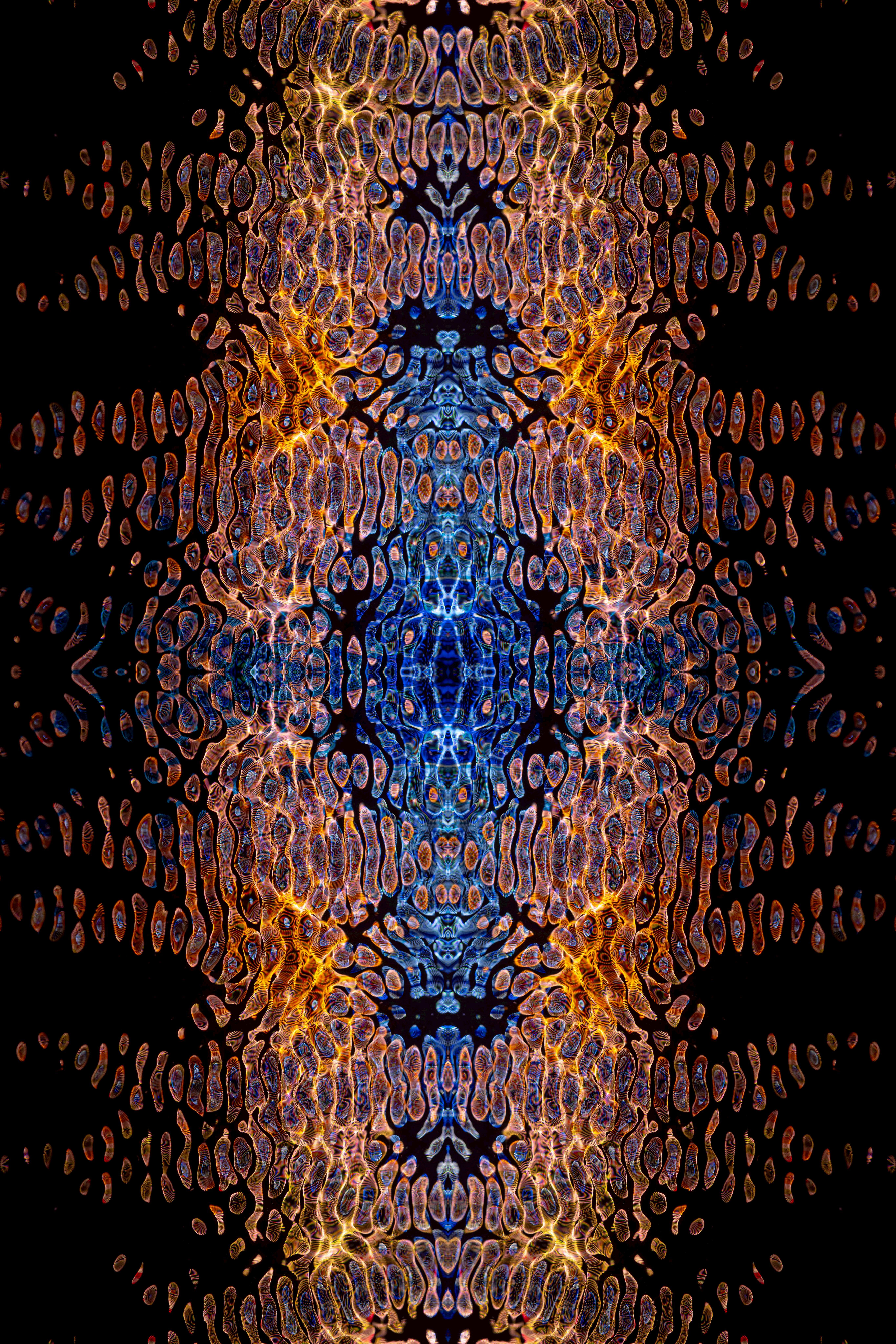 [credit](https://images.pexels.com/photos/10996828/pexels-photo-10996828.jpeg), [licence](https://creativecommons.org/public-domain/) --- ## Why These Techniques Endure: Beyond the Canvas You might be thinking, "These techniques are fascinating, but are they still relevant today?" The answer is a resounding 'yes.' Frottage and decalcomania aren't just historical footnotes; they represent a fundamental shift in what it means to be an artist, moving from a 'master creator' with a perfect vision to a 'curious explorer' who collaborates with the world and with chance. They democratize art, too; the lack of expensive materials enhances their accessibility, removing barriers to entry and truly embodying the spirit of [the art of mark-making: expressive lines and gestures in abstract painting](/finder/page/the-art-of-mark-making:-expressive-lines-and-gestures-in-abstract-painting). 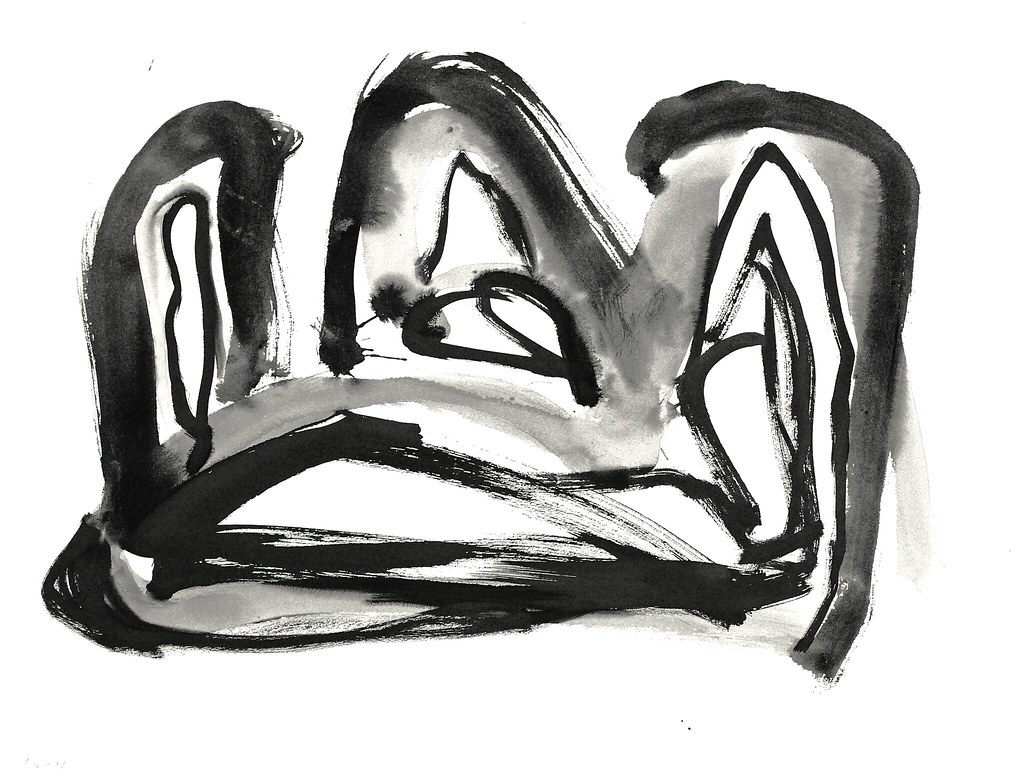 [credit](https://live.staticflickr.com/8106/28584971225_11401ccfde_b.jpg), [licence](https://creativecommons.org/licenses/by/2.0/) These techniques teach you to look, not just *at* things, but *through* them. They train your brain to find patterns and meaning in randomness, which is a crucial skill for any creative person – whether you're painting, writing, designing, or even problem-solving in daily life. Imagine using frottage principles to find unexpected textures and solutions in architecture, perhaps inspiring the facade of a building from a leaf's veins or the wear on an old stone wall. Or consider decalcomania's embrace of chance to spark new story prompts in writing, where a random blot might suggest a character's internal conflict or a fantastical landscape for a novel. They are a direct line to the kind of visual brainstorming that can break you out of a creative rut, allowing unexpected connections to form and challenging rigid thinking. 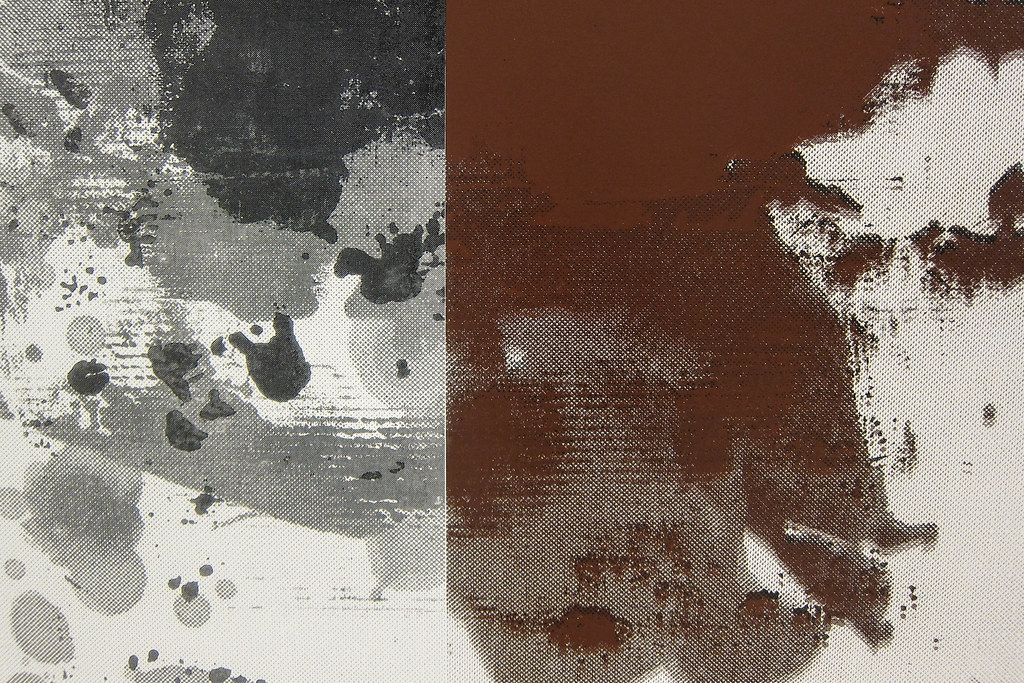 [credit](https://live.staticflickr.com/2880/13401878023_7625a4270b_b.jpg), [licence](https://creativecommons.org/licenses/by/2.0/) Beyond [Surrealism](/finder/page/what-is-surrealism), the spirit of automatism influenced other movements. Think of Jackson Pollock's drip paintings; while not frottage or decalcomania, his method of letting gravity and gesture dictate the paint's flow is deeply rooted in automatist principles, bypassing conscious control for raw expression. Even today, many contemporary [abstract artists](/finder/page/famous-abstract-artists) use chance operations and material-led processes that echo Ernst's pioneering spirit. Digital artists, while unable to replicate the tactile nature directly, can translate these principles. For frottage, high-resolution scans of textures can be used as overlay layers, masks, or custom brushes in software. For decalcomania, generative art algorithms, noise filters, or displacement maps can simulate fluid dynamics and paint separation, creating digital fractal patterns that embody the spirit of controlled chaos. It's a testament to the enduring power of accidental beauty.  [credit](https://images.pexels.com/photos/7457657/pexels-photo-7457657.jpeg), [licence](https://creativecommons.org/public-domain/) While Surrealism often delved into darker, unsettling themes to explore the full spectrum of the subconscious, frottage and decalcomania beautifully showcase its more playful side, reminding us that profound insights can arise from lighthearted experimentation. They invite a subtle form of mindfulness in observation, urging us to pause and truly *see* the world's hidden details. For me, personally, embracing the unexpected is at the very heart of my own artistic process, much like the contemporary, colorful, and often abstract works I create. The philosophy of automatism, of allowing materials and chance to guide the initial impulse, directly informs how I approach my canvas. You can see how this philosophy manifests in the pieces I have [for sale](/buy). I've found that some of my most compelling works began with an 'accident' – a drip, a splatter, or a texture – that pointed me in a completely new direction. It's about letting the materials guide you, rather than forcing your will upon them. It's a lesson that applies far beyond just a canvas; it's a way of approaching life with openness, wonder, and a willingness to see the extraordinary in the ordinary.  [credit](https://www.publicdomainpictures.net/pictures/250000/nahled/messy-colorful-artists-palette.jpg), [licence](https://creativecommons.org/publicdomain/zero/1.0/) [credit](https://www.publicdomainpictures.net/pictures/510000/nahled/image-1684562415SDr.jpg), licence --- ## FAQ: Unlocking Your Subconscious Art To address any lingering questions and solidify your understanding of these fascinating techniques, here are some common queries I hear. Think of this as a rapid-fire Q&A session designed to clear up any final curiosities.  [credit](https://images.pexels.com/photos/1067556/pexels-photo-1067556.jpeg), [licence](https://creativecommons.org/public-domain/) ### What's the fundamental difference between frottage and decalcomania? **Frottage** is a **subtractive** technique where you capture *existing* texture from a surface by rubbing a drawing tool over paper, revealing patterns that were already there. It's about discovery in the external world – uncovering hidden details. **Decalcomania** is an **additive** technique where you *create* texture and patterns through the unpredictable separation of wet paint between two surfaces, conjuring new imagery from internal chance. It's about creation from internal chaos and the sheer thrill of seeing something entirely new emerge. ### Did Max Ernst invent these techniques? Not exactly. He *popularized* and *named* them within the context of fine art, specifically for Surrealist exploration and unlocking the subconscious. People had been doing rubbings for centuries (think of brass rubbings in churches or even early forensic techniques), and decalcomania was used as a printing technique in the 18th century (e.g., for transferring patterns to ceramics). Ernst's genius was seeing their potential as tools for generating artistic ideas and embracing **automatism** – he gave them a philosophical weight and a place in the art world's avant-garde. Oscar Domínguez was also crucial in the initial development and experimentation of decalcomania, particularly in its earliest Surrealist applications. ### Can frottage or decalcomania be used with digital tools? Directly, no, as they fundamentally rely on physical interaction with textures or wet paint. The unique tactile and accidental nature of the physical processes cannot be fully replicated. However, the *principles* can certainly inspire and be creatively translated by digital artists! For frottage, you can photograph or scan physical textures at high resolution and use them as layers, masks, or brushes in [digital art](/finder/page/history-of-digital-art) software. Techniques like scanography can produce frottage-like effects. For decalcomania, digital artists can experiment with procedural generation, noise filters, or custom algorithms that simulate fluid dynamics and paint separation to create fractal-like patterns. Applying displacement maps or distortion effects to digital paint can also yield similar organic, unpredictable outcomes. The spirit of chance and discovery, a core tenet of automatism, can absolutely be translated into digital creation, leading to unexpected digital [abstract expressionism](/finder/page/ultimate-guide-to-abstract-expressionism) or mixed media art outcomes. ### What are some of Max Ernst's most famous works using these techniques? For **frottage**, his iconic "Forest" series (e.g., *Forest and Dove*, *The Forest*) from the mid-1920s transformed wood grain rubbings into dense, mysterious landscapes, often populated by ghostly figures or animals, where the gnarled lines of wood become primordial trees. For **decalcomania**, his "The Entire City" (*La Ville entière*) series (e.g., *La Ville entière (Forest and Dove)*) from the late 1930s saw accidental paint blots evolve into fantastical, decaying urban scenes, sometimes populated by strange bird-headed figures or crumbling structures that defy gravity, all emerging from the chaotic patterns of the paint.  [credit](https://live.staticflickr.com/3743/13401911013_b30b13ff6d_b.jpg), [licence](https://creativecommons.org/licenses/by/2.0/) ### Why were the Surrealists so obsessed with the subconscious? They were heavily influenced by the psychological theories of [Sigmund Freud](/finder/page/sigmund-freud-influence-on-surrealism), particularly his work on dreams and the unconscious mind. Freud's ideas about the repression of primal desires and fears deeply resonated with their disillusionment after World War I, where they felt rationalism had failed humanity. They believed that the rational mind repressed our true, primal desires and fears, and that conscious control often led to conventional, unoriginal art. By using techniques that bypassed rational thought – like automatism, frottage, and decalcomania, or even automatic writing – they hoped to create art that was more honest, raw, and powerful, tapping into universal human experiences and a deeper truth, a rebellion against perceived societal constraints and the failures of rationalism. It was a quest to unleash the primal artist within. ### What kind of paper is best for frottage? For frottage, thin, non-textured papers like newsprint, tracing paper, or lightweight sketching paper (typically 50-70gsm) are ideal. Their delicate nature allows the subtle intricacies of the textured surface beneath to transfer clearly and easily with a drawing tool. Thicker papers tend to obscure finer details. Absorbent papers are also suitable, as they readily pick up the graphite or pastel particles. When in doubt, go thinner; it's always easier to build up subtle texture than to lose it entirely. ### What kind of paint is best for decalcomania? For decalcomania, acrylics and gouache, thinned slightly with water to a fluid consistency, work exceptionally well. Inks and watercolors can also produce beautiful, delicate results. The key is to use paint that is wet enough to spread and separate unpredictably when pressed, but not so watery that it loses its pigment intensity. Oil paints can also be used, but require much longer drying times and may need a medium to ensure proper separation. Experimentation with viscosity is crucial for different effects! I've found that a slightly thicker consistency can sometimes lead to more dramatic, impactful fractal patterns, while very thin paint results in ethereal, almost web-like formations.  [credit](https://images.pexels.com/photos/8025781/pexels-photo-8025781.jpeg), [licence](https://creativecommons.org/public-domain/) --- ## A Final Invitation to Play: Your Portal to Creative Freedom What I love most about frottage and decalcomania is their accessibility and the sheer joy of discovery. You don't need a fancy studio or expensive materials. You just need a crayon, a piece of paper, and a willingness to see the world a little differently – to truly *look* beyond the obvious. These aren't just historical footnotes in [the definitive guide to the history of abstract art](/finder/page/the-definitive-guide-to-the-history-of-abstract-art-key-movements-artists-and-evolution); they are living, breathing invitations to play, offering a direct link to the creative freedom and intuitive expression I explore in my own contemporary, colorful, and often [abstract art](/finder/page/what-is-abstract-art). Go on. Find a weirdly textured manhole cover, a piece of old tree bark, or the cover of a vinyl record. Make a rubbing. Squish some paint between two pages. Let go of the need to make something 'good' and just enjoy the process of discovery. You might be surprised by the strange and beautiful worlds you find waiting for you. It's your personal magic trick, just waiting to be performed. And perhaps, if you share your experiments online, tag them with #MaxErnstInspired or #SubconsciousArt, and inspire others to try, you'll be part of a new wave of subconscious exploration, connecting with the adventurous spirit of Max Ernst and the enduring power of accidental beauty. The world, and your art, will be richer for it.