The Definitive Guide to Art Print Preservation
Protect your cherished art prints for generations. An artist's comprehensive guide to archival framing, environmental control, safe handling, and long-term storage, ensuring their lasting beauty.

Beyond the Frame: The Definitive Guide to Art Print Preservation for Lasting Beauty
I have a confession, and it still stings a little. Early in my career, I splurged on this absolutely stunning giclée print – all vibrant magentas, deep blues, and an energy that just spoke to me. It was a piece by an artist whose work I deeply admired, a real investment in joy. When it arrived, I was so thrilled I carefully unrolled it and, with the best of intentions, leaned it against my studio wall, mentally earmarking 'that weekend' for framing. Sounds innocent, right?
That weekend, of course, turned into three weeks. And the innocent spot I'd chosen for its temporary home just happened to catch a glorious, unfiltered blast of direct morning sun for about an hour each day. When I finally got it to the framer, we both saw it: a faint, ghostly, almost translucent rectangle where the sun had, with cruel efficiency, bleached a sliver of that brilliant magenta. My heart sank. The print, still beautiful, had a permanent scar, a quiet testament to my momentary lapse in care. It felt like I'd betrayed the artwork itself, like I'd dulled a piece of its soul. It's a feeling no art lover should ever experience.
It was a tough lesson, but a profoundly valuable one. This guide isn't just a list of dos and don'ts; it's a deep dive into how I've learned to safeguard prints, distilling years of mistakes and hands-on experience into actionable advice. My goal is to equip you with the knowledge to preserve the original vision and vibrant life of every print you cherish, ensuring its story continues for generations. We often perceive art prints, these accessible windows into an artist's world, as robust. They're on beautiful, thick paper, sometimes with rich, textured inks. But beneath that apparent sturdiness, they are surprisingly vulnerable. They face insidious, often invisible threats – ultraviolet light, fluctuating humidity, airborne pollutants, and even the subtle oils from our fingertips. This vulnerability extends to all your prints, whether they’re limited editions gracing your wall, open editions stacked for a gallery, or awaiting their moment in careful storage. Think of this as the ultimate owner's manual for print longevity; a truly comprehensive distillation of my experience.
This isn't a dry textbook; it’s a candid conversation about how to truly safeguard the art you cherish, ensuring it retains the artist's original vision for decades to come. Let's dive in and make sure your art's story lasts as long as it deserves.
The Relentless Enemies of Your Art Print: A Silent Battle You Need to Win
Before we dive into the defenses, we need to truly understand the adversaries. They’re cunning, they operate slowly, and they are absolutely relentless. Ignoring them is like leaving your door unlocked in a storm and hoping for the best. These are the forces constantly trying to diminish the vibrancy and integrity of your cherished artworks.
Enemy #1: Sunlight (The Stealthy Fader)
Ah, UV light – the absolute arch-nemesis of ink, and the ultimate photobomber. Think of it as a slow, patient, and utterly irreversible bleach. On a molecular level, UV light acts like a relentless chemical scissor, severing the delicate bonds within the pigments. This leads to a phenomenon known as photodegradation, where the color molecules literally break apart, causing those vibrant hues to desaturate, shift, or even disappear entirely. While direct, intense sunlight is the worst offender, even indirect, ambient daylight carries a significant load of UV rays. You won't perceive the change day-to-day, but over months and years, the cumulative damage is often dramatic and, crucially, permanent. It's like watching a vibrant painting slowly drain of its lifeblood.
Different pigment types respond differently. Organic pigments (common in many vibrant, modern inks) can be particularly susceptible, while some inorganic pigments offer more inherent stability. For instance, pigment-based archival inks on acid-free papers (meaning they are free from lignin and other acidic compounds that cause degradation) offer significantly more resilience against UV degradation compared to dye-based inks on lower-quality substrates. What exactly is a substrate? It's simply the surface the artwork is on, usually paper in the case of prints. Acid-free papers are specifically processed to remove lignin – a naturally occurring polymer in wood pulp that breaks down over time, releasing acids that yellow paper and accelerate deterioration. They also maintain a neutral pH and are often buffered (meaning alkaline substances are added) to neutralize any residual acids, creating a stable foundation. Modern archival inkjet prints, often synonymous with high-quality giclée (like those discussed in what is giclee print), leverage sophisticated pigment-based inks combined with acid-free, buffered papers to offer exceptional longevity against fading, but they are not impervious. It's a critical point to remember: nothing is truly immune to prolonged UV exposure. It's a matter of slowing the inevitable, not stopping it entirely. Even light intensity, measured in Lux, plays a role; prolonged exposure to even moderate light levels can cause cumulative damage. This silent fading makes UV radiation one of the most insidious threats to your art.
Enemy #2: Your Own Hands (The Unseen Saboteur)
I get it – that thrill of finally holding your new art! But here’s where we need to be disciplined. Your fingertips carry natural oils (sebum), lotions, and microscopic bits of dirt, all of which are subtly acidic due to fatty acids. Over time, these can leave permanent, greasy smudges, dislodge ink particles, and even accelerate the chemical degradation of the paper itself. Beyond oils, your fingertips can carry microscopic dust or grit which, when rubbed against a print, can cause tiny abrasions, disturbing the ink layer. I've seen prints with faint, ghostly thumbprints that stubbornly refuse to disappear, a sad reminder of an eager owner. It's a classic rookie mistake, one I've made myself more times than I care to admit early on.
The golden rule is simple: minimize handling. When you must touch your prints, ensure your hands are scrupulously clean and completely dry, ideally washed with mild soap and water, avoiding lotions or hand sanitizers immediately beforehand. For ultimate protection, especially for larger or more delicate pieces, wear clean, lint-free cotton gloves. Why lint-free? Because tiny fibers can embed into the print surface, causing further damage. Alternatively, consider nitrile or latex-free gloves for those with sensitivities, or if you're like me and just want to feel extra professional and minimize static cling. Another excellent method is to use a clean sheet of archival mat board or a ruler to gently slide or maneuver the print without direct contact, creating a physical barrier between your skin and the artwork.
Enemy #3: Humidity & Temperature (The Warping Duo)
Paper, at its core, is a natural, organic material – essentially refined cellulose fibers from wood pulp. And like wood, it breathes. It's hygroscopic, meaning it readily absorbs and releases moisture from the surrounding air. Think of paper like a sponge or, better yet, a very thin, very delicate piece of wood. On a humid day, a door might stick; on a dry day, it might shrink. Paper does the same, but with more dramatic visual consequences. When humidity levels are high, paper fibers swell, which can lead to unsightly waving, buckling, or 'cockling' within a frame. Conversely, overly dry conditions can make paper brittle and prone to cracking over time. It’s paper's worst hairstylist; it leaves it frizzy, brittle, or completely flat in all the wrong places. I once saw a beautiful watercolor print become so cockled it looked like a relief sculpture, a painful lesson in environmental control.
Extreme, rapid fluctuations, or persistent localized heat (a phenomenon known as heat bloom if a print is too close to a radiator or strong light source, even behind glass – imagine your print literally baking slowly) are particularly destructive, stressing the paper's structure and accelerating degradation. Imagine a print hung in a steamy bathroom (which is why our guide on how to choose art for a bathroom suggests materials other than fine art paper, like acrylic or metal prints) or directly above a working radiator. To maintain this equilibrium, I've found a simple, inexpensive hygrometer (humidity meter) and thermometer to be invaluable tools, giving you a clear, real-time picture of your environment. You literally can't manage what you don't measure.
The ideal environment for most paper-based artworks, including prints, is a stable climate with relative humidity (RH) between 40-55% and temperatures between 65-70°F (18-21°C). Beyond humidity, airborne pollutants like sulfur dioxide, nitrogen oxides, and ozone – often originating from cooking, cleaning products, or even new furniture off-gassing volatile organic compounds (VOCs) – can also cause chemical degradation, dulling colors and weakening paper over time. Avoiding areas prone to vibration (e.g., near heavy doors or powerful sound systems) is also wise, as constant subtle movement can stress framing components and the artwork over time. This attention to climate is your first, best defense.
Your First Line of Defense: Framing Like You Truly Mean It
Framing isn't merely about aesthetics; it is, without exaggeration, the single most critical step you can take to protect your art print. Think of it as assembling a custom-engineered fortress, specifically designed to fend off the enemies we just discussed. A cheap, off-the-shelf frame is, frankly, like putting your prized possession in a cardboard box and hoping for the best. For those who want the full deep dive, a chat with a professional is invaluable – something like this Q&A with an expert art framer is a fantastic starting point. But here, I’ll lay out my non-negotiables, the components that truly matter.
Here's my breakdown of what to avoid and what to prioritize, and why:
Component  | What it Really Does | Budget Option (Risky, avoid if possible) | Best Practice (Protective, highly recommended) |
|---|---|---|---|
| Glazing (Glass/Acrylic) | This is your print's ultimate sunblock, filtering up to 99% of damaging UV rays. It's a non-negotiable shield against photodegradation and light-induced heat bloom. Museum glass also adds anti-reflection and anti-static properties for unparalleled clarity and less dust attraction, making the artwork truly pop. | Standard Glass (no UV protection) | 99% UV-Protective Acrylic or Glass OR Museum Glass |
| Matting (Passe-partout) | Creates a vital air gap, preventing the print from sticking to the glazing and fostering mold. Crucially, it won't yellow or leach acids onto your art over time, causing "mat burn." "Archival" means it meets specific conservation standards for longevity and chemical stability, ensuring no harmful acids migrate. Mat board typically comes in various thicknesses (e.g., 2-ply, 4-ply, 8-ply), with thicker mats creating a more pronounced visual border and a larger air gap. | No Mat, or Acidic Paper Mat | Acid-Free, Archival Mat Board |
| Backing Board | Cheap backing is a slow poison, full of acids and potentially off-gassing volatile organic compounds (VOCs) that migrate into your print from behind, causing staining and weakening. Acid-free materials, free from lignin and acid-producing chemicals, are stable and chemically inert. | Cardboard or MDF (Wood-based) | Acid-Free Foam Core (or archival corrugated board) |
| Hinging/Mounting | Using the wrong adhesive can cause irreversible damage, staining, or makes future removal impossible without tearing. Archival methods are reversible and safe, designed for conservation. Similarly, using non-archival hardware like rusty staples or clips can also damage the print. | Scotch Tape, Rubber Cement, Dry Mounting | Acid-Free Archival Tape (e.g., Japanese paper hinge) or Corner Pockets |
| Sealing | A fully sealed frame creates a stable micro-climate, protecting against dust, insects, and helping to buffer against minor humidity changes by slowing moisture ingress. | Open back, basic clips/points | Sealed with Framing Tape (dust/pest barrier) |
Beyond the table, let me stress why these details are so critical. UV-Protective Glazing isn't just a luxury; it's a necessity. It’s an invisible barrier, a guardian that drastically slows the silent, relentless fading caused by light. While it's an investment upfront, it's far cheaper than replacing a beloved, faded print or commissioning an artist for a new one (if they even can). The difference between standard UV-protective acrylic and true Museum Glass is primarily in the anti-reflective properties and clarity – museum glass virtually disappears, allowing you to see the art as if there's no glass at all.
The Acid-Free Matting serves a dual purpose: it creates that critical air gap, preventing condensation from settling directly on the print and fostering mold or causing it to stick. And equally important, a truly archival, acid-free mat (sometimes called a passe-partout in Europe) ensures that no harmful acids leach into your artwork, a process that notoriously creates that unsightly brown 'mat burn' along the edges. Understanding 'archival' simply means it's made from materials proven to be stable and non-damaging over extended periods, often centuries – a higher standard than just 'acid-free.' This is where investing in reputable conservation suppliers really pays off. For more in-depth knowledge, consider our guide on how to care for works on paper: a collector's guide.
If you prefer to showcase the entire edge of your print, particularly if it has beautiful deckled edges (the naturally rough, untrimmed edges of handmade paper, often with a subtle, organic texture) or an irregular shape, a float mount is an excellent archival alternative to traditional matting. This method involves affixing the print to a backing board with archival hinges along the top edge, creating a shadow line around the art and making it appear to 'float' within the frame. It still creates the necessary air gap and allows the paper's unique characteristics to be visible.
And please, never underestimate the threat from behind: Acid-Free Backing. The cheap, wood-pulp-based cardboard or MDF found in many off-the-shelf frames is a slow-acting menace. Over years, its inherent acidity and potentially off-gassing volatile organic compounds (VOCs) will migrate directly into your print, staining and weakening the paper from the back. Acid-free foam core is the stable, inert solution you need. Finally, framing provides crucial physical protection, a sturdy shield against accidental bumps, scrapes, or tears that can happen in any lively home or studio. It's the protective embrace your art deserves.
Consider also the type of print you're framing. A limited edition print, often signed and numbered by the artist, may warrant a greater investment in museum-quality archival framing due to its inherent scarcity and potential for increased value. An open edition print (unlimited reproductions) or a less valuable piece still benefits immensely from archival practices, but you might adjust your budget accordingly. In either case, prioritizing acid-free materials and UV protection is always a wise choice. These principles apply equally to contemporary artists' works, regardless of how modern their materials and techniques might be. When framing, think long-term; think of the legacy.
The Right Place: Strategic Hanging and Display
Once your art is beautifully framed, its placement is the next major decision. These rules are straightforward and primarily focus on avoiding those "enemies" we just discussed. I often think of it as finding the piece's ideal micro-climate within your home. After all, what's the point of protecting it if you can't see it clearly and beautifully? This is about integrating preservation into your aesthetic choices.

- DO hang art in rooms with indirect, stable light. North-facing rooms or areas that receive plenty of ambient, diffused light are often perfect. A room with low light can actually be an ideal sanctuary for a delicate print, allowing its colors to reveal themselves subtly over time. This preserves the artist's original intention, rather than letting sunlight rewrite it.
- DON'T hang art directly opposite a bright window or in the path of intense, direct sunlight. Even with UV-protective glass, some UV radiation can still penetrate, and intense light can generate localized heat (leading to heat bloom), stressing the artwork over the very long term. Think of UV glass as SPF 50; it's great, but you wouldn't sunbathe for hours with just that, would you? Over-reliance on protection without careful placement is a recipe for silent damage.
- DON'T hang art in places with high humidity, extreme dryness, significant temperature swings, or constant vibrations. This unequivocally means avoiding the bathroom, directly over a cooking range in the kitchen, above a working radiator, near an actively used fireplace, or on a wall next to a heavy, frequently slammed door. Aim for a relatively stable environment, ideally with relative humidity between 40-55% RH and temperatures between 65-70°F (18-21°C). To monitor this, a small, inexpensive hygrometer and thermometer are incredibly useful. This consistency is about creating a stable micro-environment around your print.
- DO consider supplemental lighting. When curating a display, a guide on how to choose the right lighting for your art can dramatically enhance how you experience the piece. Critically, using LED bulbs is a brilliant choice, as they emit virtually no UV radiation and minimal heat, making them much safer than traditional incandescent or fluorescent options. This is the smart way to illuminate your collection without contributing to its demise.
Out of Sight, But Not Out of Mind: Storing Unframed Prints
What about those precious prints you’ve collected, perhaps from my own collection at /buy or from my gallery in /den-bosch-museum, but aren’t quite ready to hang? Shoving them haphazardly into a drawer or, worse, leaving them permanently in that original shipping tube, is a silent disaster waiting to happen. Proper, archival storage is absolutely paramount. I’ve made this mistake myself, only to struggle with a stubbornly curled print years later, wishing I’d been more careful from day one. It's an agonizing process to flatten a print that's developed severe roll memory.
Handling Unframed Prints Safely
Before you even think about storage, you need to handle unframed prints with the utmost care. It’s like tending to a newborn; gentle, deliberate movements are key. Always:
- Work on a Clean, Flat Surface: Prepare a large, clean, and dry surface – a drafting table, a clean dining table, or a large piece of archival board. Ensure there are no sharp objects, crumbs, or liquids nearby.
- Wear Gloves (Always!): As discussed, clean, lint-free cotton or nitrile gloves are non-negotiable. This prevents transferring oils, dirt, and acids from your skin.
- Minimize Touching the Print Surface: Lift prints by the edges or corners. For larger pieces, gently slide a clean sheet of archival material (like mat board or foam core) underneath to support it entirely.
- Avoid Bending or Creasing: Never fold, roll tightly, or allow the print to bend sharply. Support it fully when moving it.
- Protect from Abrasion: Always place a protective cover (glassine or tissue paper) over the print surface if you need to stack it even temporarily.
Archival Storage Methods
- Keep it Flat, or Roll With Caution: If at all possible, store prints completely flat. This prevents any stress on the paper fibers or ink layers. If you must keep them rolled, roll them loosely with the image side facing out. This puts less strain on the ink layer and makes them easier to unroll later without causing creases. To gently unroll a stubborn print, lay it face down on a clean, flat surface and carefully place archival weights (or clean, heavy books) on the corners for several hours or even days. For very large prints that cannot be stored flat, custom-made archival tubes with a wider diameter can reduce roll memory, but flat storage remains superior.
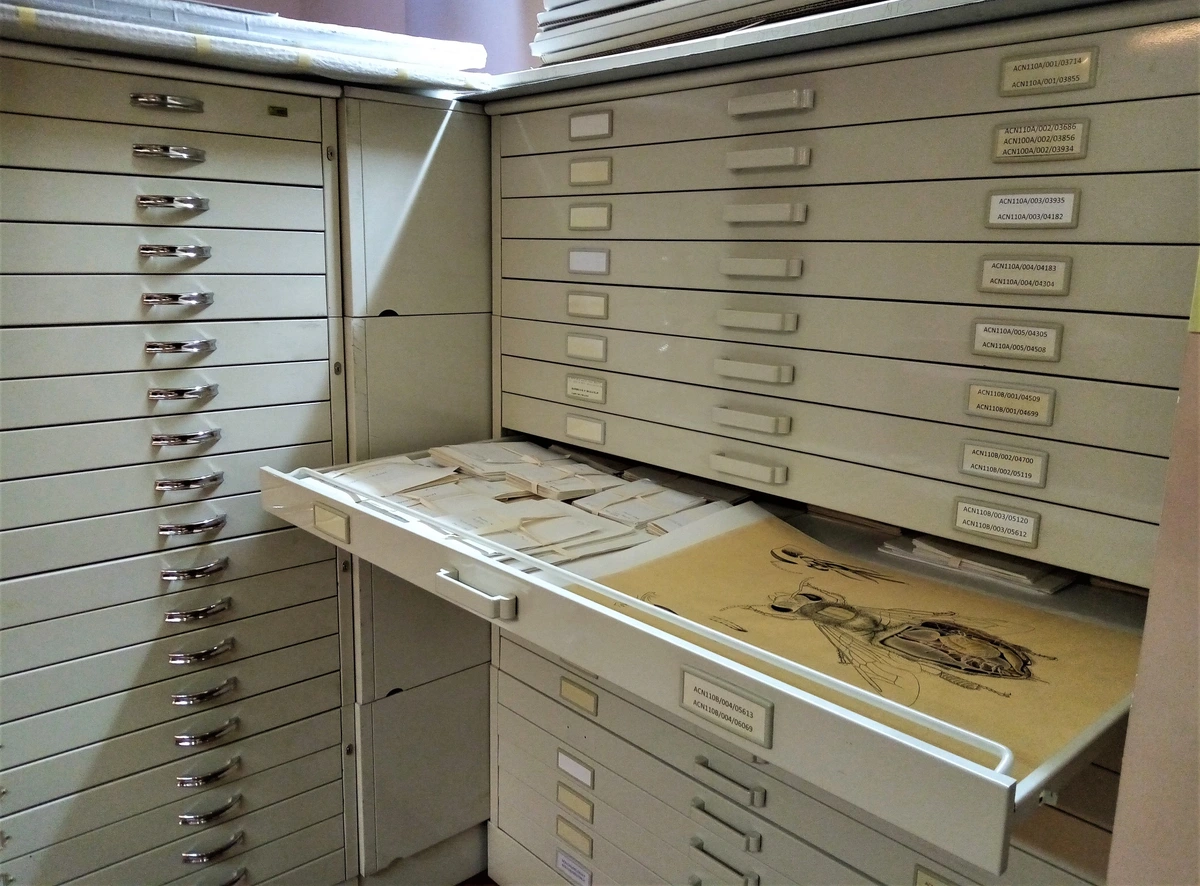
- Acid-Free Environment is Key: Never, ever let the print's surface touch non-archival materials like raw cardboard, untreated wood, or regular paper folders. These materials will leach acids over time, causing discoloration and degradation. The gold standard is to place your print between sheets of acid-free glassine paper (a translucent, smooth, and moisture-resistant paper ideal for interleaving) or acid-free tissue paper (also known as interleaving paper), or within an archival polyester sleeve, then store it inside an acid-free portfolio box or a flat-file cabinet. An "archival portfolio box" is specifically designed with chemically stable, lignin-free, and acid-free materials that won't degrade your art. These often contain alkaline buffers to neutralize any residual acids, offering a truly safe haven. There are some excellent art storage solutions for collectors available that are well worth the investment. For very old or fragile unframed prints, I highly recommend consulting with a professional paper conservator before any handling or storage attempts, as they can provide specialized, safe solutions.
- Cool, Dark, and Dry & Pest Prevention: The ideal storage location mirrors the ideal hanging environment: a climate-controlled closet or a dedicated flat-file cabinet within the main living area of your house. Avoid attics, basements, garages, or external storage units where temperature and humidity fluctuations run wild. These spaces are notorious for fostering mold, pests (like silverfish, cockroaches, or rodents attracted to paper), and rapid paper degradation. Before storing, always check for any signs of pests or mold in the proposed location – a quick clean and inspection can save you heartache. Regular monitoring with a hygrometer and thermometer can also alert you to potential issues before they become critical. For added protection, consider storing prints in sealed archival enclosures to create a micro-environment and deter pests. This vigilance is a small price to pay for peace of mind.
FAQ: Your Burning Questions Answered on Print Preservation
A little knowledge goes a long way in preserving your precious art. Here are some of the most common questions I hear, along with my candid, experience-backed answers. Consider this your rapid-fire troubleshooting guide.
Q: Can I just clean the glass of my framed print with a standard glass cleaner?
A: Proceed with extreme caution – or better yet, avoid it entirely. If your frame uses acrylic (often called Plexiglas), ammonia-based cleaners will permanently cloud and etch its surface – a heart-wrenching mistake I've witnessed too many times. Always use a cleaner specifically designed for acrylic. For real glass, it's safer, but never spray the cleaner directly onto the glass. Instead, spray it onto a soft, lint-free microfiber cloth first, then wipe. This meticulous step prevents any liquid from seeping under the frame's edges and potentially wicking onto the artwork or the mat board, which can cause irreparable damage. It's a small change in habit that saves a lot of potential grief.
Q: How can I dust the print itself if it's not behind glass?
A: My advice? Don't, if you can help it. If you have an unframed print that's accumulated dust, attempting to wipe it with a cloth will almost certainly smudge, scratch, or even lift ink particles from the surface. The safest tool is a specialized, gentle air blower (like the kind photographers use for camera lenses) to delicately puff the dust away without any physical contact. For more stubborn dust, a very soft, clean, natural-bristle brush (like a fine squirrel-hair or goat-hair brush, which should itself be cleaned regularly) can be used with extreme lightness, brushing in one direction only. But honestly, this is a technique best practiced on less valuable items first, or ideally, avoided by framing your prints correctly from the start.
Q: Is it really that bad to leave a print in its shipping tube long-term?
A: Yes, for the long term, it really is. Paper develops a strong 'memory' when kept rolled, often referred to as 'roll memory,' making it incredibly difficult to flatten properly later without risking creases, ripples, or even tears. Beyond that, the typical shipping tube is usually not made from acid-free materials, meaning its internal acidity can slowly migrate and damage the print over time. It’s designed as a temporary transport solution, not a permanent home, much like a moving box for furniture isn't its long-term storage. Get it out of the tube and into archival flat storage as soon as possible, your future self will thank you.
Q: My print has a slight wave or buckle in it. Is it ruined?
A: Not necessarily. If it’s a minor wave or 'cockling' due to humidity fluctuations, a professional framer can often flatten it during the mounting process (using archival methods, of course). However, this is a clear warning sign. It indicates the print needs to be moved to a more stable environment or reframed with proper archival materials and sealing to prevent further moisture ingress. Catch it early, and it's usually fixable. Ignore it, and you're inviting more serious problems.
Q: My giclée print looks a bit dull compared to when I bought it. Is it fading or shifting color?
A: It's possible. While giclée prints generally use pigment-based, archival inks known for their longevity, they are still susceptible to fading, particularly from prolonged UV exposure. Dullness can also be a sign of surface dust accumulation if it's not framed, or even a subtle color shift which occurs when some pigments fade faster than others, altering the overall color balance. If you suspect fading or shifting, first gently clean the surface (if unframed and safe to do so) or the glazing (if framed), and then critically evaluate its placement in relation to light sources. This might be a good time to review your framing and hanging strategy. For more details on these high-quality prints, our guide on what is giclee print might be helpful. A dulled print isn't just an aesthetic loss; it's a loss of the artist's original vibrancy.
Q: Can an art print be restored if it’s already damaged by light or moisture?
A: This is a complex question. Minor damage, such as light cockling, can often be addressed by a professional framer. However, significant fading from UV exposure is generally irreversible because the chemical bonds of the pigments have been permanently altered. Water damage, such as mold or staining, is also incredibly difficult to fully reverse and typically requires a specialized paper conservator. It's important to note that poorly executed restoration attempts can often cause further, irreversible damage. It's crucial to understand the difference between conservation (preventative preservation to slow degradation) and restoration (active repair to return something to a previous state). Restoration can be very expensive and may not achieve perfect results, which is precisely why preventative care is so, so vital.
Q: How about different printmaking techniques – do lithographs, screen prints, or etchings require different care than giclée prints?
A: While the core principles of stable environment and archival framing apply universally, there are nuances based on the materials used. Giclée prints typically use pigment-based inks with high lightfastness on archival paper, making them quite robust. Lithographs, screen prints, and etchings often involve different ink types (some oil-based, some water-based, some shellac-based) and papers, which can have varying sensitivities. For instance, some traditional printmaking inks might be more susceptible to smudging or acidic degradation if not properly matted and protected, especially oil-based inks which can become brittle. Water-based inks can be more prone to mold in high humidity. Always assume archival standards are necessary, and if in doubt about a specific printmaking technique, consult a professional conservator. Our guide on the definitive guide to archival printmaking techniques delves deeper into this. The historical evolution of printmaking, from early woodcuts to modern digital prints, often shows a progression in material stability, making older prints potentially more vulnerable.
Q: How does the care for an acrylic print differ from a paper print?
A: This is a great question about media-specific care! Unlike paper prints, acrylic prints are inherently more resilient to humidity and physical damage. They don't buckle or cockle, and many are designed with UV-resistant inks and acrylic sheets, offering excellent protection against fading without additional glazing. However, they are prone to scratching (especially if not a high-quality, scratch-resistant acrylic) and require different cleaning methods (avoiding ammonia or harsh abrasives). While you don't need to worry about acid-free mats, proper display still means avoiding direct, intense sunlight and extreme temperature fluctuations to prevent the acrylic from warping or the image layer from delaminating over decades. Each medium has its own personality when it comes to preservation! Knowing your medium is half the battle.

Q: How long should I expect archival framing materials to truly last?
A: When sourced from reputable conservation suppliers, properly assembled, and displayed in a stable environment, high-quality archival materials are designed to last for many decades, often exceeding a century. UV-protective glazing, for instance, typically maintains its efficacy for 20-30 years or more, though it's not a 'set it and forget it' solution forever. Acid-free matting and backing should remain stable for 100+ years. The key is consistent monitoring of your framed artwork and addressing any changes promptly. While these materials significantly extend the life of your print, they don't make it immortal. It's a long-term investment, but one that requires ongoing stewardship.
Q: Can I use a humidification/dehumidification system to control the environment for my art?
A: Yes, but with careful consideration. While maintaining stable humidity is crucial, directly placing an artwork near a humidifier or dehumidifier can create localized fluctuations that are more damaging than a generally stable (even if not ideal) environment. If you use such systems, ensure they regulate the entire room consistently and that the artwork is not in the direct path of moisture or dry air discharge. Consistent monitoring with a hygrometer (humidity meter) is essential to avoid over-correction. Think of it as balancing a delicate ecosystem, not just flipping a switch.
Q: How often should I monitor the humidity and temperature in my display or storage areas?
A: Ideally, consistent monitoring is best. I recommend checking your hygrometer and thermometer at least once a week, and more frequently if you live in an area with dramatic seasonal changes, or if you notice any unusual atmospheric shifts. If you're maintaining a stable environment, major swings should be rare, but regular checks help you catch minor issues before they become significant problems. Think of it as a subtle health check for your art, allowing you to intervene proactively.
Q: What should I do if I see mold growing on my print?
A: This is a serious issue that needs immediate, professional attention. Do not attempt to clean mold yourself, as you risk spreading the spores, causing further damage to the print, or even health issues. Carefully isolate the affected print and consult a professional paper conservator immediately. Prevention is key: mold thrives in high humidity and stagnant air, so ensure proper climate control and air circulation in your display and storage areas. This is one battle you don't want to fight alone.
Q: Should I consider insuring my valuable art prints?
A: Absolutely. For valuable prints, especially limited editions from established artists or pieces with sentimental significance, obtaining specialized art insurance is a wise decision. While all the preservation tips in this guide aim to prevent damage, accidents and unforeseen circumstances can still occur. Insurance provides financial protection against loss, theft, or irreparable damage, adding another layer of security to your cherished collection. It’s peace of mind, allowing you to enjoy your art without constant worry.
A Final Thought: The Legacy You Preserve
Caring for your art isn't about being overly paranoid; it's a profound act of respect – for the artwork itself, for the artist who poured their time, talent, and soul into its creation, and ultimately, for yourself and your connection to beauty. It’s a simple, yet powerful, act of preservation. As an artist myself, I often consider the journey my pieces will take, hoping they bring joy for many lifetimes, passing on not just an image, but a piece of sustained wonder. I often muse about the hands that will hold my art decades or even centuries from now, and the stories they'll tell, just as I often reflect on my own artistic journey documented in my /timeline.








The pieces you choose to bring into your life, whether they are prints from my own collection at /buy or works from other artists, become silent witnesses to your story. They enrich your space, spark conversation, and provide daily moments of contemplation. By taking these relatively simple steps – choosing the right frame, finding the perfect spot, and storing unframed pieces thoughtfully – you ensure that the art that brought you joy the day you first encountered it can continue to do so, not just for your lifetime, but potentially for generations to come, truly becoming a part of your legacy. It’s an act of cultural stewardship, connecting past, present, and future through the enduring power of art. Now, go forth and protect your treasures!