How Does Light Damage Your Art? A Comprehensive Guide
Discover the hidden ways light steals color from your paintings, prints, and photographs. Learn protection methods UV damage prevention.

# How Does Light Damage Your Art? A Comprehensive Guide
I remember this one time vividly – proudly hanging a vibrant print in my sunniest room, only to watch it fade from electric blue to muted gray over two years. That visceral sting? It’s a universal pain for any [art lover](/finder/page/an-art-lovers-guide-to-berlin). Light seems harmless, even beneficial (hello, mood lighting!), but it’s slowly, quietly stealing your [art](/finder/page/history-of-art-guide)’s soul. We spend so much time choosing frames and placement, yet often overlook this silent thief. Let’s pull back the curtain on how light damages [art](/finder/page/history-of-art-guide) – because understanding the enemy is your first defense.
[credit](https://images.pexels.com/photos/19615521/pexels-photo-19615521/free-photo-of-woman-in-light-and-shadow.jpeg),
[licence](https://creativecommons.org/public-domain/)
## What Exactly Is Light Damage?
Light damage isn’t a single event – it’s a slow chemical betrayal. When photons (light particles) hit your artwork’s surface, they act like tiny energy hammers, breaking chemical bonds in pigments and materials. Think of it like sunburn for paint: immediate damage might not be obvious, but the cumulative effect is irreversible. This process primarily falls into three categories:
- **Photochemical Damage:** UV rays trigger chemical reactions, bleaching pigments and degrading binders (like the glue holding paint to canvas). This is color loss incarnate.
- **Photothermal Damage:** Longer wavelengths (like infrared) generate heat. This subtle warming warps canvases, softens varnishes, and makes materials brittle over decades.
- **Physical Stress:** The sheer repetition of light particles hitting one spot can physically erode delicate surfaces, especially paper fibers in prints and photographs.
## The Three Culprits: UV, Visible Light, and Heat
Not all light is created equal. The villain behind most damage is **Ultraviolet (UV) radiation**, the high-energy, invisible part of the spectrum we associate with sunburn and fading. It’s nature’s ultimate bleaching agent. **[Visible light](/finder/page/light-exposure-art-conservation)** (the colors we see) also drives photochemical damage, though less intensely than UV. And **Infrared radiation** (heat) is the silent flexer – it doesn’t fade colors directly but accelerates all other damage by making molecules vibrate faster, essentially speeding up the decay process. Natural daylight contains all three, making it the most potent threat, followed by fluorescent bulbs (high UV), then LED/incandescent bulbs (lower UV, but still significant heat and [visible light](/finder/page/light-exposure-art-conservation)).
[credit](https://live.staticflickr.com/3240/3072144985_431f495bcf_b.jpg),
[licence](https://creativecommons.org/licenses/by-nc-sa/2.0/)
### The Art of Lighting: Creating Atmosphere Without Damage
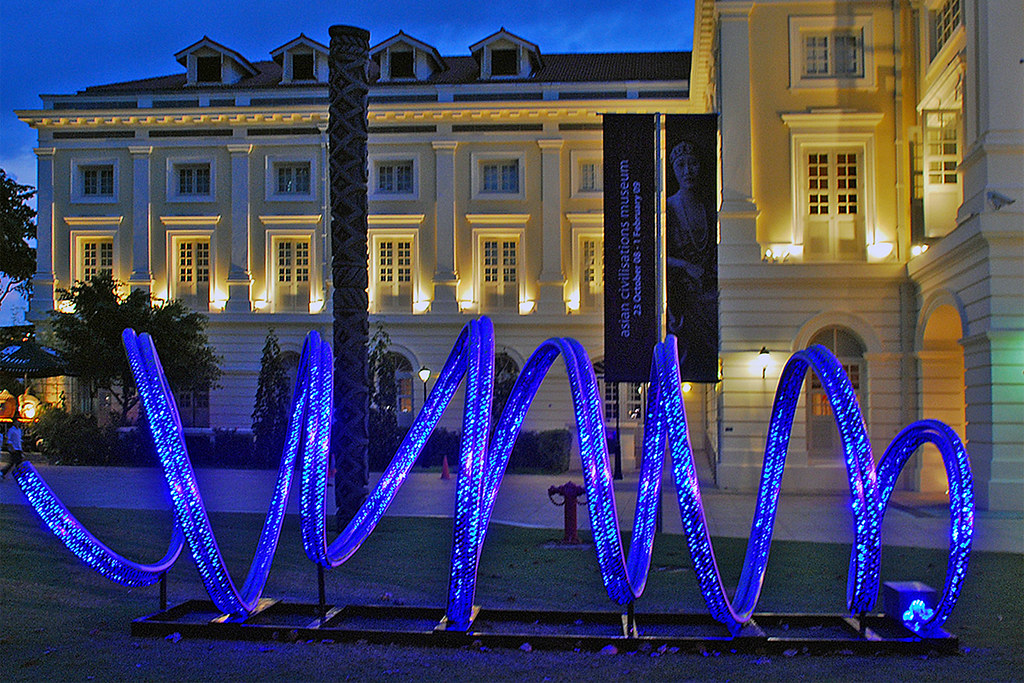
**Light Painting as a Metaphor for Art Protection:**
This light painting image beautifully illustrates how we can create beautiful, intentional light experiences while being mindful of our impact. Just as the artist carefully controlled the light to create this image, we must thoughtfully control the light around our artwork to create the right atmosphere without causing damage.
**Intentional Lighting Design:**
- **Layered Lighting**: Combine ambient, task, and accent lighting
- **Color Temperature**: Choose warm (2700K) to neutral (4000K) temperatures
- **Beam Control**: Use fixtures with precise light direction
- **Dimming Capability**: Allow adjustment based on artwork needs
**Creating Focal Points:**
- **Spotlight Effect**: Direct attention to specific pieces
- **Gradual Illumination**: Create depth with varying light levels
- **Reflection Techniques**: Use indirect lighting for softer effects
- **Dynamic Adjustment**: Change lighting to highlight different aspects
**Museum-Quality Home Lighting:**
- **Track Lighting**: Professional-grade directional control
- **Picture Lights**: Dedicated artwork illumination
- **Recessed Lighting**: Clean, unobtrusive ceiling fixtures
- **LED Technology**: Energy-efficient with minimal heat output
## How Different Art Mediums Feel The Burn
Light doesn’t discriminate, but it hits different materials differently. Knowing your art’s vulnerabilities is crucial:
| Medium | Primary Light Threats | Common Signs of Damage |
|-----------------|---------------------------------------------------------------------------------------|--------------------------------------------------------|
| **Oil Paintings** | UV degrades pigments and organic binders (linseed oil). Heat can soften the [paint layer](/finder/page/how-to-prevent-paint-film-cracking). | Fading (especially reds, yellows), darkening of whites, surface cracking ("crazing") |
| **Watercolors** | UV rapidly fades vibrant hues; water-soluble pigments are highly sensitive. Humidity + light = disaster. | Dramatic color loss, paper becoming brittle and yellowed, flaking pigment |
| **Photographs** | UV breaks silver halide crystals in traditional prints; degrades inks in digital prints. Significant fading, loss of detail, yellowing of paper/fibers. |
| **Paper Prints** | Sunlight bleaches inks and oxides the [paper itself](/finder/page/how-to-care-for-works-on-paper-a-collectors-guide). Acidic papers yellow faster. | Faded colors, stained yellow/ brown borders, paper becoming brittle and dusty. |
| **Works on Paper** | UV fades inks (especially non-archival) and embrittles paper fibers. | Fading lines/colors, brown spots (foxing), fragile edges. |
| **Works Fabric** | UV destroys dye molecules; weakens natural fibers. | Severe color loss, fabric becoming weakened and discolored. |
## The Slow Fade: Seeing Damage Over Time
Light damage is a marathon, not a sprint. The most insidious part? **Cumulative effect**. Each [light exposure](/finder/page/light-exposure-art-conservation) adds up, whether for 5 minutes or 5 hours. That painting in your guest room? It’s slowly fading every time someone opens the curtains. Even low-level light in a "darker" room contributes over years. **Fading** is the most obvious sign, especially in organic pigments like **Prussian blue** or **[alizarin crimson](/finder/page/using-alizarin-crimson-in-painting)**. **Yellowing** plagues whites, papers, and light-colored varnishes as organic materials oxidize. And **embrittlement**? That’s when paper, canvas, or textiles lose flexibility, becoming crackly and prone to tearing, often just from the gentle touch of framing a piece. It’s heartbreaking to touch a beloved print that’s turned to dust.
[credit](https://upload.wikimedia.org/wikipedia/commons/5/52/Camping_long_exposure_light_painting_tent_clicks_%281%29_06.jpg),
[licence](https://creativecommons.org/licenses/by-sa/4.0)
### The Intersection of Art, Science, and Preservation
**Understanding Light as Both Creative and Destructive Force:**
This image represents the fascinating relationship between art and science—much like how light can both create artistic beauty and cause deterioration. The same photons that inspire artists can break down the very materials they work with. This duality makes light one of the most complex and important considerations in [art preservation](/finder/page/how-environmental-factors-affect-art).
[credit](https://images.pexels.com/photos/30652466/pexels-photo-30652466.jpeg?cs=srgb&dl=pexels-amar-30652466.jpg&fm=jpg),
[licence](https://creativecommons.org/public-domain/)
**Scientific Principles Behind Light Damage:**
- **Quantum Mechanics**: How photons interact with molecules at the atomic level
- **Chemical Kinetics**: The rate and progression of degradation reactions
- **Thermodynamics**: How light energy converts to heat and affects materials
- **Material Science**: Understanding how different substrates respond to light
**Advanced Conservation Technologies:**
- **Nanotechnology**: Self-healing coatings and protective barriers
- **Spectroscopy**: Non-invasive analysis of material composition
- **3D Digital Modeling**: Creating perfect digital archives of physical art
- **AI-Powered Analysis**: Machine learning to predict and detect damage patterns
**The Future of Art Preservation:**
- **Smart Materials**: Coatings that respond to environmental changes
- **Biological Solutions**: Using microorganisms for gentle cleaning
- **Photon Management**: Advanced systems to control [light exposure](/finder/page/light-exposure-art-conservation) precisely
- **Virtual Restoration**: Digital restoration techniques that don't alter originals
## Protecting Your Art: Smart Strategies
You don’t need to exile your art to a dark dungeon forever. Thoughtful protection makes a world of difference:
- **UV Filtering is Non-Negotiable:** This is your #1 defense. Standard glass blocks almost *zero* UV. Invest in **museum-quality acrylic** (like Plexiglas) or **specialty glass** (like UF3 or Conservation Clear) that blocks 97-99% of harmful UV rays. Acrylic is lighter and shatter-resistant, but glass is superior at blocking IR (heat). The cost? Insignificant compared to replacing faded art.
- **Control the Light Source:** Orientation matters. Avoid placing artwork directly opposite bright windows. Use **UV-filtering window film** on your glazing. For display, think indirect lighting: track lights, picture lights, or recessed cans aimed at the wall *beside* the artwork, creating gentle reflected illumination. Distance helps – doubling the distance from a light source often cuts exposure by 75%.
- **Rotate Your Collection:** Give your art a break! Rotate pieces in sunnier spots with those in naturally darker areas. Even a "rest" period of 6-12 months significantly slows cumulative damage. I have a small rotation system for my own prints – it keeps the colors vibrant longer and lets me rediscover forgotten pieces.
### **Choosing Framing Matters: The Conservation Approach**
Framing is more than just aesthetics – it's protection:
[credit](http://commons.wikimedia.org/),
[licence](https://creativecommons.org/publicdomain/mark/1.0/)
- **Acid-free mats**: Essential for preventing paper acid migration
- **Conservation backing boards**: Provide structural support and chemical stability
- **Spacers/rabbets**: Create air gaps between artwork and glazing
- **Hinging systems**: Use reversible techniques like photo corners or Japanese paper hinges
**Critical:** Never let artwork touch glass directly. Moisture gets trapped, promoting mold and chemical reactions that can permanently damage both the art and its frame.
### **Climate Control: The Environmental Defense**
Temperature and humidity stability are crucial:
| **Environmental Factor** | **Ideal Range** | **Danger Zone** | **Effects of Fluctuation** |
|-------------------------|----------------|----------------|---------------------------|
| **Temperature** | 18-22°C (65-72°F) | Above 25°C (77°F) | Accelerated chemical reactions, material stress |
| **Relative Humidity** | 45-55% | Above 60% or below 30% | Mold growth, cracking, warping |
| **Daily Fluctuation** | <2°C / <5% | >5°C / >10% | Material fatigue, structural damage |
[credit](https://upload.wikimedia.org/wikipedia/commons/9/9e/WLA_metmuseum_Water_Lilies_by_Claude_Monet.jpg),
[licence](https://creativecommons.org/licenses/by-sa/2.5)
**Heat sources to avoid:** Radiators, fireplaces, space heaters, and even powerful electronics that generate significant heat. Keep artwork at least 3 feet away from these sources.
## Digital Art & Prints: Not Immune!
Don’t think your modern print on [archival paper](/finder/page/the-definitive-guide-to-archival-printmaking-techniques-understanding-gicle-lithography-and-more) is immune! Faded ink is faded ink, regardless of the medium. While pigment inks and high-quality canvases offer better resistance than cheap photo paper, **UV light is the great equalizer**. [Digital art](/finder/page/history-of-digital-art) displayed on screens? Different story – screen burn-in is an issue, but light fading isn’t relevant. However, *prints* of [digital art](/finder/page/history-of-digital-art) suffer the same fate as any other artwork on paper. Archival pigment inks are better, but they can still fade over time under strong light. Treat them with the same care as an original watercolor.
## What About NFTs? (And other digital "solutions")
Here’s where reality meets hype. The idea that an NFT is a "permanent" record of an artwork ignores the very real physical degradation of the artifact it represents. A token on a blockchain doesn’t stop your physical painting from fading on the wall. In fact, it can even encourage risky behavior – like displaying high-value originals under bright lights for digital "preview" photos. Blockchain tech has legitimate uses for provenance, but it offers **zero protection** against light damage to the actual object. Don’t let the digital promise of immortality make you careless with the tangible masterpiece in your hands.
[credit](https://images.pexels.com/photos/10996828/pexels-photo-10996828.jpeg),
[licence](https://creativecommons.org/public-domain/)
## FAQ: Light Damage Demystified
### Isn’t All Natural Light Bad for Art?
Not all! **Diffuse, indirect daylight** is less damaging than direct, unfiltered sun hitting a canvas head-on. The problem comes from intensity and duration. Bright afternoon sun streaming onto a painting for hours? Very bad. A piece receiving [ambient light](/finder/page/how-to-choose-art-for-a-room-with-low-light) for part of the day? Manageable with UV filtering and rotation.
### How Long Does It Take for Light to Damage Art?
This is the tricky part. Under unfiltered direct sun, noticeable fading can occur in **weeks or months**. In typical home lighting with UV protection, it might take **5-20 years** to become significantly apparent. But remember, the damage starts the moment it’s exposed. It’s a slow, relentless process, and by the time you see it, it’s often too late to reverse. Prevention is the only cure.
### Do Darker Colors Fade Faster?
Often, yes! Lighter colors (yellows, blues, reds) frequently contain highly sensitive organic pigments that fade rapidly. Darker colors (like certain blacks, browns, deep purples) might seem fade-resistant because they absorb more light, converting more energy to *heat* (exacerbating photothermal damage). But no pigment is entirely immune. Even resilient mineral pigments (like some iron oxides) can subtly shift over decades.
### Is LED Lighting Safer Than Fluorescent? Incandescent?
Generally, **LEDs are the safest choice** for display. High-quality LEDs emit very little UV radiation and minimal heat compared to fluorescents (high UV) and incandescents (significant IR/heat). However, *always* check specs – some cheap LEDs can still emit problematic blue light (a high-energy part of visible spectrum contributing to fading). Look for LEDs rated with low blue light output. Avoid fluorescent lights unless they are specifically marketed as museum-quality, UV-filtered tubes (many aren't!).
### What About Picture Lights? Are They Safe?
Picture lights can be safe if chosen carefully:
| **Picture Light Type** | **UV Output** | **Heat Generation** | **Best For** |
|------------------------|---------------|-------------------|-------------|
| **LED Picture Lights** | None | Low | Most artworks |
| **Halogen** | None | High | Only for short-term display |
| **Fluorescent** | Moderate | Medium | Avoid for sensitive pieces |
| **Incandescent** | None | High | Risky for delicate art |
[credit](https://commons.wikimedia.org/wiki/File:Painter_David_Brewster_creating_work_for_the_Art_of_Action_project.jpg),
[licence](https://creativecommons.org/licenses/by/1.0)
**Distance Matters**: Keep picture lights at least 12-18 inches from the artwork surface. The closer they are, the higher the light intensity and heat exposure.
### What If I Already Have Faded Art? Can It Be Restored?
Once pigment molecules are broken down, they can’t be chemically restored to their original state. Professional conservation focuses on **stabilizing** the artwork to prevent further damage (cleaning, repairing tears, applying protective, removable varnishes) and sometimes **toning** to visually compensate for color loss. Prevention is infinitely better, cheaper, and less stressful than restoration.
## The Final Thought: Light, Storytelling, and Legacy
Art carries stories – yours, the artist’s, history’s. Light damage is the story of neglect weaved into that piece. Every pigment lost, every delicate paper softened by heat, is a chapter we didn’t intend to write. Protecting your art isn’t just about preserving color; it’s about preserving the intention, the emotion, the moment captured. It’s about ensuring that decades from now, someone else can stand before it and feel the same shock of beauty that did. Light is fundamental to how we experience art, but it demands respect. By understanding its power and acting wisely, we become not just collectors, but true stewards – guardians of the light within the [art itself](/finder/page/how-to-choose-art-for-a-scandinavian-style-home). Your future self, and the art itself, will thank you. Now go check that sunny window placement! Seriously. Do it now.
[credit](https://www.flickr.com/photos/gandalfsgallery/53660010389),
[licence](https://creativecommons.org/licenses/by-nc-sa/2.0/)
[Explore artist stories](/timeline) for inspiration on protecting creative heritage. Or [browse protected prints](/buy) designed to withstand the years.
## Further Reading & Resources
### Recommended Books
- **"The Conservation of Paintings" by Harriet K. Stratis**: Comprehensive guide to painting conservation
- **"Light and the Artist" by Roy S. Bernhardt**: Scientific approach to light effects on art
- **"Caring for Your Art: A Guide for Artists, Collectors, and Galleries" by Jill Snyder**: Practical preservation advice
- **"Museum Conservation and Restoration" by Garry Thomson**: The authoritative reference for museum professionals
- **"Archival Methods for Photographs" by James M. Reilly**: Essential guide for photographic preservation
- **"The Chemistry of [Art Conservation](/finder/page/definitive-guide-to-art-conservation)" by Richard Wolbers**: Scientific approach to conservation chemistry
- **"Preventive Conservation in Museums" by Sharon Macdonald**: Comprehensive guide to preventive care
### Professional Organizations
- **American Institute for Conservation (AIC)**: Directory of conservators and conservation standards
- **International Institute for Conservation (IIC)**: Global conservation research and education
- **Getty Conservation Institute**: Advanced conservation research and resources
- **International Council of Museums (ICOM)**: Professional standards and ethics for museums
- **Canadian Conservation Institute**: Government conservation research and services
- **Institute of Conservation (ICON)**: UK-based conservation professional organization
- **Association of North American Graduate Programs in Conservation (ANAGPIC)**: Training and education standards
### Monitoring Tools
- **UV Light Meters**: Quantify UV exposure levels in your display spaces
- **Lux Meters**: Measure overall light intensity
- **Data Loggers**: Track temperature and humidity fluctuations over time
- **Spectrophotometers**: Measure color changes over time
- **Environmental Sensors**: Monitor air quality and pollutants
- **Thermal Imaging Cameras**: Identify heat sources and distribution
- **Digital Documentation Systems**: Track condition changes photographically
### Online Resources and Databases
**Conservation Information Portals:**
- **Conservation Wiki**: Collaborative conservation knowledge base
- **Getty Conservation Institute Online Resources**: Research publications and guidelines
- **AIC Wiki**: Conservation treatment and material information
- **Cultural Heritage Imaging**: Technical documentation resources
**Educational Platforms:**
- **MOOC Conservation Courses**: Online courses from major institutions
- **YouTube Conservation Channels**: Professional demonstrations and tutorials
- **Webinar Series**: Live and recorded conservation presentations
- **Conservation Podcasts**: Audio discussions with experts
### Professional Services Directory
**Conservation Services:**
- **Painting Conservation**: Specialized treatment for canvas and panel paintings
- **Paper Conservation**: Works on paper, prints, and drawings
- **Frame Conservation**: Historic and contemporary frame restoration
- **Textile Conservation**: Tapestries, flags, and fabric art
- **Objects Conservation**: Sculpture, installations, and mixed media
- **Digital Conservation**: Digital preservation and restoration
**Consulting and Assessment:**
- **Collection Surveys**: Comprehensive condition assessments
- **Environmental Consulting**: Climate control system design
- **Storage Planning**: Optimal storage solutions for collections
- **Emergency Response**: Disaster planning and recovery
- **Insurance Appraisals**: Professional valuation for insurance purposes
### Quick Reference Chart
| **Art Type** | **Max Lux Level** | **UV Limit** | **Rotation Frequency** |
|--------------|------------------|--------------|------------------------|
| **Watercolors** | <150 lux | <5 µW/lm | Every 3 months |
| **Oil Paintings** | <200 lux | <10 µW/lm | Every 6 months |
| **Photographs** | <150 lux | <5 µW/lm | Every 4 months |
| **Paper Art** | <100 lux | <3 µW/lm | Every 3 months |
| **Digital Prints** | <200 lux | <10 µW/lm | Every 6 months |
| **Textile Art** | <50 lux | <2 µW/lm | Every 2 months |
| **Three-Dimensional Art** | <300 lux | <15 µW/lm | Every 12 months |
[credit](https://live.staticflickr.com/1714/26211939951_5664f4815a_b.jpg),
[licence](https://creativecommons.org/licenses/by/2.0/)
*Note: Lux measures visible light intensity; µW/lm measures UV radiation relative to visible light*
### Advanced Protection Guidelines
**Lighting Standards by Environment:**
| **Environment Type** | **Maximum Lux** | **UV Protection Required** | **Additional Considerations** |
|----------------------|----------------|---------------------------|-------------------------------|
| **Museum Galleries** | 50-150 lux | 99% | Controlled viewing times |
| **Private Homes** | 150-300 lux | 95-99% | Rotation systems recommended |
| **Office Display** | 200-400 lux | 95% | Limited daily exposure |
| **Retail Spaces** | 300-500 lux | 99% | High-traffic areas |
| **Commercial Galleries** | 200-400 lux | 99% | Professional installation |
| **Outdoor Display** | Variable | 99% + Weather Protection | Seasonal rotation essential |
**Seasonal Lighting Adjustments:**
| **Season** | **Recommended Lux** | **UV Protection Level** | **Rotation Frequency** |
|------------|-------------------|------------------------|------------------------|
| **Spring** | 150-250 lux | 98% | Standard rotation |
| **Summer** | 100-200 lux | 99% | Increased rotation |
| **Autumn** | 150-250 lux | 98% | Standard rotation |
| **Winter** | 200-300 lux | 98% | Standard rotation |
## Glossary of Terms
- **Lightfastness**: Resistance of a pigment to fading when exposed to light
- **Photochemical Damage**: Chemical reactions triggered by light energy
- **Photothermal Damage**: Damage caused by heat generated by light absorption
- **Cumulative Effect**: Progressive damage that builds up with repeated exposure
- **Archival Quality**: Materials designed for long-term preservation
- **Conservation Framing**: Framing techniques that protect and preserve artwork
- **UV Filtering**: Materials that block ultraviolet radiation
- **Microenvironment**: Controlled conditions around an artwork
### Advanced Technical Terms
- **Blue Wool Scale**: Industry standard for testing lightfastness (1-8 scale)
- **ISO 105-B02**: International standard for textile lightfastness testing
- **ANSI IT9.2**: Standard for the stability of color photographs
- **FADGI**: Federal Agencies Digital Guidelines Initiative
- **Color Rendering Index**: Measures how accurately light colors appear
- **Color Temperature**: Measured in Kelvin, affects perceived color
- **Spectral Power Distribution**: The intensity of light at different wavelengths
- **Photo-oxidation**: Chemical breakdown caused by light and oxygen
- **Radical Scavengers**: Chemical compounds that prevent free radical damage
- **Antioxidants**: Substances that prevent oxidation reactions
### Conservation Treatment Terms
- **Reversible Treatment**: Conservation work that can be undone without damage
- **Intervention**: Any action taken to modify or treat an artwork
- **Retouching**: Adding color to compensate for loss or damage
- **In-painting**: Localized restoration of missing areas
- **Varnish Removal**: Taking off old or discolored surface coatings
- **Consolidation**: Strengthening fragile or flaking materials
- **Deacidification**: Removing acids from paper to prevent deterioration
- **Lamination**: Applying protective layers to fragile materials
- **Encapsulation**: Sealing artwork between protective sheets
- **Mounting**: Securing artwork for display or storage