Encaustic Painting: A Definitive Guide to Wax Art & Its Secrets
Dive into the luminous world of encaustic painting. Explore its ancient history, essential tools, diverse techniques, and why this mesmerizing wax art continues to captivate artists today.

# What is Encaustic Painting? The Ancient Art of Painting with Fire and Wax
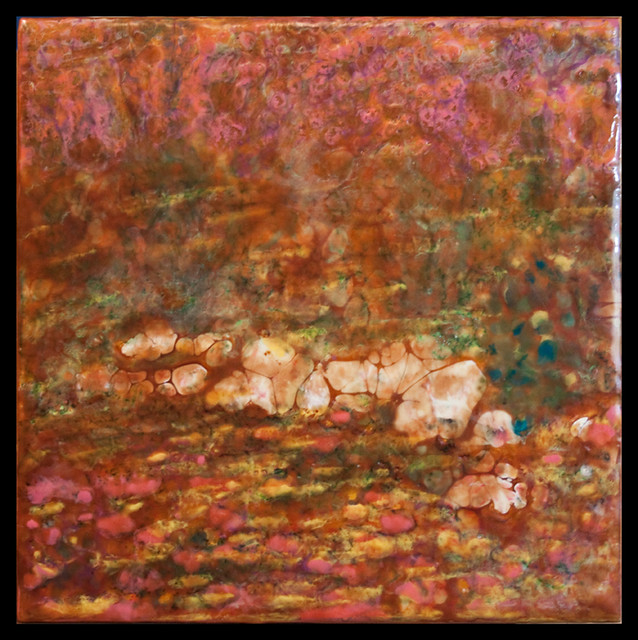
Have you ever been stopped in your tracks by an artwork that seems to glow from within? I have. It was a textured, [abstract piece](/finder/page/case-study-transforming-a-small-dark-hallway-with-a-vibrant-abstract-piece), and the light seemed to dance across its surface in a way I'd never seen. I later learned its secret: it wasn't oil or acrylic. It was **[encaustic painting](/finder/page/the-history-of-encaustic-painting)**, an ancient, almost mystical process of [painting](/finder/page/what-is-action-painting) with heated wax. The word ‘encaustic’ comes from the [Greek](/finder/page/famous-greek-sculptures) *enkaustikos*, which means “to heat or burn in.” This isn't just a technique; it's a process rooted in the transformative power of fire itself. It's about taking the humblest of materials—wax, resin, and earth—and turning them into something luminous, durable, and deeply personal with little more than heat and your own two hands. My own journey into this [art form](/finder/page/what-is-mosaic-art) began with that single, mesmerizing encounter. The surface had this incredible, almost sculptural quality. It felt alive, with a depth that invited you to look closer, to fall into its warm, slightly foggy dream.
I've since spent countless hours exploring this medium, and what strikes me most is how it connects you to a lineage of artisans from millennia past, while offering a vibrant, textural language for expressing modern ideas. It's a medium that rewards patience and a willingness to learn from the material itself, as each layer responds to the one beneath it, creating a dialogue of heat, time, and color. Think about it: how often do you get to work with a material that is both a liquid and a solid, a paint and a sculpture, an ancient tradition and a modern experiment? That's the magic of encaustic.
Have you ever been stopped in your tracks by an artwork that seems to glow from within, its surface holding light in a way that feels almost alive? I remember the first time it happened to me, standing in a small gallery. It was a textured, [abstract piece](/finder/page/case-study-transforming-a-small-dark-hallway-with-a-vibrant-abstract-piece), where light seemed to dance and pool in ways I’d never seen in an oil or [acrylic painting](/finder/page/how-to-varnish-an-acrylic-painting). The color had a saturation and clarity that was simply different—not sitting on the surface, but emanating from within. I later learned its secret: **[encaustic painting](/finder/page/the-history-of-encaustic-painting)**, an ancient and almost mystical process of [painting](/finder/page/what-is-action-painting) with fire and wax.
The word ‘encaustic’ comes from the [Greek](/finder/page/famous-greek-sculptures) *enkaustikos*, which means “to heat or burn in.” It’s a word that pulls no punches. This isn't just a technique; it's a process rooted in the transformative power of heat itself. Imagine taking the most humble of materials—wax from bees, resin from trees, pigments from the earth—and using little more than a flame and your own two hands to turn them into something luminous, durable, and deeply personal. It’s painting, but it’s also a form of alchemy, a collaboration with fire. There’s something deeply satisfying about that, a connection to a very old way of making.
[credit](https://images.pexels.com/photos/7218533/pexels-photo-7218533.jpeg),
[licence](https://creativecommons.org/public-domain/)
My own journey into this [art form](/finder/page/what-is-mosaic-art) began with that single, mesmerizing encounter. The surface had this incredible, almost sculptural quality. It felt alive, with a depth that invited you to look closer, to fall into its warm, slightly foggy dream. This wasn’t an image you just saw; it was a surface you almost felt with your eyes. That initial pull, that whisper to come closer, is what led me down a fascinating rabbit hole, uncovering a history that stretches back thousands of years and a versatility that continues to captivate contemporary artists today. It's this rich blend of ancient history and modern possibility that makes encaustic such a compelling medium to explore. It connects you to a lineage of artisans from millennia past, while offering a vibrant, textural language for expressing modern ideas. It's a medium that rewards patience and a willingness to learn from the material itself, as each layer responds to the one beneath it, creating a dialogue of heat, time, and color.
At its most basic level, encaustic is a beeswax-based paint that's kept molten on a heated palette. What sets it apart is its transformative journey from a liquid, workable state to a solid, durable object. This process creates a unique kind of luminosity because light penetrates the transparent layers of wax and reflects back, creating a depth that feels almost three-dimensional. It’s this inner glow that has fascinated artists for millennia and continues to draw people in today.
## A Quick Definition for Beginners: Painting with Light
For those who just want a simple answer: **[encaustic painting](/finder/page/the-history-of-encaustic-painting) is the art of using heated beeswax mixed with pigments and resin to create durable, luminous artworks.** The key element, the one that defines the entire process, is heat. It’s the fire that melts the wax for application, and it’s the heat that fuses each new layer to the one before it, welding them into a solid, archival, singular surface. It's a method that lives somewhere between painting and sculpture, a discipline of layering light as much as color. Think of it like welding with materials you can find in nature—you're not just gluing layers together, you're melting them into a single, unified whole.
## The Fundamental Principles: It’s All About the Chemistry
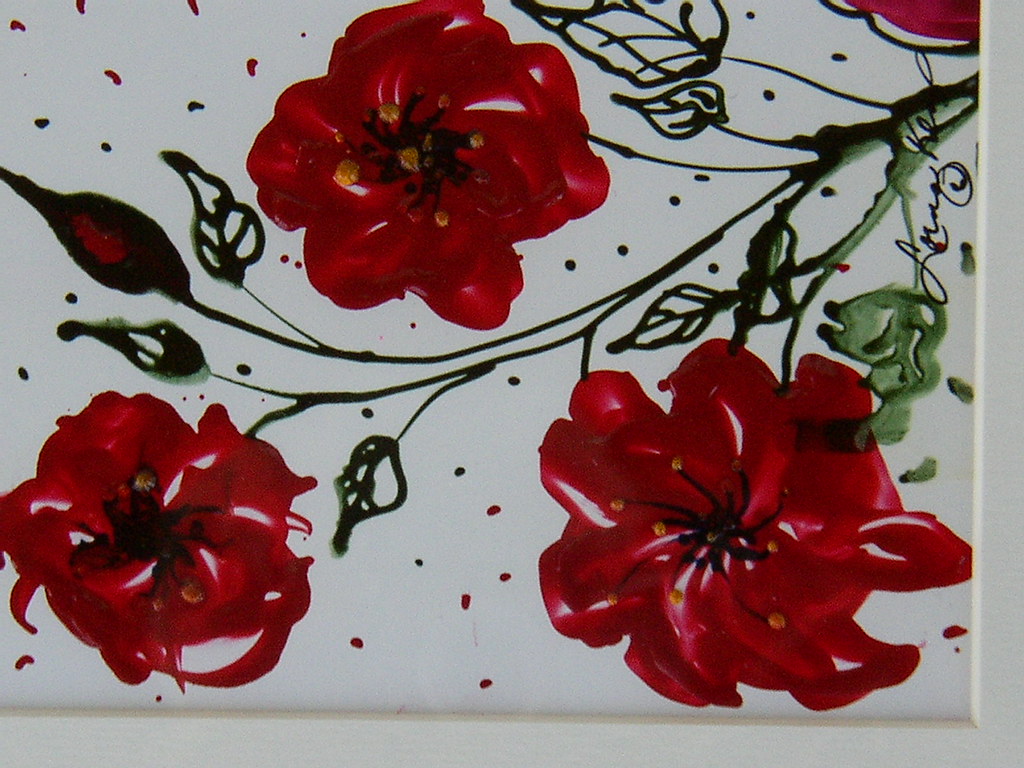
Have you ever worked with a material that feels like it has a memory? That's encaustic. It's not just a process; it's a constant negotiation with a substance that changes state right under your brush. At its heart, **[encaustic painting](/finder/page/the-history-of-encaustic-painting)** is the art of using molten beeswax, usually mixed with natural tree resin (like damar) for hardness and stability, and pigments for color. The magic isn't in the heat itself, but in the cooling. Unlike watercolors that soak into paper or oils that dry by oxidation, encaustic physically solidifies as it cools. You apply a molten stroke, and within seconds it's a solid shell. This is what gives encaustic its characteristic depth—you're quite literally looking through dozens of translucent layers of history. I often think of it as the slowest-drying medium in the world, but only because you have the power to re-melt it at any moment. It's a dialogue between liquid and solid that you control.
[credit](https://live.staticflickr.com/5302/5601488526_fec5209393_b.jpg),
[licence](https://creativecommons.org/licenses/by-nc-nd/2.0/)
## So, What Exactly *Is* Encaustic Painting, Anyway?
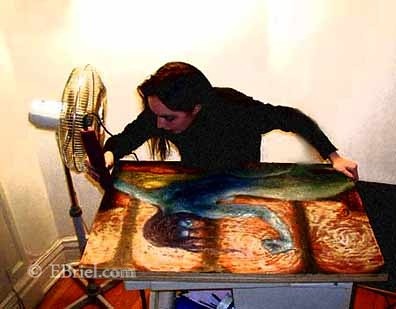
The magic of encaustic lies in its simplicity. You take beeswax, you melt it, you mix in colors, and you paint. But that simple process unlocks a world of depth. Unlike watercolors that soak into paper or oils that dry by oxidation, encaustic physically solidifies as it cools. This happens almost instantly. You apply a molten stroke, and within seconds it's a solid shell. Then, you pass a heat source over it, and for a brief moment, that shell liquefies again, bonding molecularly with the next layer you apply. You're building a physical history, one thin, solidified film at a time. This is what gives encaustic its characteristic depth—you're quite literally looking through dozens of translucent layers of history. Imagine being able to peel back the layers of an [oil painting](/finder/page/what-is-oil-painting) without destroying it; in encaustic, you can do just that with heat, scraping back through time to reveal a color or shape you thought was lost forever.
[credit](https://live.staticflickr.com/222/479422964_34147de0a5_w.jpg),
[licence](https://creativecommons.org/licenses/by-nc-nd/2.0/)
### The Core Ingredients: A Closer Look at the Chemistry
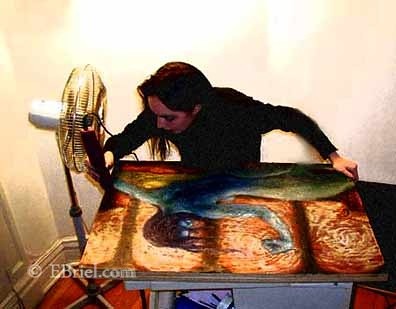
So, what goes into this magical concoction? The triumvirate of encaustic are simple, yet powerful. Getting to know each one intimately is the first step in mastering the medium. I often think of them as partners in a chemical dance, each one bringing a crucial element to create something stable and beautiful. It’s a bit like cooking; the quality of your ingredients directly affects the final dish. If you get the balance wrong, your painting might be too soft and get damaged easily, or so hard it becomes brittle. I learned this the hard way with an early piece that cracked because I was too heavy-handed with the resin. Understanding the role of each component isn't just academic; it's the foundation of a painting that will last for centuries.
[credit](https://live.staticflickr.com/222/479422964_34147de0a5_w.jpg),
[licence](https://creativecommons.org/licenses/by-nc-nd/2.0/)
#### Beeswax: The Soul of the Medium
This is the soul of encaustic. Pure, filtered beeswax forms the bulk of the medium, offering its characteristic translucence and that wonderful, honeyed aroma. I've always found the subtle scent of warm beeswax incredibly grounding while I work. For best results, look for refined, clean beeswax to ensure a pure base for your paints. You can find it in pellets or blocks; pellets are often easier to measure and melt down.
There's a whole world within the world of beeswax. The quality matters immensely. Cheap, unrefined wax can contain impurities that cloud the medium and affect its stability over time. Look for sources that sell "bleached" or "white" refined beeswax, as the natural yellow hue can slightly tint your colors. Some artists swear by capping wax, which is the purest form, while others prefer the subtle warmth of a lightly filtered wax. The choice between white and yellow often comes down to the color palette you're aiming for—white for brilliant, clear colors, and yellow for warmer, more antique-looking tones.
[credit](https://upload.wikimedia.org/wikipedia/commons/5/58/Mummy_portrait_of_an_elderly_man_from_Egypt_-_Stuttgart_LMW_AS_7.3_%2802%29.jpg),
[licence](https://creativecommons.org/licenses/by-sa/4.0)
#### Damar Resin: The Unsung Hero of Durability
Now, plain beeswax can be a bit soft and prone to scratching. That would be like trying to build a sculpture out of modeling clay and expecting it to hold a fine edge—it just won't. That's where damar resin, a natural tree sap harvested in Indonesia and India, comes in. Adding damar crystals to the [molten wax](/finder/page/exploring-encaustic-wax-my-journey-with-ancient-mediums-in-abstract-art) increases its melting point, makes it harder, more durable, and gives it a beautiful, almost jewel-like transparency. It also prevents the wax from cracking as it cools and ages, which is its most crucial job. It’s like the backbone of the medium, giving it structure. A typical ratio is about one part damar resin to six or eight parts beeswax by volume. For a beginner, a 1:8 ratio is a safe and forgiving starting point. Be warned, melting damar resin releases a distinct, pine-like aroma that requires [good ventilation](/finder/page/how-to-set-up-good-ventilation-in-your-art-studio). It’s the smell of structure being born, but it’s a potent fume you don’t want to inhale for long.
#### Pigments: Bringing Wax to Life
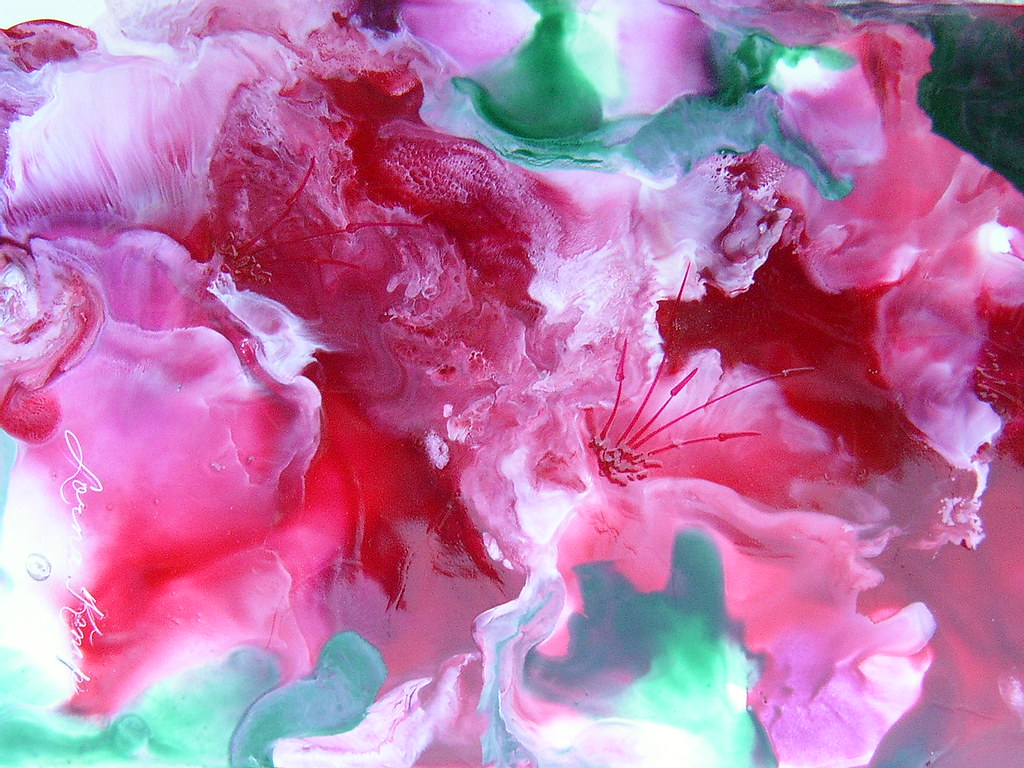
These are the colors that bring the wax to life. Artists can add dry powdered pigments directly to the molten medium, or use commercially prepared encaustic paints, which are a huge time-saver. The choice of pigment can dramatically change the feel of a piece. Earth pigments like ochres, umbers, and siennas feel incredibly authentic in encaustic, as if the medium was made for them. Modern synthetic organic pigments, on the other hand, can deliver a vibrancy that the ancients could only dream of. I avoid using [oil paints](/finder/page/best-oil-paints-for-beginners) for mixing directly into the medium. The oils can interfere with the wax's archival stability over decades, and that's a risk I'm not willing to take. Using pure powdered pigments, or buying pre-made encaustic paints from a reputable brand, is the best way to ensure your work lasts. The absolute key is to use lightfast pigments that will stand the test of time. In my experience, a little bit of pigment goes a long way, and it's easy to add too much, which can make your medium gritty or opaque. Start with a small amount and add more until you achieve the tinting strength you desire.
[credit](https://live.staticflickr.com/5142/5601488334_423d21b706_b.jpg),
[licence](https://creativecommons.org/licenses/by-nc-nd/2.0/)
## A Whisper from the Past: Encaustic's Ancient Roots
It's wild to think that this [art form](/finder/page/what-is-mosaic-art) isn't some fleeting modern trend, but something that has quietly, persistently, been around for thousands of years. The word 'ancient' really isn't an exaggeration here. [Encaustic painting](/finder/page/the-history-of-encaustic-painting) dates back to the **ancient Greeks**, who used it to paint ships and sculptures, protecting them from the salty sea air with its incredibly durable, waterproof finish. The Greeks reportedly used a *cauterium*, a metal rod with a small spoon-like end that was heated in a fire, to apply the wax.
[credit](https://upload.wikimedia.org/wikipedia/commons/0/0d/Mummy_portrait%2C_wax_encaustic_painting_on_sycamore_wood%2C_2nd_century_AD%2C_Roman_Egypt%2C_Badisches_Landesmuseum_Karlsruhe%2C_Germany_%2831838861225%29.jpg),
[licence](https://creativecommons.org/licenses/by-sa/2.0)
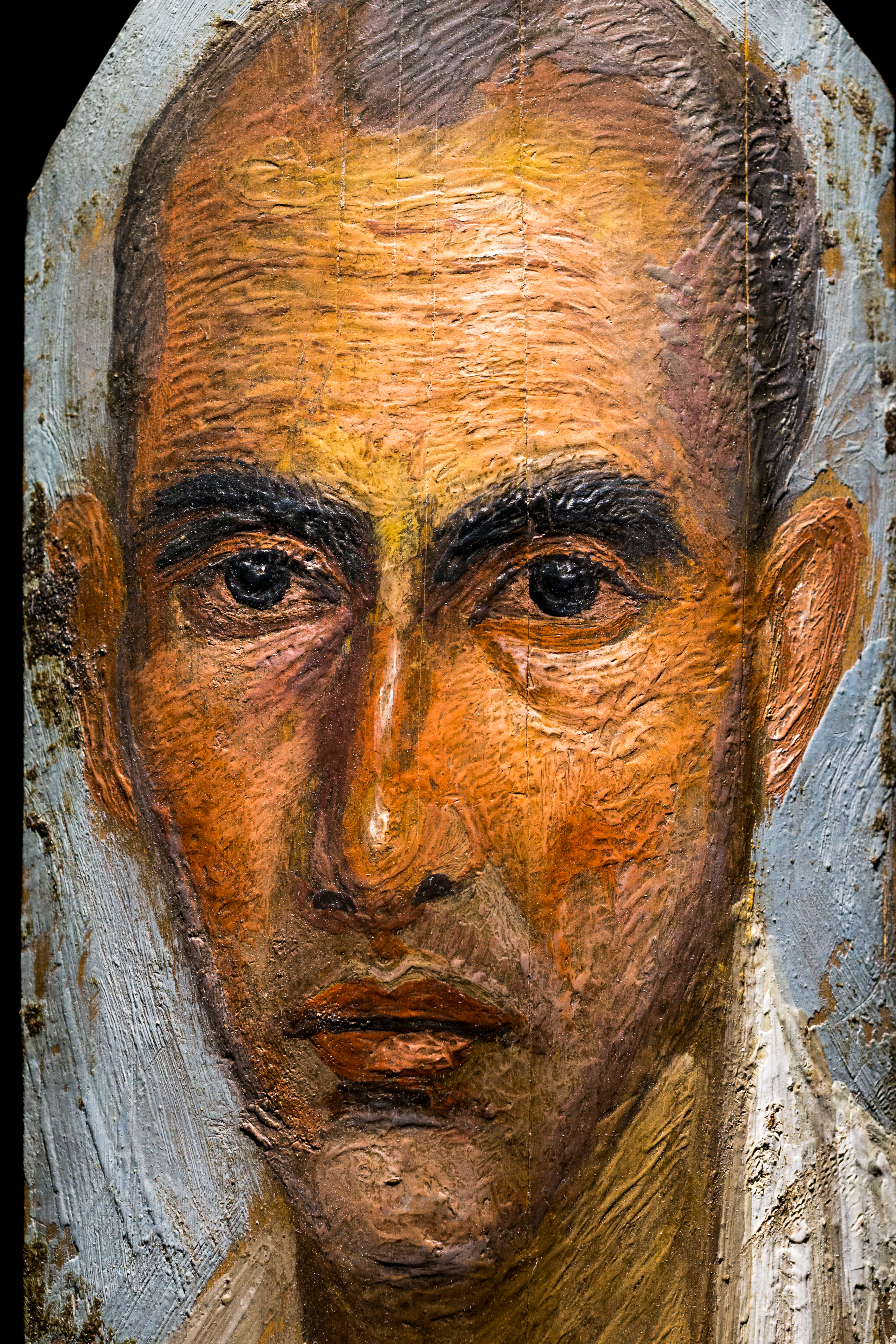
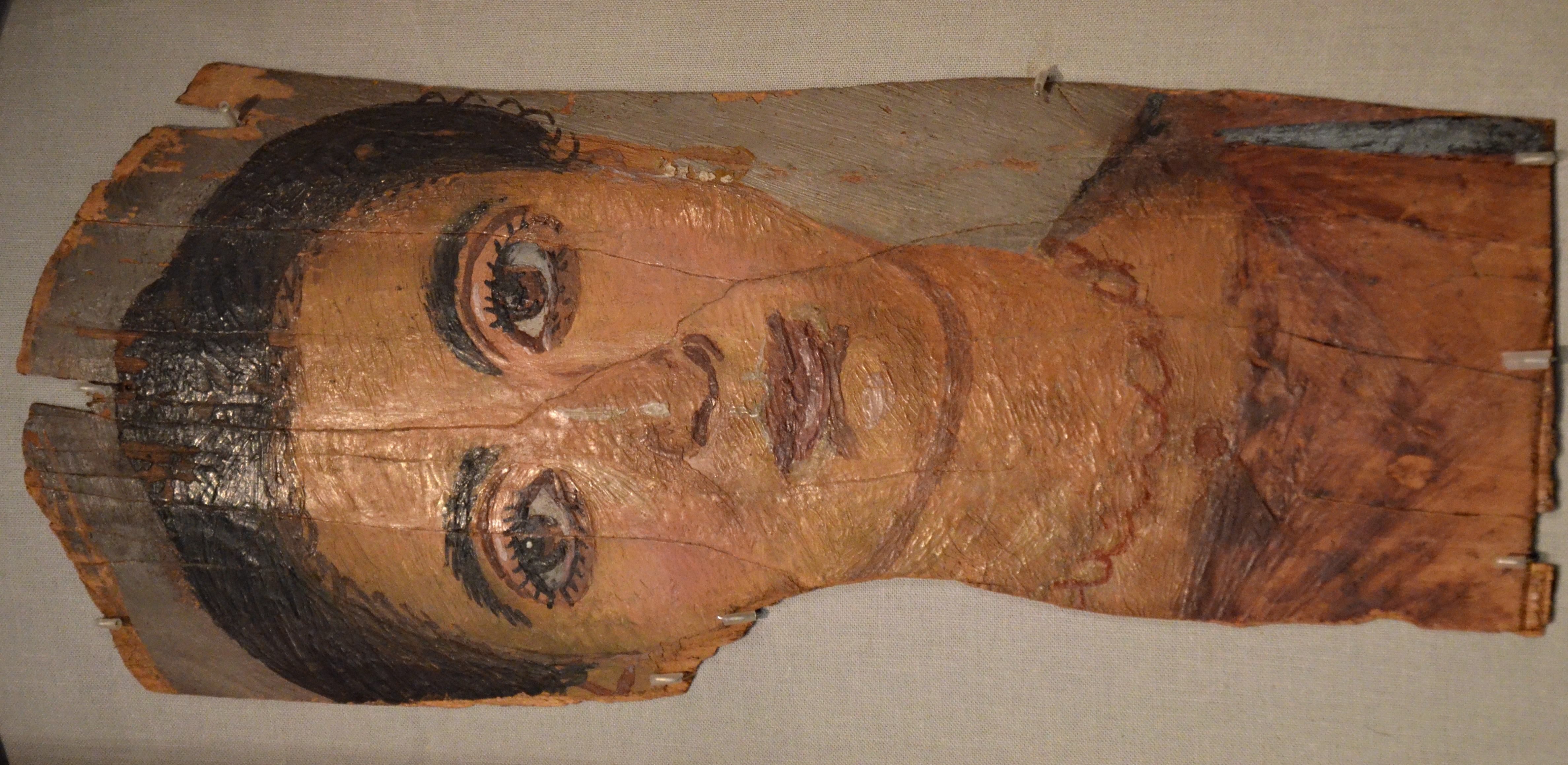
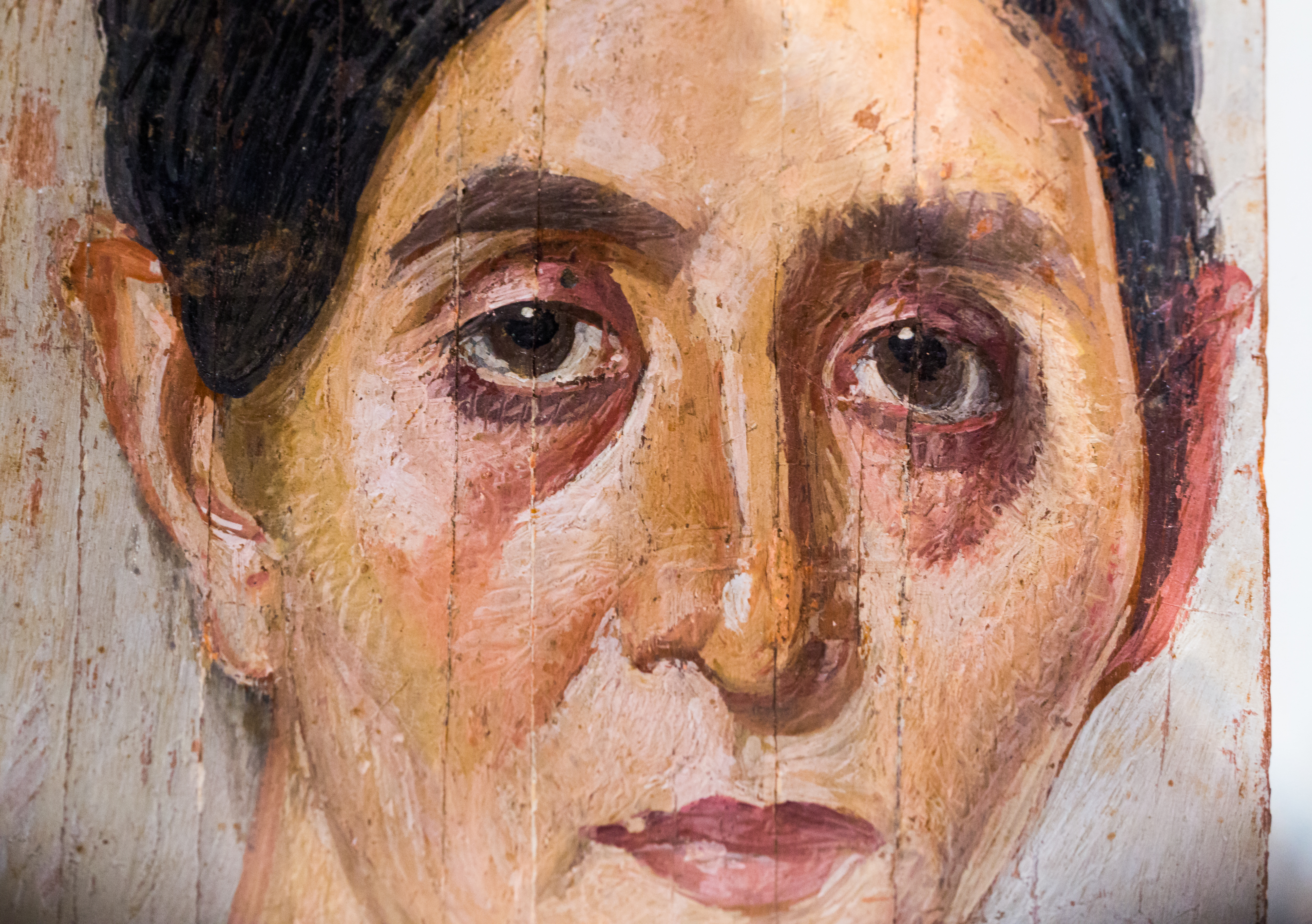
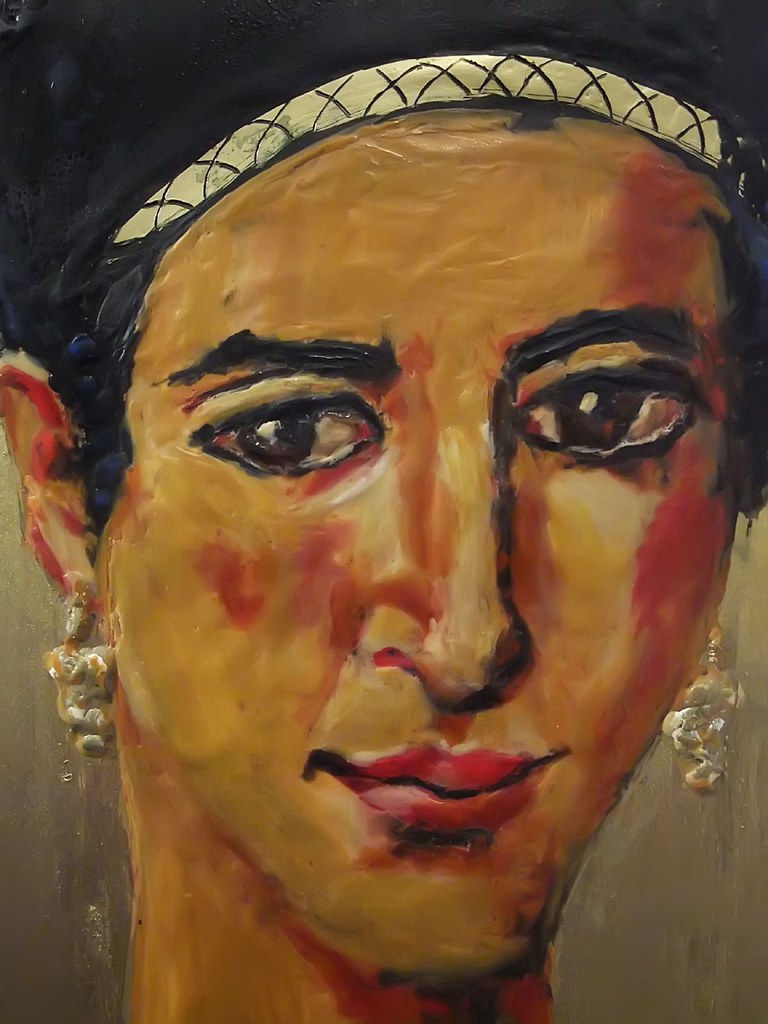
But perhaps the most striking examples we have are the **Fayum mummy portraits** from Roman Egypt, dating back to the 1st to 4th centuries AD. Found in the Faiyum Basin, these wooden panels were placed over the faces of mummified bodies. These remarkably preserved, hyper-realistic portraits still retain their incredible luminosity and depth, a testament to encaustic's longevity. The direct gaze of the subjects feels startlingly modern. The artists used the quick-drying nature of wax to build up layers of light and shadow, capturing a sense of life that transcended death. Imagine that! Artworks from nearly 2,000 years ago, looking as vibrant as if they were painted yesterday. I once stood in front of one in a museum, and it felt like its eyes were following me. It’s a humbling thought for any artist today, a direct line back to the hands of ancient masters.
[credit](https://live.staticflickr.com/4068/4517586381_e5a52e9e02_z.jpg),
[licence](https://creativecommons.org/licenses/by-nc-nd/2.0/)
After the decline of the Roman Empire, encaustic fell into obscurity, largely replaced by the newer, cheaper technique of tempera, which used egg yolk as a binder and didn't require constant heat. It's a fascinating historical "what if" – what if this medium had continued to evolve? Instead, it became a lost art, its secrets hidden in plain sight on those Egyptian portraits. It wasn't until the 18th and 19th centuries that artists and explorers, captivated by classicism, began to rediscover the medium, often in the context of trying to understand and imitate the techniques of the ancient world. It was an art form reborn from archaeology.
[credit](https://upload.wikimedia.org/wikipedia/commons/5/59/Mummy_portrait_of_a_woman_from_er-Rubayat_-_Berlin_AS_31161-9_%2802%29.jpg),
[licence](https://creativecommons.org/licenses/by-sa/4.0)
## Essential Materials and Tools: Building Your Encaustic Studio
Alright, so you're intrigued. You're probably thinking, "How do I even *start* with something that needs to be molten?" Good question! Working with encaustic requires a few specialized tools, but honestly, it's not as intimidating as it sounds. You just need to respect the heat. It all revolves around managing temperature—you're essentially trying to keep a liquid medium in a workable state just long enough to apply it to a surface, where it will then cool and solidify. It's a dance between hot and cold. Setting up your workspace isn't just about buying tools; it's about creating a safe and efficient environment that facilitates this dance. In my experience, taking the time to set up correctly from the start makes the entire creative process more fluid and much safer. Let's walk through what you actually need, from the essential big-ticket items to the little things that make life easier. Think of it less like setting up an easel and more like organizing a small, specialized workshop.
[credit](https://live.staticflickr.com/4017/4296072688_d990d54448_b.jpg),
[licence](https://creativecommons.org/licenses/by-nc-sa/2.0/)
### Core Tools for Heating and Application
Your entire process hinges on managing heat and applying the medium. These tools form the core of your setup. When I first started, I thought I could improvise everything, but these specialized tools make a world of difference in both safety and the quality of your work. It's the difference between a rickety ladder and a solid scaffold—both might get you to the same height, but one is definitely a better idea if you're planning to do any real work.
* **Heated Palette:** This is your workbench and the heart of the operation. It's a temperature-controlled surface (often electric) that keeps your [encaustic medium](/finder/page/exploring-encaustic-wax-my-journey-with-ancient-mediums-in-abstract-art) molten and ready to apply. Mine sits right next to me, a constant low hum of warmth. For beginners, a simple electric griddle with a sheet of aluminum or a flat piece of sheet metal on top works well—just make sure it's clean. More advanced artists often use purpose-built palettes like the Encaustic Art Institute's hot palette or one from R&F Paints, which offer precise thermostatic control that can radically change how the wax flows. Some even have different temperature zones, which is a luxury I've come to love for keeping different colors at their ideal consistency.
* **Heat Gun or Torch:** This is the tool for "fusing." After applying a layer of wax, you gently melt its surface into the previous layer to create a unified, durable surface. A heat gun is a safer, more controlled option for beginners. A small butane or propane torch, like an Iwatani or a small Bernzomatic, can be used for larger areas but requires more skill and an even hand to avoid scorching the wax, which can turn it an unpleasant yellow or brown. I always recommend extreme caution and [good ventilation](/finder/page/how-to-set-up-good-ventilation-in-your-art-studio) with any open flame! The key is a quick pass to melt the surface, not to liquefy the paint. The goal is a subtle sheen, not a bubbling mess.
* **Natural Bristle Brushes:** This is a critical one: **synthetic brushes will melt into a useless, gooey mess**. You must use natural hair brushes. Hog bristle brushes are popular for their stiffness, allowing you to scrub the paint onto the surface. Soft hake brushes are also excellent for softer, more fluid applications. I keep a variety of sizes and shapes, including cheap bristle brushes for applying clear medium and my good brushes for the actual paint application. A pro tip is to keep a small tin of molten, clear medium on your palette to dip your brushes in when you're done. This re-coats the bristles in a protective layer of wax, keeping them supple and ready for the next session. They'll last for years if you treat them right.
### The Foundation: Surface and Safety
If your surface and safety setup aren't solid, nothing else matters. These are the unglamorous but utterly essential foundations of encaustic art. I learned this the hard way with a warped panel early on.
[credit](https://live.staticflickr.com/2928/14732961196_7ac29ea97a_b.jpg),
[licence](https://creativecommons.org/publicdomain/zero/1.0/)
* **Rigid, Absorbent Support:** Unlike canvas, encaustic needs a sturdy surface that won't flex and crack the wax. A flexible surface is your enemy here. A common method is to apply multiple layers of [traditional gesso](/finder/page/gesso-the-unsung-hero-of-painting-surfaces) (made with rabbit skin glue, not [acrylic gesso](/finder/page/gesso-the-unsung-hero-of-painting-surfaces)) to both sides of a braced [wood panel](/finder/page/abstract-art-on-wood-panels-exploration) to prevent warping. You can also use rigid boards designed for encaustic, often labeled as Encauboard. Heavier substrates like stone or metal are also options, but they require special preparation. The surface also needs to be absorbent to give the wax something to grab onto. The preparation of your surface is the single most critical step for ensuring the longevity of your artwork.
* **Ventilation:** This is non-negotiable. Working with heated wax and resin can produce fumes, so a well-ventilated space, ideally with an exhaust fan that vents directly outdoors, is absolutely crucial for your health. Seriously, don't skimp on this one. A simple box fan in a window is better than nothing, but a proper ventilation system is the gold standard for any serious encaustic artist. The resin fumes can be particularly irritating, and long-term exposure without proper ventilation is not something to mess with.
* **Other Essential Tools:** Your toolkit can be as simple or as complex as you like.
* **Incising Tools:** Dental tools, styluses, and even empty ballpoint pens are fantastic for scratching fine lines into the wax.
* **Scraping Tools:** Razor blades, palette knives, and ceramic scrapers are great for texture and sgraffito (scraping away a top layer to reveal the one below).
* **Shaping Tools:** Old credit cards, combs, and textured fabrics can create unique marks.
* **Measuring Tools:** A small digital scale is invaluable for consistently mixing your medium, especially if you're making your own paints from scratch.
Possibilities for experimentation are truly endless once you have the basics covered.
[credit](https://upload.wikimedia.org/wikipedia/commons/c/cb/Four_Dancers_%28ca._1899%29_painting_in_high_resolution_by_Edgar_Degas._Original_from_The_National_Gallery_of_Art._Digitally_enhanced_by_rawpixel._%2850635986367%29.jpg),
[licence](https://creativecommons.org/licenses/by/2.0)
## Crafting the Magic: Basic and Advanced Encaustic Techniques
Once you have your tools, the real fun begins. Encaustic isn't just about [painting](/finder/page/what-is-action-painting) in the traditional sense; it’s a more dimensional, sculptural process. For me, one of the most exciting aspects is the sheer versatility of techniques available right from the start, letting you build incredible complexity or keep things beautifully simple. The key is to start with the fundamentals and build your skill from there. Each technique unlocks a new way of thinking about the surface, moving from simple color application to a true dialogue with the material. The techniques below are just the beginning; once you understand how wax, heat, and pigment interact, your own inventions will follow.
| Technique | Description | Best For | Difficulty |
| :--- | :--- | :--- | :--- |
| **Layering & Fusing** | The core of encaustic. Applying and melting layers to build depth. | All encaustic work | Beginner |
| **Sgraffito** | Scratching or scraping into the wax to reveal underlying colors. | Linear drawing, adding fine details | Beginner |
| **Collage** | Embedding materials like paper, fabric, or photographs. | Mixed-media and narrative work | Intermediate |
| **Stenciling** | Using a mask to apply paint in a specific shape. | Patterns, crisp lines | Intermediate |
| **Image Transfer**| Transferring a photocopied image into the wax surface. | Photo-based, conceptual work | Advanced |
[credit](https://www.flickr.com/photos/asiasociety/4929458890),
[licence](https://creativecommons.org/licenses/by-nc-nd/2.0/)
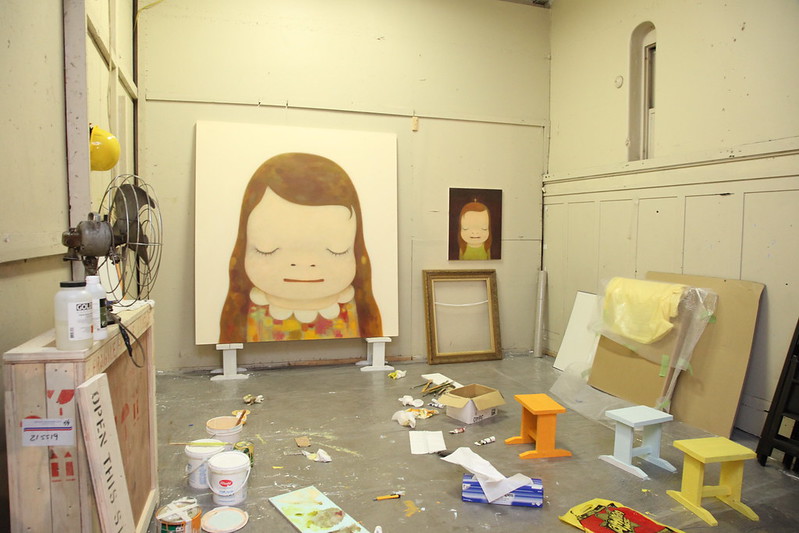
Think of this table as a menu. You don't have to order everything at once, but it's good to know what's available. Let's dive into each one in more detail.
### Foundational Techniques: The Building Blocks of Wax
These are the essential skills that every encaustic artist uses, regardless of their style. These aren’t just techniques; they’re the vocabulary of the medium. If you can layer, cool, and fuse, you can speak the language. Mastering these opens the door to everything else.
* **Layering and Fusing:** This is the absolute foundation. Apply a [thin layer](/finder/page/how-to-layer-colors-in-acrylic-painting) of molten wax, fuse it with a heat source, then let it cool and repeat. You can build up incredible depth and translucency this way. I often find myself getting lost in the rhythm of this process, each layer adding a new whisper to the story. The most common mistake I see beginners make is failing to fuse properly. Remember the mantra: "cool, then fuse." If a layer isn't properly fused, it can delaminate over time, cracking and separating from the layers below, like pages in a wet book. A perfectly fused painting has a unified surface. Think of it like welding with wax; you need just enough heat to melt the two surfaces together without destroying the forms you've built. Too much heat is the enemy of detail.
* **Incising and Scraping (Sgraffito):** While the wax is still warm and soft, or after it has cooled and hardened, you can use sharp tools to incise lines or scrape away areas, revealing underlying colors. This is where the medium truly becomes sculptural. It's like an archaeological dig, but you're uncovering your own history in the painting. A [palette knife](/finder/page/what-is-a-palette-knife-and-how-to-use-it) is great for moving soft wax around, while a razor blade, a dental tool, or even an old ballpoint pen can be used on cooled, harder wax to create sharp, clean lines. This is one of the most direct ways to draw into your painting, and it's incredibly satisfying to reveal a hidden layer of color, like finding a fossil hidden in rock.
* **Embedding and Collage:** Because it's wax, you can embed all sorts of materials: papers, textiles, photographs, even small found objects. The trick is to seal porous materials first, often with a [thin layer](/finder/page/how-to-layer-colors-in-acrylic-painting) of clear medium, to prevent air bubbles from getting trapped. Be mindful of the materials you choose; paper items with a high acid content can degrade over time and stain the wax. Using archival, acid-free papers is always a good idea. This adds texture and narrative, creating fascinating mixed-media pieces. It’s a wonderful way to incorporate other parts of your [artistic journey](/timeline) into a piece. I've seen everything from dried flowers to vintage buttons embedded, each adding a unique story to the work. Think of the wax as a time capsule.
### Intermediate and Advanced Techniques: Pushing the Boundaries
Once you're comfortable with the basics, you can start exploring techniques that blend encaustic with other media or push the boundaries of texture and image-making.
[credit](https://upload.wikimedia.org/wikipedia/commons/0/0c/Mother_and_Child_%28The_Oval_Mirror%29_MET_DT2025.jpg),
[licence](http://creativecommons.org/publicdomain/zero/1.0/deed.en)
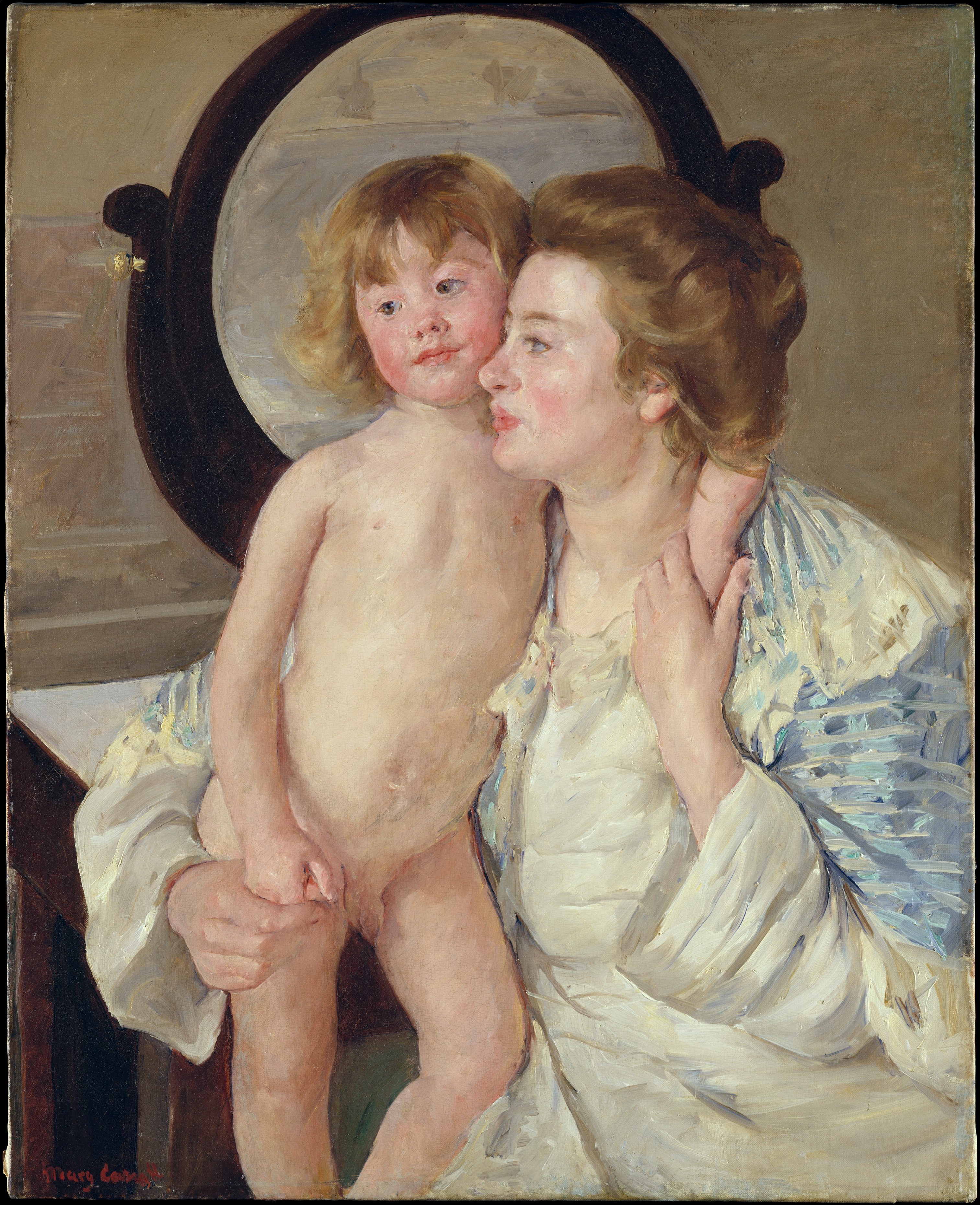
* **Stenciling and Masking:** You can create sharp shapes and patterns by laying stencils onto your painting and applying wax over them, or by masking off areas with painter's tape. I've had great results using simple paper stencils, holding them down firmly and dabbing the wax over them with a brush. The wax cools almost instantly against the stencil, creating a crisp edge. For more durable stencils, you can use mylar or thin metal. The contrast between the soft, melted edges of a brushstroke and the hard, clean lines of a stencil can be really striking.
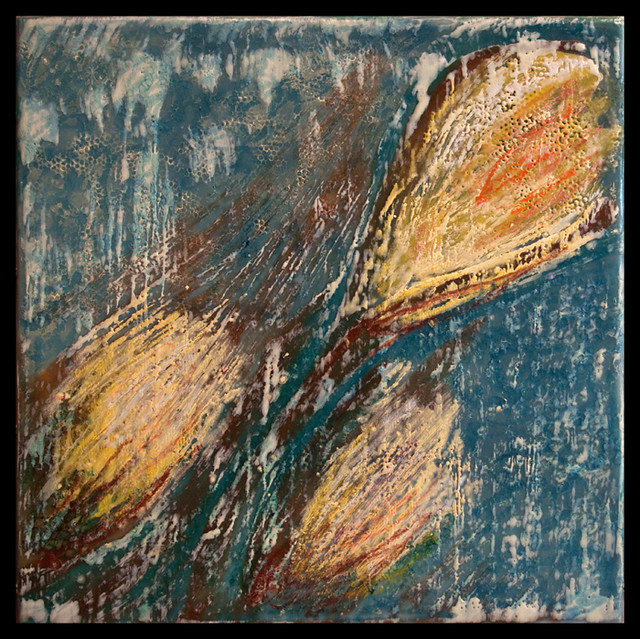
* **Texturing:** The texture is encaustic's secret weapon. You can manipulate the wax with almost anything. Press bubble wrap into a warm layer to create a honeycomb pattern. Drag a comb through it to make lines. Crumple up aluminum foil and press it in. I've even used leaves, lace, and the textured sole of a shoe. The key is to experiment on a small test panel first to see how the wax behaves. The resulting surface doesn't just catch the light; it grabs it, holds it, and plays with it. The texture possibilities are truly limited only by your imagination.
* **Pan Pastel and Pigment Sticks:** For softer, more gestural marks, you can work oil pastels or Pan Pastels over a cooled, solid layer of wax. The wax provides a wonderfully receptive surface for these dry media. You can then seal those marks with another thin, well-fused layer of clear medium, locking them in place. This allows for a combination of soft, sketch-like marks and the hard-defined edges of the wax. It's a technique I love for adding subtle background details or atmospheric effects.
It's a favorite among artists who work with photography. You can transfer a laser-printed image (toner-based, not inkjet) onto encaustic. The process involves coating the print with a layer of medium, letting it cool, and then rubbing away the paper with water, leaving the toner embedded in the wax. The results are often ethereal and ghostly, a perfect fusion of modern technology and [ancient medium](/finder/page/the-history-of-tempera-painting-from-ancient-egypt-to-modern-revival). It's a tricky process that can feel like magic when it works and pure frustration when it doesn't.
This is a more advanced technique that requires a bit of patience and an understanding of drying times. After you have several well-fused layers of wax, you can let the painting cool completely and then draw or paint over it with oil sticks (also called pigment sticks). The wax is an excellent ground for the [oil paint](/finder/page/what-is-oil-painting). You can let the oil marks dry for a day or two, or you can reactivate them with heat and smear them around for a completely different, painterly effect, which is my personal favorite way to use them. A final layer of clear, well-fused medium seals it all in, creating a sandwich of two different, but compatible, mediums.

[credit](https://upload.wikimedia.org/wikipedia/commons/0/05/Edvard_Munch_-_Mrs._Schwarz_-_NG.M.02817_-_National_Museum_of_Art%2C_Architecture_and_Design.jpg),
[licence](https://creativecommons.org/licenses/by-sa/4.0)
## The Sculptural Dance: Why Encaustic Feels Different
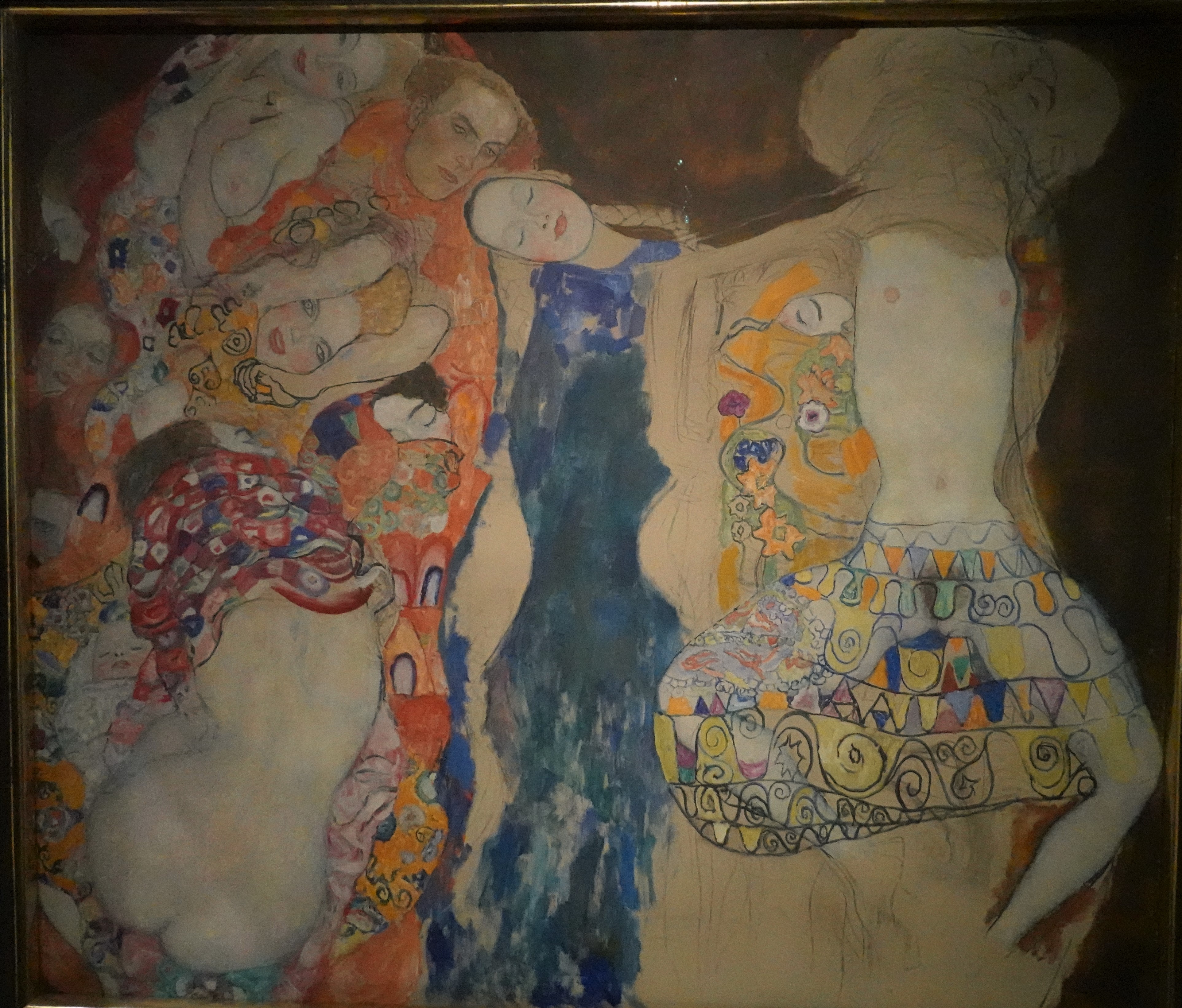
Remember how I mentioned that incredible, almost sculptural quality? This is one of the most compelling aspects of encaustic. Unlike oil or [acrylic paint](/finder/page/golden-vs-liquitex-which-pro-acrylic-paint-is-right-for-you), which mostly exist on a two-dimensional plane, wax builds up. You can literally sculpt with it, creating ridges, valleys, and textures that catch the light in extraordinary ways. This physical dimension invites viewers to not just look, but almost *feel* the artwork with their eyes. It’s a dialogue between surface and light, between pigment and palpable form. When I'm working, I'm not just thinking about color and composition; I'm thinking about how the light will play across those layers, what secrets they'll reveal at different angles. It's truly a dance.
This physicality is something that flat media can't replicate. The way light hits a thick, glossy stroke of wax versus a thin, scraped-back area creates a dynamic range of luster and shadow. It's tactile, even when you're not allowed to touch it. This quality makes encaustic particularly interesting for artists working in [abstract art](/finder/page/what-is-abstract-art), where the physical presence of the work is as important as its color.
[credit](https://upload.wikimedia.org/wikipedia/commons/8/8a/Gustav_Klimt%2C_The_Bride%2C_1917-18%3B_Leopold_Museum%2C_Vienna_%282%29.jpg),
[licence](https://creativecommons.org/licenses/by/2.0)
Think of it as painting with a material that has a third dimension built right into its DNA. The act of painting becomes a process of deposition—you're adding matter, not just color, to the surface. And because you can carve back into it, scrape it, and re-melt it, you're constantly moving between additive and subtractive processes. It's a dance between building up and tearing down, between revealing and concealing. This push and pull gives the work a presence, a physical weight, that a flat, thin film of paint can't match. I’ve had people tell me they have to physically stop themselves from touching the work, and to me, that’s a sign of success.
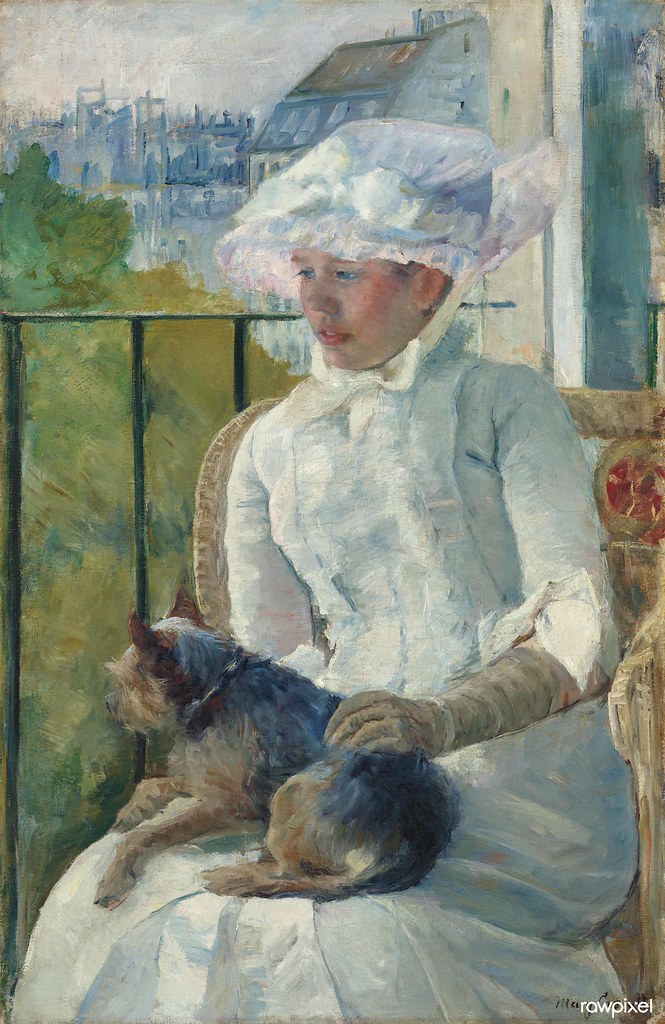
This dialogue with light is what separates encaustic from almost any other painting medium. You can have two paintings with the exact same colors, but in encaustic, the one with more varied texture will seem to shimmer and shift as you move past it. A deeply incised line isn't just a line; it's a crevice that holds shadow and then catches the light on its opposite edge. A thick impasto stroke isn't just a glob of paint; it's a tiny mountain range, with its own slopes and valleys that interact with the environment. This is why encaustic work is so difficult to reproduce in photographs. A camera captures one moment of its dance with light, but to truly understand it, you have to be in its presence.
[credit](https://live.staticflickr.com/65535/50636785651_b6862f442d_b.jpg),
[licence](https://creativecommons.org/licenses/by/2.0/)
## Beyond the Ancient: Contemporary Explorations
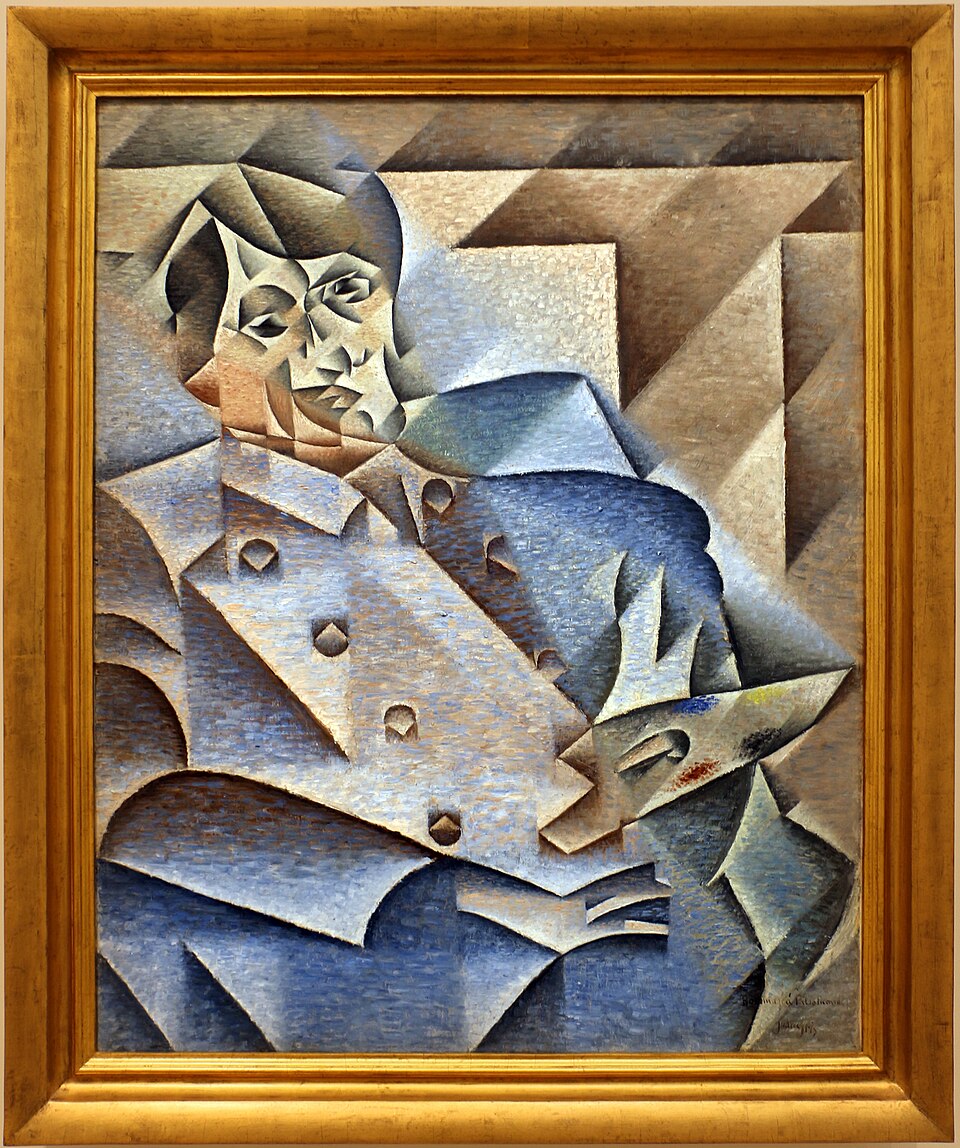
While encaustic has ancient roots, contemporary artists are pushing its boundaries in exciting new directions. From abstract expressionist pieces that highlight the medium's raw, textural possibilities, to delicate, layered works that evoke ethereal landscapes, the modern encaustic scene is incredibly vibrant. Artists are combining encaustic with photography, [printmaking](/finder/page/definitive-guide-printmaking-techniques), and even digital media, demonstrating its adaptability and relevance in a modern context.
[credit](https://commons.wikimedia.org/wiki/File:Juan_gris,_ritratto_di_pablo_picasso,_1912,_01.jpg),
[licence](https://support.google.com/websearch/?p=image_info)
I've been fascinated by artists who use encaustic to transfer laser-printed images, creating haunting, ghostly effects as the wax soaks into the toner. Others are embedding hardware like LEDs into their work, making the ancient medium quite literally glow from within. The use of unconventional materials—from charred wood and metal leaf to organic matter like leaves and flowers sealed under a layer of transparent wax—shows just how versatile this medium can be.
### Leading Voices: Artists to Know
It's one thing to talk about techniques, but it's another to see them in the hands of masters. Artists today are truly redefining what encaustic can be.

[credit](https://upload.wikimedia.org/wikipedia/commons/4/4c/Boy_with_a_Sword_MET_DP-14936-027.jpg),
[licence](http://creativecommons.org/publicdomain/zero/1.0/deed.en)
* **Jasper Johns:** No discussion of modern encaustic is complete without him. His iconic *Flag* paintings, like the one pictured above, introduced the medium to the 20th-century art world. His use of it was a radical statement—it was ancient, textural, and completely outside the slick, macho world of [Abstract Expressionism](/finder/page/ultimate-guide-to-abstract-expressionism). He embedded newspaper clippings into the wax, making a painting that was also a collage, a record of the time it was made.
* **Braulio Muñoz:** An artist who pushes the medium into the realm of sculpture and installation. His work often involves building up multiple panels into large-scale, immersive environments that challenge the boundary between painting and architecture.
* **Miles Conrad:** An expert in surface and light, Conrad explores minimalism with encaustic. His work is a masterclass in restraint, showing how the slightest shifts in color and texture, built up over countless layers, can create fields of color that seem to breathe and shift as you move around them.
This fusion of old and new—an [ancient medium](/finder/page/the-history-of-tempera-painting-from-ancient-egypt-to-modern-revival) used to explore contemporary ideas—is what makes the current encaustic art world so exciting. If you're looking to [buy art](/buy) that has a unique presence, you'll find encaustic pieces that truly stand out. It's a medium that rewards experimentation and offers a tactile experience unlike any other, inviting the viewer into a conversation that spans millennia.
[credit](https://live.staticflickr.com/1211/1392900887_e41b6cf73f_b.jpg),
[licence](https://creativecommons.org/licenses/by-nc-nd/2.0/)
## The Ritual of Heat: My Continued Journey with Wax
For me, [encaustic painting](/finder/page/the-history-of-encaustic-painting) isn't just a technique; it's a conversation. It's about patience, about letting the material guide you, and about finding beauty in the unexpected. The process itself is almost meditative, a constant negotiation with heat and flow. I've spent countless hours in my studio, often lost in thought, the warm scent of beeswax filling the air as I explore new ideas. There's a simple, sensory pleasure in the ritual. The hum of the palette. The soft, slightly sweet, organic scent of the wax. The sharp crackle of the heat gun, and the subtle, almost imperceptible sigh of the wax as it re-liquifies for a moment under the heat.
There's a certain alchemy to it that I haven't found in any other medium. It forces a different pace. You can't rush it. You can't just slap paint on and hope for the best. You have to wait for the layer to cool, you have to fuse it properly, you have to think three or four steps ahead. It's a discipline, but one that feels like a collaboration with the material itself. The wax has its own logic, its own way of behaving, and you learn to work *with* it, not against it. The challenge and reward of mastering this unique medium continue to fuel my artistic passion, much like the journey of building my [museum in Den Bosch](/den-bosch-museum). It's a reminder that sometimes, the oldest paths lead to the most surprising new discoveries.
[credit](https://upload.wikimedia.org/wikipedia/commons/7/71/Pierre-Auguste_Renoir%2C_La_Loge%2C_Courtauld_Gallery.jpg),
[licence](http://creativecommons.org/publicdomain/zero/1.0/deed.en)
It’s a medium that teaches you as much as you teach it. Every time I think I have it figured out, it shows me a new possibility, a new way to capture light or texture. The other day, I was working on a panel and made a terrible mistake—a line where I didn’t want one, a smear of color. I was ready to scrape it all down. But then, on a whim, I held the heat gun over it for a few seconds longer than usual, and the mistake melted, swirled, and merged into something far more beautiful than what I had intended. That moment of surrender, of letting go of control, is the real joy of it. And that, more than anything, is what keeps me coming back to my heated palette, day after day.
## Frequently Asked Questions about Encaustic Painting
Let's dive into some of the most common questions people have about this ancient-yet-contemporary art form. It's natural to be curious about a process that involves heat, wax, and a history stretching back millennia. Whether you're an aspiring artist or an art collector, these are the things I get asked about most often. I've gathered some of the most common ones here to address your curiosity and maybe even demystify a few things about this enchanting process. Think of it as a quick-start guide to the practical side of encaustic.
[credit](https://www.publicdomainpictures.net/pictures/570000/nahled/edward-hopper-painting-1706058931ATe.jpg),
[licence](https://creativecommons.org/publicdomain/zero/1.0/)
### Is encaustic painting difficult to learn?
That's a great question. Is it difficult? I'd say it's *different*. If you're coming from watercolor or acrylics, it requires a complete mental shift. You're not just dealing with color and composition; you're managing heat, flow, and a cooling material. The basic technique of melting, applying, and fusing is straightforward and can be learned in an afternoon. Mastering the nuance of how heat affects the wax, how layers interact, and how to control the medium takes a lifetime. But don't let that discourage you. The learning process itself is incredibly rewarding. There's a deep satisfaction in learning a craft that feels so connected to one of humanity's oldest artistic traditions. My advice is to start with a workshop or a good online tutorial to get the fundamentals of safety and fusing down pat. From there, it's all about experimentation. I always tell beginners that the first few sessions are about getting comfortable with the rhythm of the medium.
### How do you care for an encaustic painting?
This is a crucial one. The good news is that a properly made [encaustic painting](/finder/page/the-history-of-encaustic-painting) is remarkably durable and archival; those Fayum portraits are proof. The key is stability. Encaustic can be sensitive to extreme heat, as you might expect. You should never hang an encaustic painting in direct sunlight, over a fireplace, or near a radiator. The ideal environment is a stable room temperature. Think of it like a bar of chocolate—it's fine at room temperature, but you wouldn't leave it on your dashboard on a hot day. A room that stays between $60-75^\circ ext{F}$ ($15-24^\circ ext{C}$) is perfect.
Dusting is simple: a soft, dry cloth like a microfiber rag or a gentle brush with natural bristles is all you need. Unlike an oil painting, you do not use any liquid cleaners, water, or solvents, as they can damage the wax surface. If you live in a very cold climate and the painting is shipped to you, it might develop a temporary "bloom"—a whitish haze on the surface. This is just a reaction to the cold and can usually be removed by gently buffing the surface with a soft cloth or a tiny bit of odorless mineral oil on the cloth, followed by immediate buffing. For anything more serious, like a deep scratch, it's best to consult the artist or a professional art conservator who specializes in wax. You can learn more about the specifics in our guide on [how to clean and care for encaustic art](/finder/page/how-to-clean-and-care-for-encaustic-art).

[credit](https://upload.wikimedia.org/wikipedia/commons/7/78/Gustav_klimt%2C_le_tre_et%C3%A0%2C_1905%2C_01.jpg),
[licence](https://creativecommons.org/licenses/by-sa/4.0)
### What kind of wax do you use for encaustic painting?
The traditional and most respected medium is pure, filtered **beeswax**. It's the soul of the medium. While some artists experiment with synthetic waxes or paraffin, these are generally not recommended for fine art. Paraffin, in particular, is much more brittle, lacks the lovely aroma of beeswax, and is far less stable over time. It also tends to be more opaque.
Beeswax, when mixed with damar resin, creates a stable, durable, and beautiful surface that has stood the test of literally thousands of years. It's a natural material that has proven its archival qualities over centuries. The beeswax used is typically a type called "capping wax," which is filtered to remove impurities like bee parts and honeycomb debris. This refinement process is what gives artists the clear, luminous quality that makes encaustic so special. Many artists seek out wax from specific regions, believing it has different qualities, much like a vintner might seek grapes from a particular terroir.
[credit](https://upload.wikimedia.org/wikipedia/commons/8/87/Henri_matisse%2C_la_danse.jpg),
[licence](https://creativecommons.org/licenses/by-sa/4.0)
### Can you do encaustic painting at home?
Yes, absolutely. Many artists have a home studio set up for it. I've worked in everything from a corner of a garage to a dedicated studio room. However, and I cannot stress this enough, **ventilation is paramount**. An open window is not sufficient. Setting up a dedicated space with an exhaust fan that vents directly outdoors is highly recommended. Resin fumes are not something you want to breathe in, and long-term exposure without proper ventilation can be harmful. It's the difference between a pleasant hobby and a long-term health risk.
You also need to be extremely mindful of fire safety. You are working with a heat source and, in some cases, an open flame. A clear, organized workspace is essential. Keep flammable materials (like paper towels, solvents, and of course your wood panels) well away from your heat gun or torch. So, while a spare room or basement can work, it requires a bit more setup than just plonking down an easel in the corner. Think of it as setting up a small workshop rather than just a painting space. It's an investment in safety and your long-term health. Check your home insurance policy, as some have clauses about studio activities. But don’t let this intimidate you; with a little planning and respect for the process, a home studio is a perfectly achievable dream.
[credit](https://live.staticflickr.com/1714/26211939951_5664f4815a_b.jpg),
[licence](https://creativecommons.org/licenses/by/2.0/)
### Does encaustic painting melt?
This is a common concern. While the wax will melt if exposed to high enough heat, a properly mixed encaustic medium (with damar resin) has a higher melting point than pure beeswax, typically around $140-180^\circ \text{F}$ ($60-82^\circ \text{C}$). This translates to roughly $180-200^\circ \text{F}$ ($82-93^\circ \text{C}$) for the paint itself. This means it won't melt in normal room conditions. People often worry it will liquefy on a warm day, but that's highly unlikely.
But as I mentioned above, direct, intense heat sources like sunlight through a window, a lamp placed right next to it, or a hot car can absolutely soften or damage it. This is why display and storage advice is so important. Think of it this way: on a hot summer day, the inside of a parked car can easily reach $130-150^\circ \text{F}$ ($54-65^\circ \text{C}$). That's getting dangerously close to the softening point. Never store or transport an encaustic painting in a trunk or the back of a hot vehicle. The good news is that in any normal, climate-controlled home or gallery environment, it is completely stable and durable. It’s tough, but it’s not indestructible, and that’s part of respecting the craft.
### What is the best surface for encaustic?
You need a surface that is **rigid and absorbent**. A flexible surface like stretched canvas will cause the wax to crack as it flexes. The most common and reliable surface is a braced [wood panel](/finder/page/abstract-art-on-wood-panels-exploration), like birch plywood or medium-density fiberboard (MDF), that has been sealed with multiple coats of traditional gesso (not acrylic gesso). This seals the wood and provides a toothy, absorbent surface for the wax to grip.
But here's a crucial tip: you must seal both the front, back, and *all* edges of the panel equally. If you only gesso the front, the bare wood on the back will absorb ambient moisture from the air at a different rate than the sealed side, causing the panel to warp over time. Other options include heavy-duty boards sold specifically for encaustic (often called Encauboard), or even rigid surfaces like stone, unglazed ceramic, or metal, provided they are properly prepared with a suitable ground for the wax to adhere to.
[credit](https://live.staticflickr.com/2796/4517666735_898124fb9f_z.jpg),
[licence](https://creativecommons.org/licenses/by-nc-nd/2.0/)
### What is the difference between encaustic and cold wax?
This is a classic point of confusion, and it's an important distinction. They sound similar but are entirely different beasts. I can't tell you how many times I've seen people try to mix the two and end up with a sticky disaster.
[credit](https://images.pexels.com/photos/8276803/pexels-photo-8276803.jpeg),
[licence](https://creativecommons.org/public-domain/)
**Cold wax** is a medium made from beeswax with solvents and resins, designed to be mixed with [oil paint](/finder/page/best-oil-paints-for-beginners). It has a paste-like consistency at room temperature. You don't heat it. It's used to extend oil paints, speed up drying time, and create matte, textured, impasto effects. Think of it as an additive for oil painting.
**Encaustic**, as we've discussed, is a standalone medium of molten wax, resin, and pigment that is applied hot and fused with heat. It's a self-sufficient paint system.
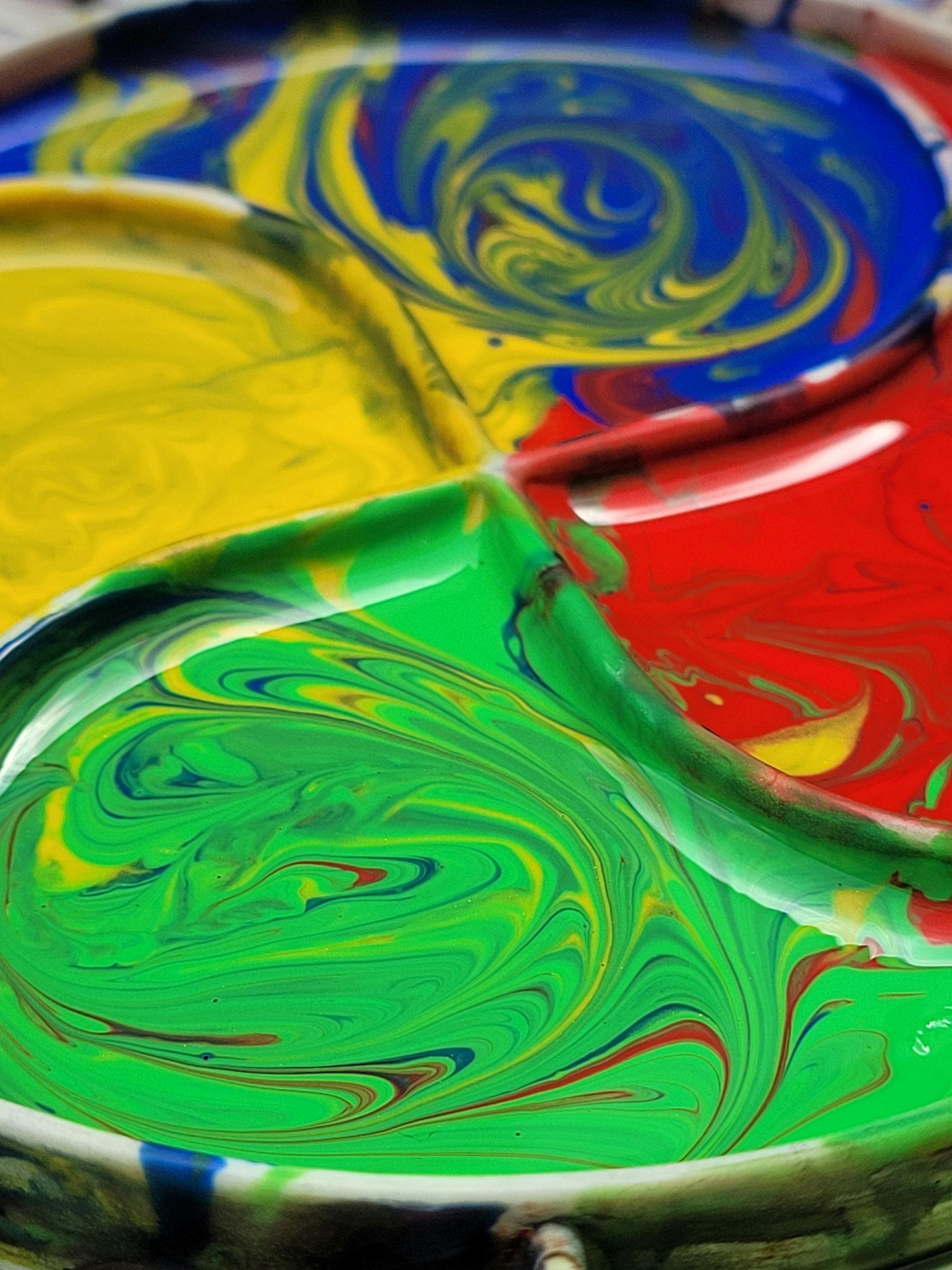
A key takeaway: you can use oil paint mixed with [cold wax medium](/finder/page/the-history-of-encaustic-painting-ancient-wax-art-to-modern-revival) on top of a *finished, cooled* encaustic painting. In this scenario, the encaustic acts as the rigid ground, essentially replacing the canvas. But you **cannot** mix liquid cold wax medium into hot molten encaustic—the solvents in the cold wax will react unpredictably. The distinction is critical.
[credit](https://images.pexels.com/photos/9123581/pexels-photo-9123581.jpeg),
[licence](https://creativecommons.org/public-domain/)
### How much does it cost to start encaustic painting?
The cost of entry is generally higher than, say, starting with acrylics. You need a few specialized tools that have a higher upfront cost. A good heated palette can range from a hundred to several hundred dollars. A decent heat gun will set you back another $30 to $80. Then there are the ongoing material costs: the wax, resin, and pigments. A pound of good beeswax can cost around $15-25, and damar resin is about the same. Pre-made encaustic paints are convenient but pricier per volume than making your own.
That said, you can be smart about it. A simple electric griddle ($40-60) can be a very affordable heated palette to start with. You can begin with just a handful of basic colors and expand your palette over time. While not the cheapest hobby to start, it's an investment in a deeply rewarding craft. Think of it less as a casual purchase and more as setting up a small, specialized workshop. The tools, if cared for, will last for many, many years.
## The Ancient Art of Painting with Fire: Why It Still Captivates Us
So there you have it. From ancient mummy portraits to vibrant modern abstracts, encaustic painting has maintained its allure, a testament to its enduring beauty and versatility. It's a medium that demands respect for its heat, but in return, offers unparalleled depth, texture, and luminosity. It's more than just paint; it's history, chemistry, and sculpture all converging into a single, luminous object. It's a process that forces you to slow down, to think in layers, to collaborate with a material that has a memory and a life of its own.
It connects us to a lineage of artisans stretching back to the classical world, yet it feels incredibly vital and contemporary in the hands of today's artists. This blend of the ancient and the modern, this dialogue between fire and wax, is what continues to capture our imagination. If you ever get the chance to see [encaustic art](/finder/page/how-to-clean-and-care-for-encaustic-art) up close, take a moment to truly *feel* it with your eyes. It's an art of patience, an art of layers, an art of transformation.

[credit](https://images.pexels.com/photos/17327177/pexels-photo-17327177/free-photo-of-man-doing-graffiti-on-a-street.jpeg),
[licence](https://creativecommons.org/public-domain/)
And perhaps that's the real magic of it. In our fast-paced, digital world, encaustic forces a slower rhythm. It insists on a tangible, hands-on process. It rewards patience and punishes haste. In that molten state, it holds a moment of pure potential, and in its solid form, it captures that moment forever. I promise you, it whispers. And in a world that so often shouts, the things that whisper are the ones worth leaning in to hear.