Palazzo Vecchio's Renaissance Art: A Rooftop Revolution
Dive deep into the heart of the Renaissance with a personal guide to the stunning art collection of Florence's Palazzo Vecchio. Discover masterpieces, hidden stories, and a power struggle on the ceiling.

# A Rooftop Revolution: Unlocking the Renaissance Secrets of Palazzo Vecchio I remember standing in the [Piazza della Signoria](/finder/page/piazza-della-signoria-art-history-guide) years ago, staring up at [Florence](/finder/page/best-galleries-in-florence)’s [Palazzo Vecchio](/finder/page/palazzo-vecchio-florence-visit-guide), and thinking it was the city’s stern, stone-faced bouncer—the grumpy fortress next to the more glamorous Uffizi Gallery. You know the one; it looks permanently unimpressed with the tourist selfies below. But then I spent a day actually exploring it, not just walking past it, and I realized how utterly wrong I was. This isn’t just a government building with a few old paintings; it’s a battleground of ideas, a canvas for a multi-century power play, and the beating heart of one of the most magnificent and cunning art collections of the [Renaissance](/finder/page/italian-renaissance-art-beginners-guide). It’s an object lesson in the [raw power](/finder/page/the-symbolism-of-dragons-in-asian-art-power-wisdom-and-fortune) of art. The air hums with the ghosts of unfinished masterpieces—a space that once pitted [Leonardo](/finder/page/why-is-leonardo-da-vinci-famous) against [Michelangelo](/finder/page/ultimate-guide-to-michelangelo) in a direct artistic duel that history itself couldn't quite contain. It's a room built to make you feel small, to make you understand the [sheer scale](/finder/page/my-journey-with-large-scale-abstract-art-challenges-and-triumphs) of Medici power, both imagined and real. But here's the thing nobody tells you right away: the Palazzo Vecchio is actively deceiving you. It's an exercise in historical propaganda so complete, so audacious, that it makes modern spin doctors look like amateurs. Every statue, every fresco, every gilded ceiling tile was deliberately placed to tell a story, to erase a rival, or to cement a dynasty. It’s not just a palace; it’s a three-dimensional history book where the winners got to write—and paint—every single page. And if you know how to look, you can start to see the layers of stories, the political hacks, and the outright cover-ups that shaped one of the world’s most influential cities. Before we dive in, let's get one thing straight. I'm not an art historian in the traditional sense. My world is contemporary, often abstract art. But that's precisely why I find this building so magnetic. It's the *why* behind the art. What does a society ask its greatest artists to create? What stories do they demand be told? Standing inside the Palazzo Vecchio, you don't just see masterpieces; you feel the pressure, the ambition, and the fear that called them into existence. It’s the ultimate lesson in art as a tool, not just an object. And honestly, it makes you appreciate the radical freedom of a blank white canvas today in a whole new way.  [credit](https://commons.wikimedia.org/wiki/File:Uffizi_Gallery,_Florence.jpg), [licence](https://creativecommons.org/licenses/by/2.0/deed.en) This chapter of the Palazzo's story really begins in the early 16th century, a period defined by the search for civic identity and the desperate need to project stability. The city, battered by internal strife and external threats, looked to its artists as we today might look to our architects or brand consultants—as shapers of public reality and identity. It was a moment when artistic symbolism was not subtle, but a direct and forceful declaration of civic values. 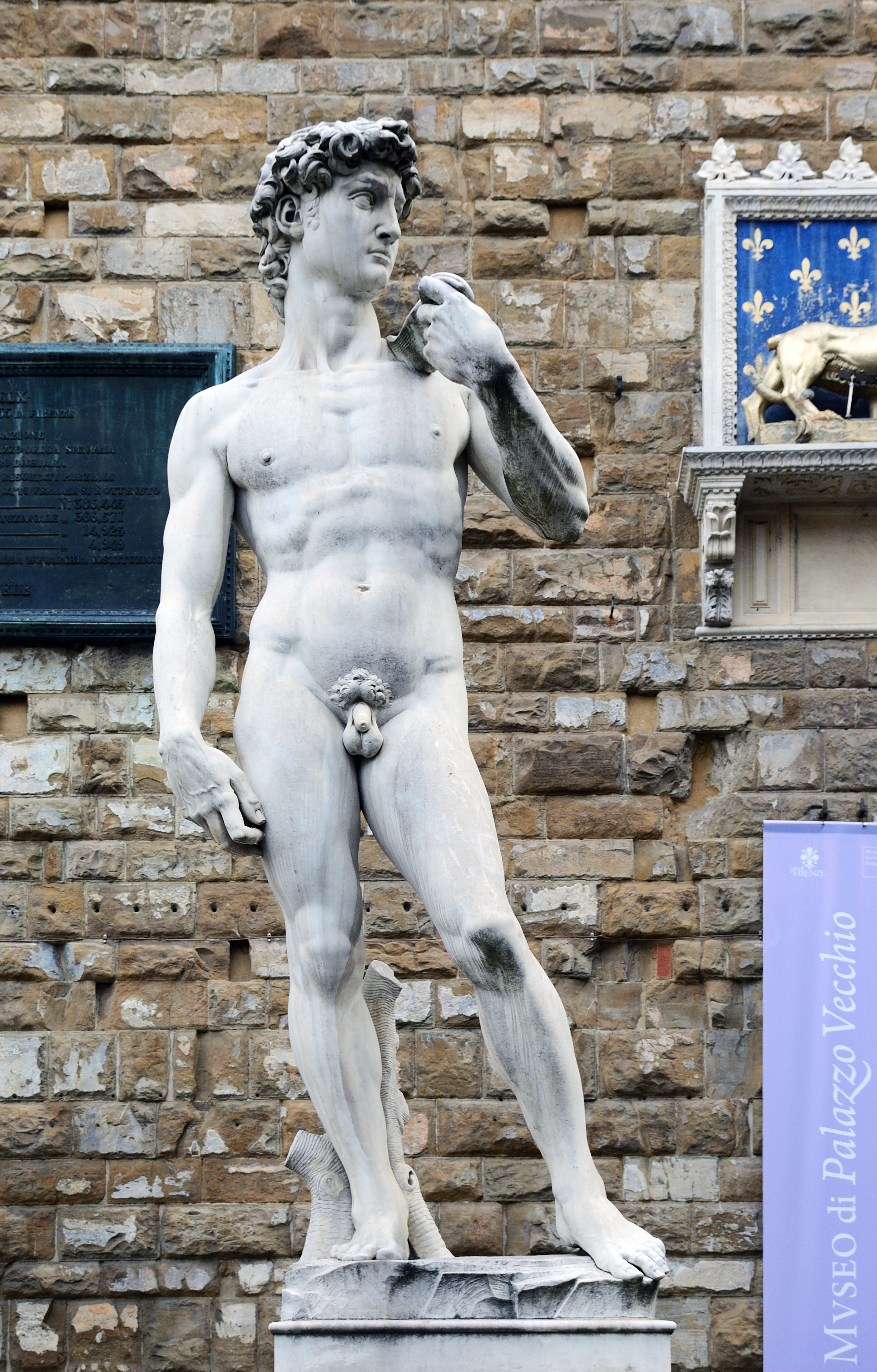 [credit](https://upload.wikimedia.org/wikipedia/commons/c/c0/Marble_replica_of_Michelangelo%27s_David_in_Florence.jpg), [licence](https://creativecommons.org/licenses/by-sa/4.0) ## Florence in the Renaissance: When Art Was Politics To truly grasp the Palazzo Vecchio, you first need to understand that [Renaissance](/finder/page/italian-renaissance-art-beginners-guide) [Florence](/finder/page/best-galleries-in-florence) wasn't a museum; it was a pressure cooker of money, faith, and ruthless ambition. It was an oligarchic republic fueled by banking wealth and haunted by rivalries between powerful families like the Albizzi, Pazzi, and of course, the Medici. The prize? Control of the city. In this world, commissioning a public artwork—a sculpture, a fresco—wasn’t just philanthropy. It was a flex. It was a calculated political maneuver to signal piety, wealth, and divine approval. The Medici family mastered this game. For decades they ruled from behind the scenes until a populist backlash kicked them out in 1494. That's the backdrop. The Palazzo Vecchio, as the seat of government, became the ultimate prize—a building whose walls, both inside and out, told the official story of who was in charge and why they deserved to be there. The art wasn’t decoration; it was the constitution, written in paint and stone. This duel for the city’s soul, between republican ideals and Medici power, is the story written on the walls of the Palazzo Vecchio. It's a narrative of manipulation, power, and the art of persuasion, so potent that it could shape the reality of a society—a concept explored in our article on how leaders use the arts for influence. Moreover, the Palazzo itself was a symbol of republican defiance against individual tyranny. Its very name, "Palazzo della Signoria," referred to the "Signoria," the rotating council of guild members who governed the city. The building’s purpose was to house this government, this embodiment of the collective will. So when the Medici were exiled, their return wasn't just a change of management; it was a hostile takeover of the very heart of Florentine identity. Every stroke of Vasari’s brush was an act of ideological conquest, a repainting of the city's soul in the Medici image. ## The Great Artistic Duel in the Salone dei Cinquecento Imagine this: It’s 1503. The Medici are out, and the Florentine Republic is back in charge. They need a hall for their new 500-man grand council, a space that screams, "We are powerful, stable, and ridiculously cultured." So they build the Salone dei Cinquecento—Hall of the Five Hundred. It’s a cavernous room, 54 meters long, that feels less like a room and more like a city block turned inside out. Designed by Simone del Pollaiuolo (nicknamed Il Cronaca), it’s a feat of civic architecture meant to project the republic’s stability and grandeur. But empty space doesn’t win any propaganda wars. They needed to prove their legitimacy, and they had the ultimate weapon: a head-to-head paint-off between [Leonardo da Vinci](/finder/page/why-is-leonardo-da-vinci-famous) and [Michelangelo Buonarroti](/finder/page/ultimate-guide-to-michelangelo). The very existence of this hall was a political calculation. By commissioning the two greatest living artists—rivals known for their wildly different temperaments and styles—the Republic wasn't just decorating a room; they were staging the ultimate artistic showdown. It would be like pitting the world's two most famous contemporary artists against each other to design the main hall of the United Nations. The goal wasn't just to produce two beautiful frescoes; it was to create a legend, a story that would be told for centuries, cementing Florence’s reputation as the undisputed center of the artistic universe. But the Salone was more than just a big room; architecturally, it was a calculated psychological weapon. Its sheer verticality, with walls soaring tens of meters overhead, was designed to make any individual feel utterly insignificant, a mere cog in the great republican machine. The vast floor, originally intended for the assembled council members, would have been a sea of civic representation, a physical embodiment of popular government. 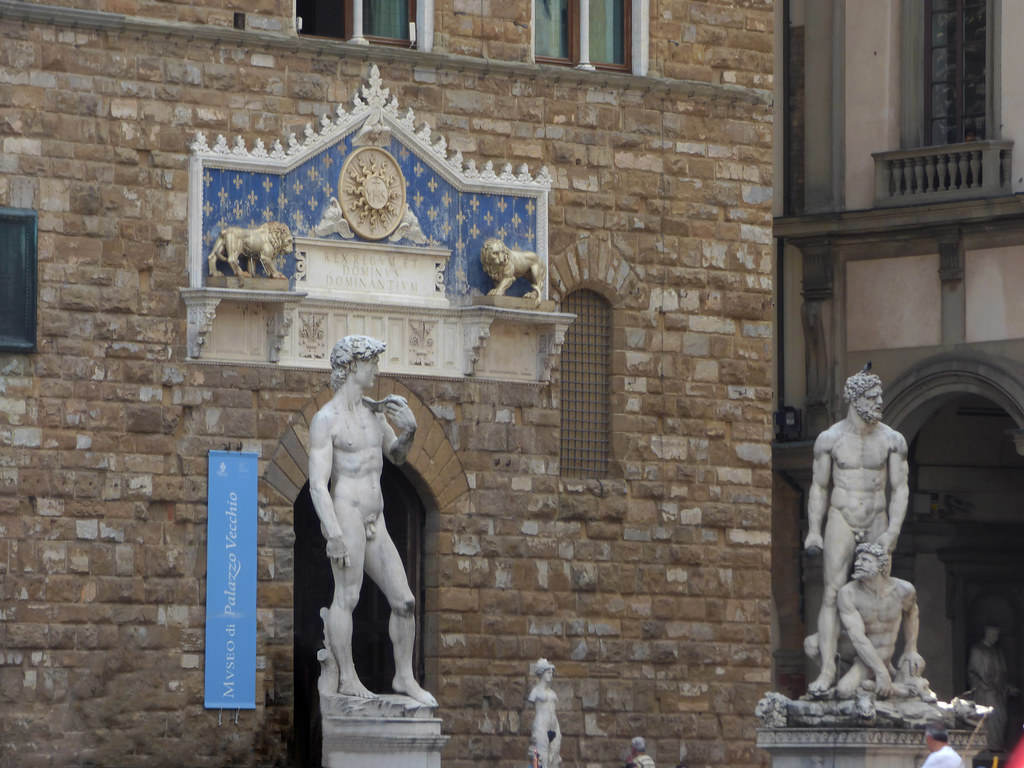 [credit](https://live.staticflickr.com/1787/28656449207_f9b8b6794d_b.jpg), [licence](https://creativecommons.org/licenses/by-nc-sa/2.0/) The choice of Il Cronaca was itself a statement. He wasn't the city's flashiest architect. His reputation was built on robustness, sobriety, and clean lines—the epitome of republican virtue. This hall wasn't meant to be a delicate pleasure palace; it was a workshop of democracy, a barn built for the heavy machinery of state. It conveyed permanence, a bulwark against the chaos of tyrannical rule represented by the exiled Medici. The genius of this plan lay in its brazen simplicity: turn art into a public spectacle of civic might. By pitting their two resident titans against one another, the Republic wasn't just commissioning frescoes; it was orchestrating a legendary event, a testament to [Florence](/finder/page/best-galleries-in-florence)'s intellectual and artistic supremacy that the world would remember long after their political troubles had faded. 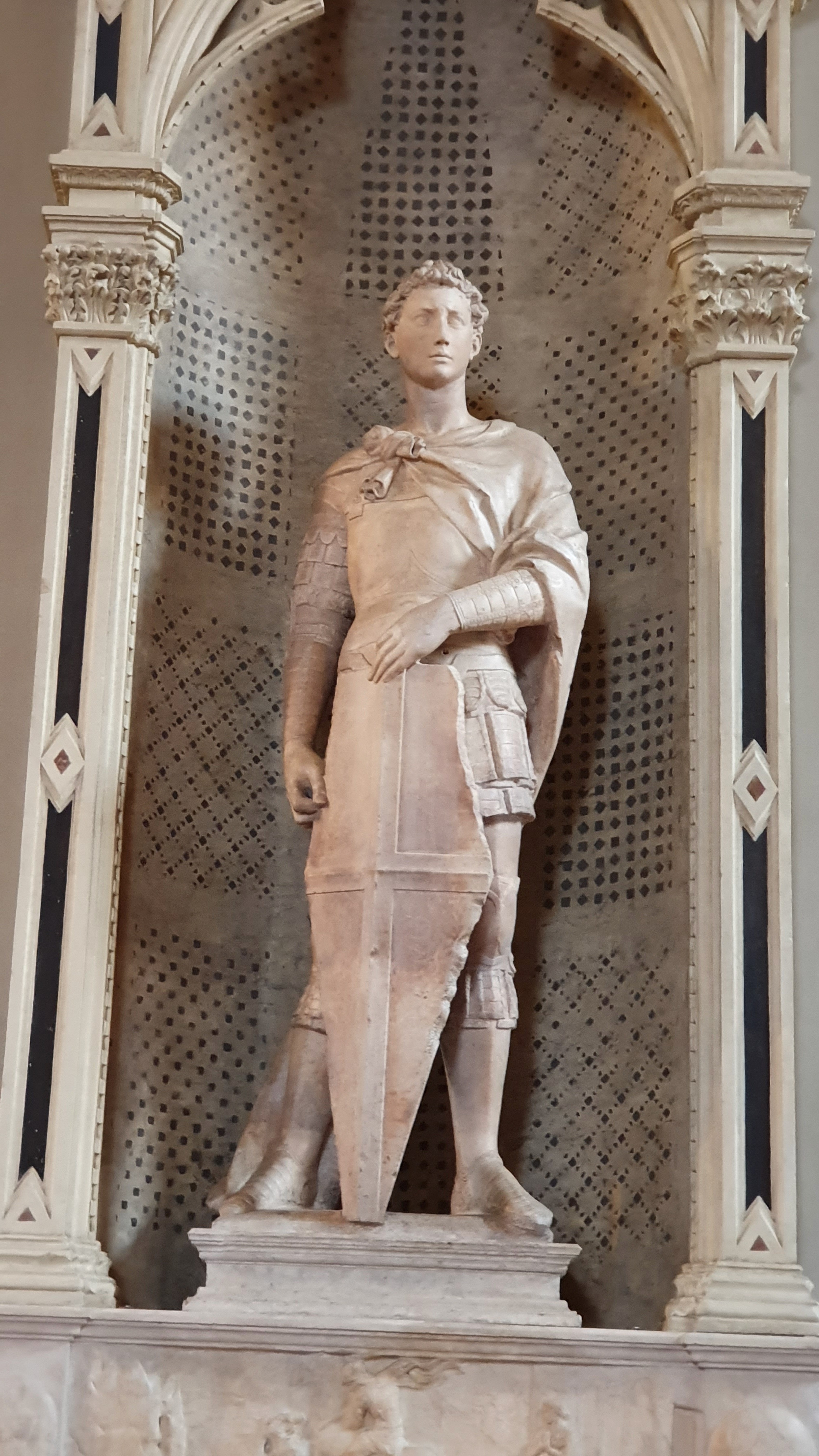 [credit](https://upload.wikimedia.org/wikipedia/commons/9/93/Saint_George_by_Donatello-Bargello.jpg), [licence](https://creativecommons.org/licenses/by-sa/4.0) That’s right. The city fathers pitted the two greatest artistic rivals of their generation against each other in a paint-off. A literal clash of geniuses on opposite walls of the same room. I can’t decide if that’s the most brilliant or most audacious art commission in history. Sadly, neither fresco was ever finished, and both were lost to time, but the very idea sets the stage for the drama that permeates the palace. It's tempting to view this through a modern lens, as a simple artistic showdown. Dig a little deeper, though, and you'll find a calculated political strategy wrapped in artistic patronage. [Leonardo](/finder/page/why-is-leonardo-da-vinci-famous), the established master in his fifties, brought his profound understanding of motion, anatomy, and psychological intensity to the project. [Michelangelo](/finder/page/ultimate-guide-to-michelangelo), the brilliant and temperamental upstart in his twenties, was already earning a reputation for his almost supernatural ability to render the human form with unprecedented dynamism and emotional weight. In challenging one another, they weren't just painting; they were defining the very soul of the Florentine Republic on its most public canvas. 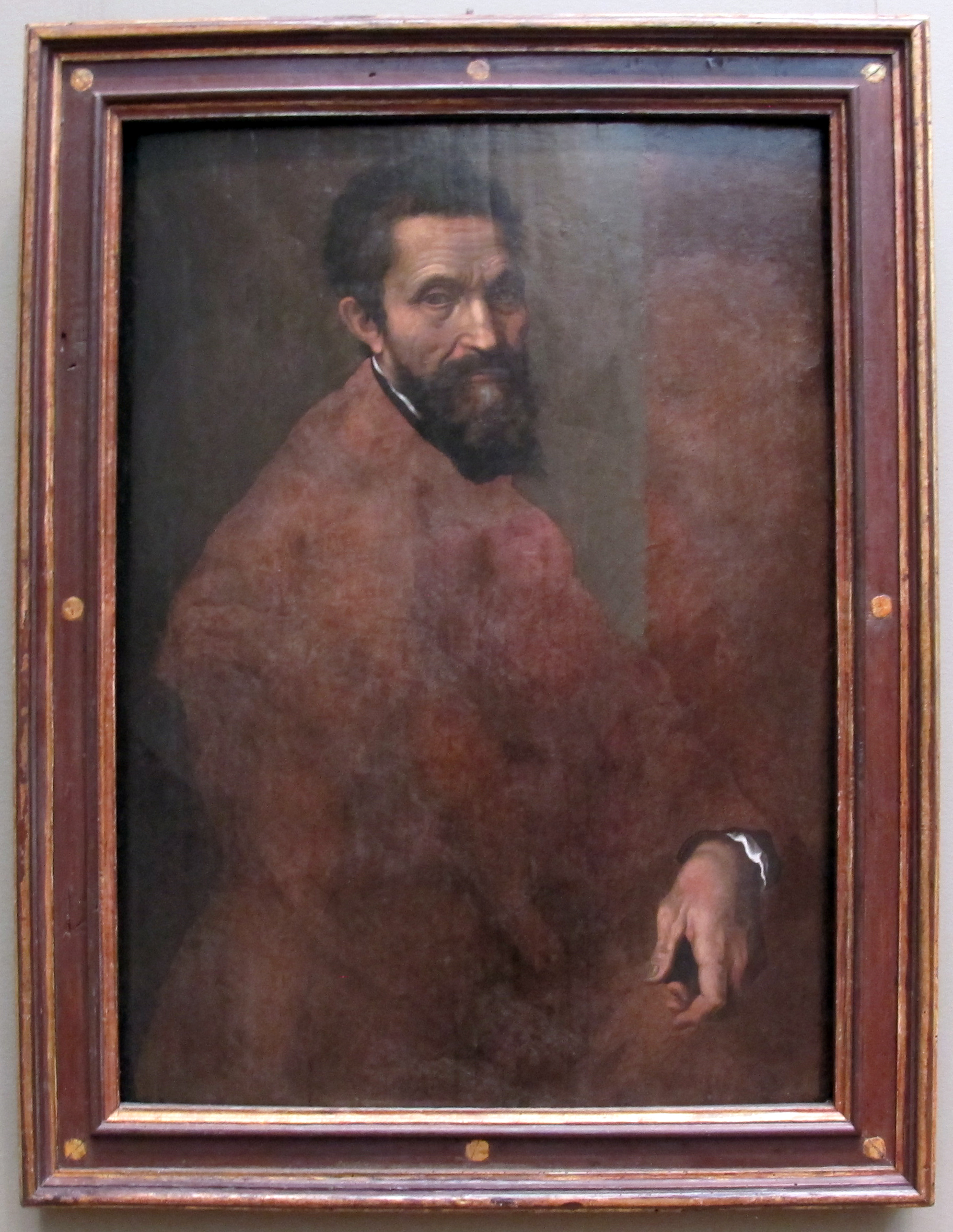 [credit](https://upload.wikimedia.org/wikipedia/commons/6/6a/Daniele_da_volterra%2C_ritratto_di_michelangelo_buonarroti%2C_1544_ca..JPG), [licence](https://creativecommons.org/licenses/by/3.0) ### The Lost Masterpieces of Leonardo and Michelangelo [Leonardo](/finder/page/why-is-leonardo-da-vinci-famous) was commissioned to depict the **Battle of Anghiari**, a Florentine victory over Milanese forces in 1440. This wasn't just a battle scene; it was a commission to create an icon of republican freedom—a clear statement of the Republic's resolve against tyranny. True to form, he tried an experimental technique involving heated waxes (a precursor to encaustic) that failed, and the work deteriorated even as he painted it. The central, surviving portion was known as the "Fight for the Standard," a vortex of horsemen locked in a desperate, snarling struggle, a study in pure fury that became legendary even in its unfinished state. The very choice of encaustic was part of [Leonardo](/finder/page/why-is-leonardo-da-vinci-famous)'s ambition. He sought a medium that would capture the lustrous sheen of armor and the subtle, shifting light of a chaotic battlefield, something he felt traditional fresco couldn't achieve. His preparatory drawings, or *cartoons*, became sites of pilgrimage for other artists who sought to learn the secrets of depicting motion and emotion. The power of his unfinished mural was such that for decades, even as it decayed, it was considered the finest depiction of the horrors of war ever created. What made Leonardo’s vision so compelling was its psychological depth. He wasn’t interested in a sterile, heroic depiction of war. He wanted to capture the *furia*, the animalistic rage and terror of combat. The snarling faces of the horses, the contorted bodies of the soldiers—these weren't idealized forms; they were raw, visceral studies of human (and animal) nature under extreme duress. For Leonardo, this was the perfect allegory for the Republic's own struggle: a desperate, ugly, but ultimately noble fight for survival. I find myself endlessly fascinated by Leonardo’s failures, perhaps even more than his successes. Here was a mind that couldn’t accept the limitations of his craft, that was always pushing towards a new technical solution. His failure in the Salone dei Cinquecento wasn't a sign of incompetence; it was a testament to his restless, experimental genius. It's a powerful reminder that even the greatest masters hit walls, that innovation is often a messy, imperfect process. 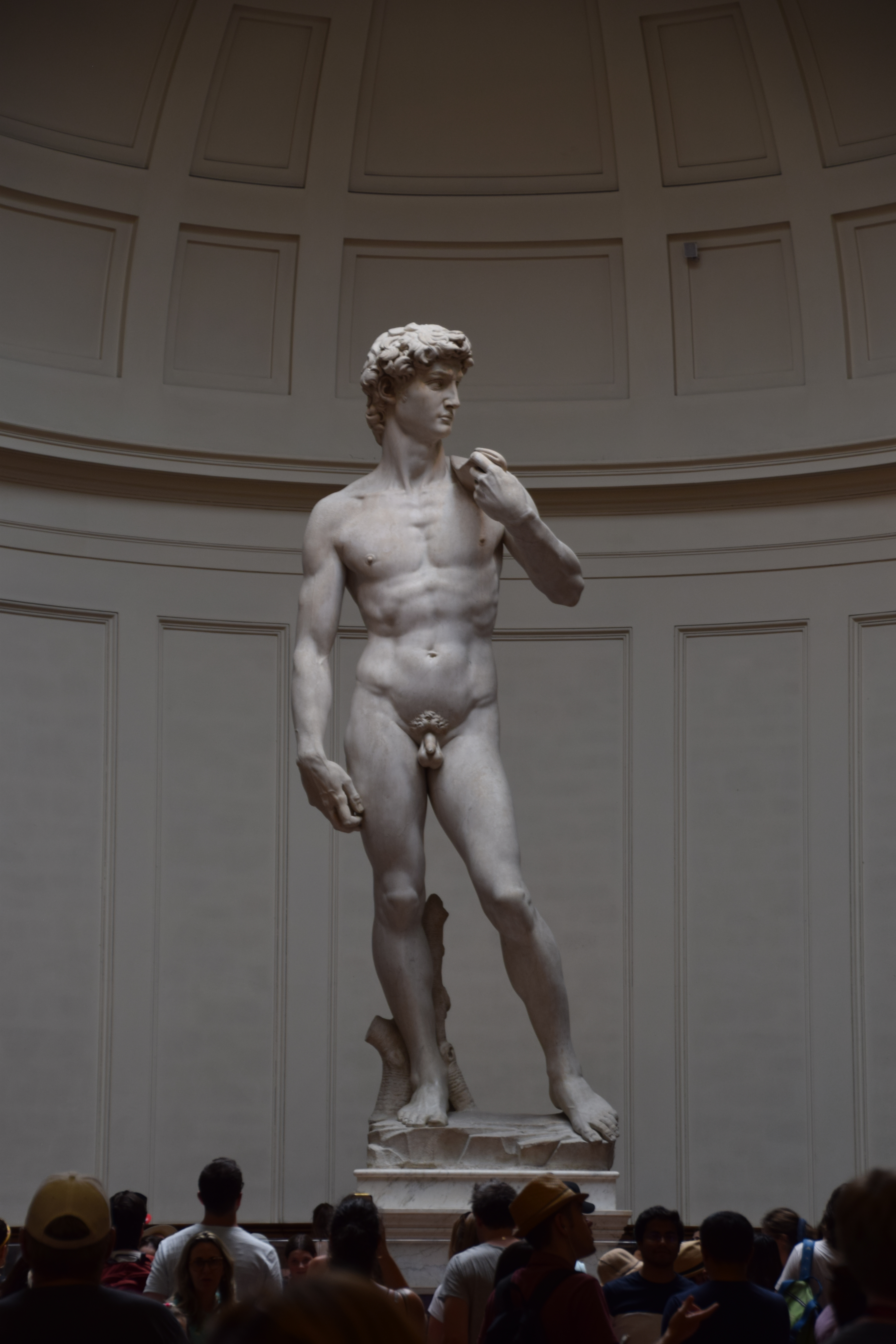 [credit](https://upload.wikimedia.org/wikipedia/commons/7/76/Galleria_dell%27Accademia_Michelangelo%E2%80%99s_David%2C_Florence_2019_-_48170250682.jpg), [licence](https://creativecommons.org/licenses/by/2.0) [Michelangelo](/finder/page/ultimate-guide-to-michelangelo), in direct competition, was set to paint the **Battle of Cascina**, but not a moment of combat. Instead, he chose the moment *before* the fight, when Florentine soldiers, bathing in the Arno River on a sweltering day in 1364, were startled by a surprise attack. He depicted them scrambling, nude or half-dressed, their bodies a symphony of heroic contortions showcasing his unparalleled understanding of anatomy. Can you imagine? The two defining battle scenes of the [Renaissance](/finder/page/italian-renaissance-art-beginners-guide), a duel of brushes, lost forever. It’s one of [art history](/finder/page/intellectual-curiosity-art-history)’s great “what ifs,” and the phantom presence of these works, a ghost echo of genius clashing on these very walls, still haunts the hall today. [Michelangelo](/finder/page/ultimate-guide-to-michelangelo)'s genius here was in his choice of moment. While Leonardo depicted the chaos *of* battle, Michelangelo showed the vulnerability and sudden panic just *before* it. The twisting, muscular bodies of the soldiers caught off-guard were a demonstration of his mastery of the male nude, a subject he explored with relentless passion throughout his career. This wasn't just a historical scene; it was a celebration of the idealized human form, implying that the strength and beauty of the Florentine people were the true source of the Republic's power. It was a completely different vision of heroism—one based on physical perfection and readiness, even in moments of apparent repose. Michelangelo's *Battle of Cascina* cartoon (the full-scale preparatory drawing) became one of the most influential artworks of the century, even more so than many finished paintings. Young artists, including Raphael and even the older Leonardo, flocked to see it. His mastery of the male body in complex, twisting poses—a style known as *figura serpentinata* or the serpentine figure—set the standard for the next hundred years of European art. Ironically, his work, which never even made it to the wall, ended up being more influential than most artists manage in a lifetime. 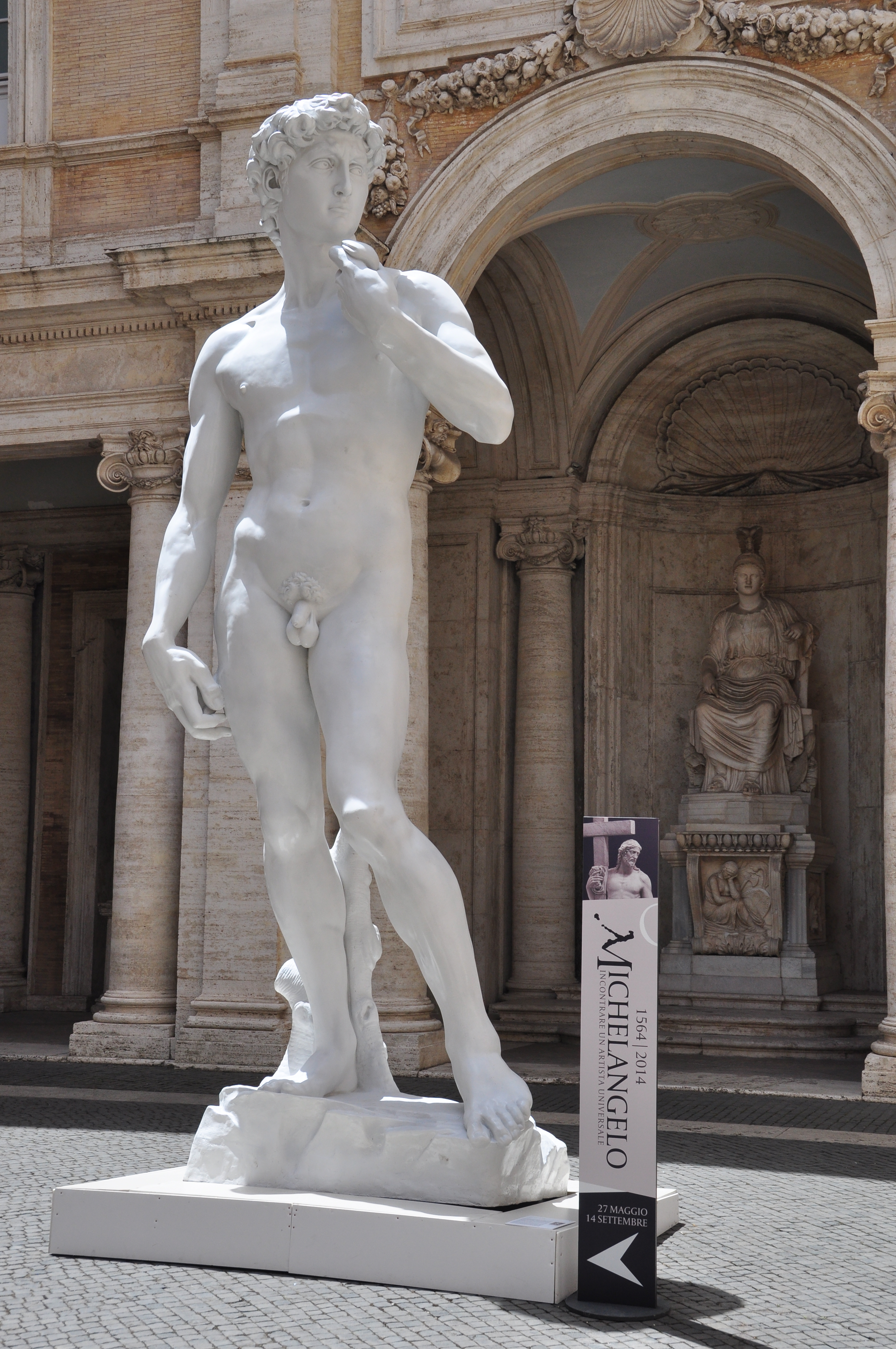 [credit](https://upload.wikimedia.org/wikipedia/commons/5/5e/Statue_of_David_-_Michelangelo.JPG), [licence](https://creativecommons.org/licenses/by-sa/4.0) ## The Apotheosis of Power: When the Medici Came Home Just a few decades later, the Medici family returned with a vengeance. In 1537, a distant cousin named Cosimo de' Medici, then just 17, was installed as Duke of Florence. He proved to be a political mastermind, ruthlessly consolidating power and transforming the city into a dynastic monument. The Palazzo Vecchio was his first project—their new canvas. Enter another titan: **Giorgio Vasari**. More than just a painter, Vasari was the world’s first true art historian. His book, *The Lives of the Artists*, literally defined the concept of the [Renaissance](/finder/page/italian-renaissance-art-beginners-guide) for centuries to come. Cosimo wasn't just your average power-hungry duke. He was a master strategist, a patron of science and the arts, and a man who understood the power of public relations long before the term existed. He transformed Florence from a struggling republic into a powerful duchy, eventually becoming the Grand Duke of Tuscany. His patronage wasn't just about personal vanity; it was a systematic, state-sponsored campaign to legitimize his family's rule and cement their place in history. Vasari wasn't just a painter to him; he was his Minister of Propaganda. Cosimo gave Vasari a brutal task: a complete makeover of the Palazzo. This was an act of historical erasure. Vasari was to scrub away the old republican sentiments—quite literally by painting over them—and layer the palace in a thick coat of Medici-approved propaganda. For Cosimo, art wasn’t just beautiful; it was statecraft. This was more than just a political takeover; it was a profound transformation of the building's very meaning. Where the Republic had sought to glorify collective civic virtue, the Medici sought to concentrate all glory in the person of the Duke himself. Cosimo, a master of public relations centuries before the term was invented, understood that visual language was the most effective way to legitimize his rule and solidify his family’s hold on power for generations to come. Vasari was his perfect instrument—an [artist](/finder/page/how-to-write-an-effective-artist-bio) who was also a brilliant myth-maker and court historian. Vasari's approach was holistic and architectural. He didn't just slap new paint on the walls; he redesigned entire rooms, built monumental staircases to create a sense of awe, and covered every available surface with a coordinated program of imagery. He was the ultimate artistic director, controlling everything from the grand frescoes to the stucco details on the ceiling. The result is a total work of art, an immersive environment designed to swallow you whole in the grandeur of Medici power. His masterpiece is the ceiling of the Salone dei Cinquecento. It’s a dizzying, overwhelming panorama of 39 painted coffered panels. Each coffer tells a different story, but they all sing the same song of Medici glory. Standing underneath it, you don’t just see a painting; you experience a calculated assault on the senses, a deliberate attempt to overwhelm you with the magnitude of Medici power. The sheer scale of the ceiling program was unprecedented. The 39 panels are divided into six transverse bands, each containing its own thematic cycle. The structure mimics the grand imperial architecture of ancient [Rome](/finder/page/best-galleries-in-rome), deliberately linking Cosimo’s rule to that of the [Roman](/finder/page/roman-empire-art-influence-history) emperors. The entire ceiling is supported by carved and gilded brackets featuring the heads of satyrs and lions, a constant visual reminder of Medici heraldry intertwined with classical power. Let's break down the key elements of this incredible work: **The Central Tondo:** This is the bullseye, the most important panel in the entire hall. Here, in the **Apotheosis of Cosimo I**, the Duke is not just a ruler; he is a demigod, being crowned by Florence herself, represented as the goddess *Florentia*. This is the core message: Cosimo's rule is not just political; it is divinely ordained, a restoration of a mythical [golden age](/finder/page/guide-to-the-golden-age-of-dutch-painting). It's the ultimate power statement, literally placing the ruler among the gods. **The Allegorical Cycle:** Surrounding this are scenes that link Cosimo directly to classical mythology and Roman virtue. We see him as a new Augustus, bringing peace and prosperity, echoing the first Roman emperor's own propaganda. We see Hercules performing his labors—the most prominent being *Hercules and the Hydra*, a direct allegory for Cosimo crushing the many-headed monster of republican rebellion. The message is clear: the Medici are the inheritors of [Rome](/finder/page/best-galleries-in-rome)'s greatness, and their strength is mythic in scale. **The Military Triumphs:** The most visually striking panels depict Cosimo's real-world military victories. The **Conquest of Siena** is a chaotic, violent scene of battle, a stark reminder of what happens to those who oppose Medici rule. The **Defeat of Pisa** reinforces this message of total domination. These aren't hidden away; they are front and center, serving as a potent warning to any visiting ambassadors or foreign dignitaries about the price of defiance. **The Sixteen Districts of Tuscany:** Flanking the central scenes are personifications of the sixteen cities and districts Cosimo brought under Florentine control. They aren't depicted as conquered enemies, but as willing participants in the grand Medici project, bringing offerings and paying homage. It’s a brilliant piece of political messaging, transforming subjugation into a harmonious union. **The Personification of Virtues:** Winged figures representing Fortitude, Justice, and Temperance float gracefully around the central scenes. Their presence is a constant reassurance: Medici rule is not tyranny, it is wise, balanced, and just. It's a brilliant piece of political messaging, equating the Duke's power with universal moral principles. 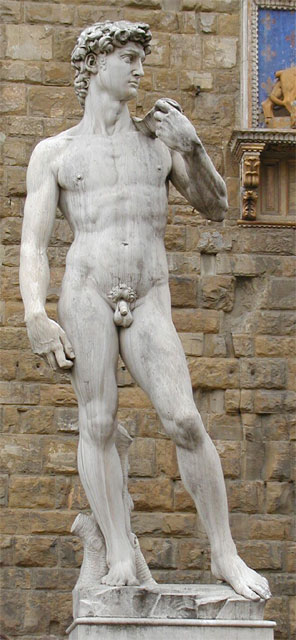 [credit](https://upload.wikimedia.org/wikipedia/commons/2/27/David_by_Michelangelo_in_Florenz.jpg), [licence](http://creativecommons.org/licenses/by-sa/3.0/) The iconography is meticulously political. At the center, in the most prominent tondo, the **Apotheosis of Cosimo I** sets the stage. Every panel radiates out from this core idea of divine right and earthly power. Military triumphs like the **Conquest of Siena** are placed not as mere historical records, but as divine judgments, the inevitable outcome of a ruler sanctioned by heaven. This isn't just history; it's theology.  [credit](https://upload.wikimedia.org/wikipedia/commons/8/88/Vitruvianischer_Mann.png), [licence](https://creativecommons.org/licenses/by-sa/3.0) Vasari’s true genius was in how he weaved it all together. A visitor could not escape the singular, overarching narrative. The program was designed to be read and experienced from a specific point in the room, likely where the Duke himself would sit or stand, orchestrating the entire political theater. Every figure, every scene, every swath of color contributes to a singular, almost deafening message: Cosimo is the divinely ordained, Herculean, and benevolent father of a new Tuscan golden age. Resistance is futile. It’s a masterpiece of persuasive design that leaves no room for doubt: the Medici are destiny. And to experience it is to understand how art, when wielded with political will, can become one of the most powerful tools on earth.  [credit](https://upload.wikimedia.org/wikipedia/commons/3/3e/Donatello%2C_san_giorgio_01.2.JPG), [licence](https://creativecommons.org/licenses/by/2.5) This isn't just decoration; it's a calculated narrative. Every panel, every figure, every symbol screams one message: the Medici are the heirs to Florence’s greatness, ordained by the gods themselves to bring order and prosperity. It’s an epic story written in paint and [gold leaf](/finder/page/what-is-gold-leaf-art).  [credit](https://images.pexels.com/photos/2043385/pexels-photo-2043385.jpeg), [licence](https://creativecommons.org/public-domain/) It also represents a fundamental shift in artistic patronage. The Republic commissioned works that glorified the city, the state, and its collective values. The Medici commissioned works that glorified the Medici. It's the moment where public art becomes, in many ways, an instrument of personal and dynastic ambition, a trend that would come to define the European courts for centuries to come.  [credit](https://pxhere.com/en/photo/973226), [licence](https://creativecommons.org/publicdomain/zero/1.0/) The program wasn't conceived in a vacuum. Vasari drew upon a long tradition of political iconography, but amplified it to a scale never before seen. Think of it as a [Renaissance](/finder/page/italian-renaissance-art-beginners-guide) version of a modern political campaign's media strategy—every visual element, from the largest battle scene to the smallest decorative putto, had a specific purpose and targeted a specific audience. For the common citizen, it was a reassurance of strength and stability. For the aristocracy and foreign powers, it was a display of wealth, military might, and divine right that demanded respect and obedience.  [credit](https://upload.wikimedia.org/wikipedia/commons/a/a4/Paintings_in_the_Gem%C3%A4ldegalerie%2C_Berlin_-_Room_VI_0.1.jpg), [licence](http://creativecommons.org/publicdomain/zero/1.0/deed.en) ## Beyond the Main Hall: The Intimate Treasures of the Quartieri Monumentali While the Salone dei Cinquecento will knock you off your feet, the real gems are hidden in the palace’s private apartments, the **Quartieri Monumentali**. This is where the style shifts from political bombast to intimate, opulent genius. We move from Vasari's epic scope to the elegant, almost whimsical world of [Mannerism](/finder/page/what-is-mannerism-art-movement). If the Salone was the public face of the regime—loud, aggressive, and overwhelmingly powerful—then the private apartments were the inner sanctum, the space where the ruling family and their most trusted courtiers lived, worked, and entertained. The art here had a different job to do. It wasn't about proclaiming dominance over the masses; it was about reinforcing the cultural and intellectual superiority of the Medici court to an elite audience. The tone changes from epic poetry to a series of intricate, sophisticated sonnets. The decoration of these apartments was a gradual process spanning decades, primarily orchestrated by Vasari and his highly organized workshop. Each room was dedicated to a specific member of the Medici family or to a virtue they claimed to embody. This allowed for a rich tapestry of themes, from mythological allegories to historical narratives, all designed to create an environment of cultivated power. Unlike the overwhelming singular message of the Salone, the apartments require a more intimate, conversational viewing, rewarding those who take the time to decode their complex programs.  [credit](https://upload.wikimedia.org/wikipedia/commons/c/cd/Sofonisba_anguissola%2C_autoritratto_con_spinetta%2C_1554-55%2C_Q358.JPG), [licence](https://creativecommons.org/licenses/by/3.0) These quarters were designed as a tour de force, each room representing a different virtue or genealogy connected to the Medici. Let's walk through a few of these remarkable spaces: **The Sala di Ercole (Hall of Hercules):** Here, Vasari and his workshop transformed the room into a dialogue between mythology and contemporary politics. Frescoes depict the Labors of Hercules, deliberately drawing parallels between the hero's strength and Cosimo I's own struggles to consolidate his power. For guests, the message was subtle but clear: you are in the presence of a demigod-like ruler whose authority is sanctioned by ancient legends. **The Sala di Gualdrada:** This room serves a slightly different purpose. It celebrates a medieval Florentine heroine, Gualdrada, who famously defied an emperor, supposedly inspiring the tradition of civic republicanism. This is a masterstroke of political appropriation. The Medici, who had just abolished the Republic, are positioning themselves as the ultimate defenders of Florence's long and noble tradition of independence and civic virtue. It's a way of having their cake and eating it too—claiming the Republic's legacy while dismantling its institutions. **The Sala dei Gigli (Hall of the Lilies):** This is perhaps the most visually stunning of the public rooms, and its core decoration predates the Medici makeover. The magnificent fresco of saints and Roman heroes is by Domenico Ghirlandaio, Michelangelo's own painting master. It culminates in his renowned altarpiece, *Madonna and Child with Saints Zenobius, John the Baptist, and Justus*. By preserving and integrating this masterpiece, the Medici were doing more than just acknowledging a great work of art. They were symbolically linking themselves to the era of the early Republic, suggesting a continuity of Florentine greatness from the age of Savonarola right through to their own rule. It was a clever way to say, "We are not destroying the old Florence; we are its ultimate fulfillment."  [credit](http://commons.wikimedia.org/), [licence](-) ### The Studiolo of Francesco I: A Cabinet of Curiosities in Paint If I had to pick one room that perfectly captures the Renaissance mind, this is it. It’s a tiny, windowless study built for Francesco I de’ Medici, Cosimo’s son. On the surface, it’s a decorative puzzle box filled with 34 mythological paintings—two tiers of them, stacked one upon the other. The lower tier, the doors of which once concealed Francesco's actual collection of wonders, represents the fundamental scientific and mythological building blocks of the universe: the Four Elements (Earth, Air, Fire, Water). The upper tier explores the divine harmony and human crafts that arise from this natural order. But it’s more than that. It’s a visual representation of the era’s obsession with the connection between the divine (the heavens), the natural world (earth and water), and mankind’s ability to harness it all through science and art (alchemy and metallurgy). Walking into this tiny space feels like stepping directly into the brain of a late-Renaissance prince—a place where science, magic, and art had not yet been wrenched apart by modernity. The very architecture of the Studiolo reinforces this concept. The lack of natural light forces the visitor to focus entirely on the microcosm within. The room becomes a self-contained universe, a physical representation of the hermetic tradition that believed the initiate could understand the macrocosm (the universe) by studying the microcosm (the self or a small, perfect model). It's a room built not for [public display](/finder/page/qa-public-art-commissioner), but for private, almost mystical contemplation. 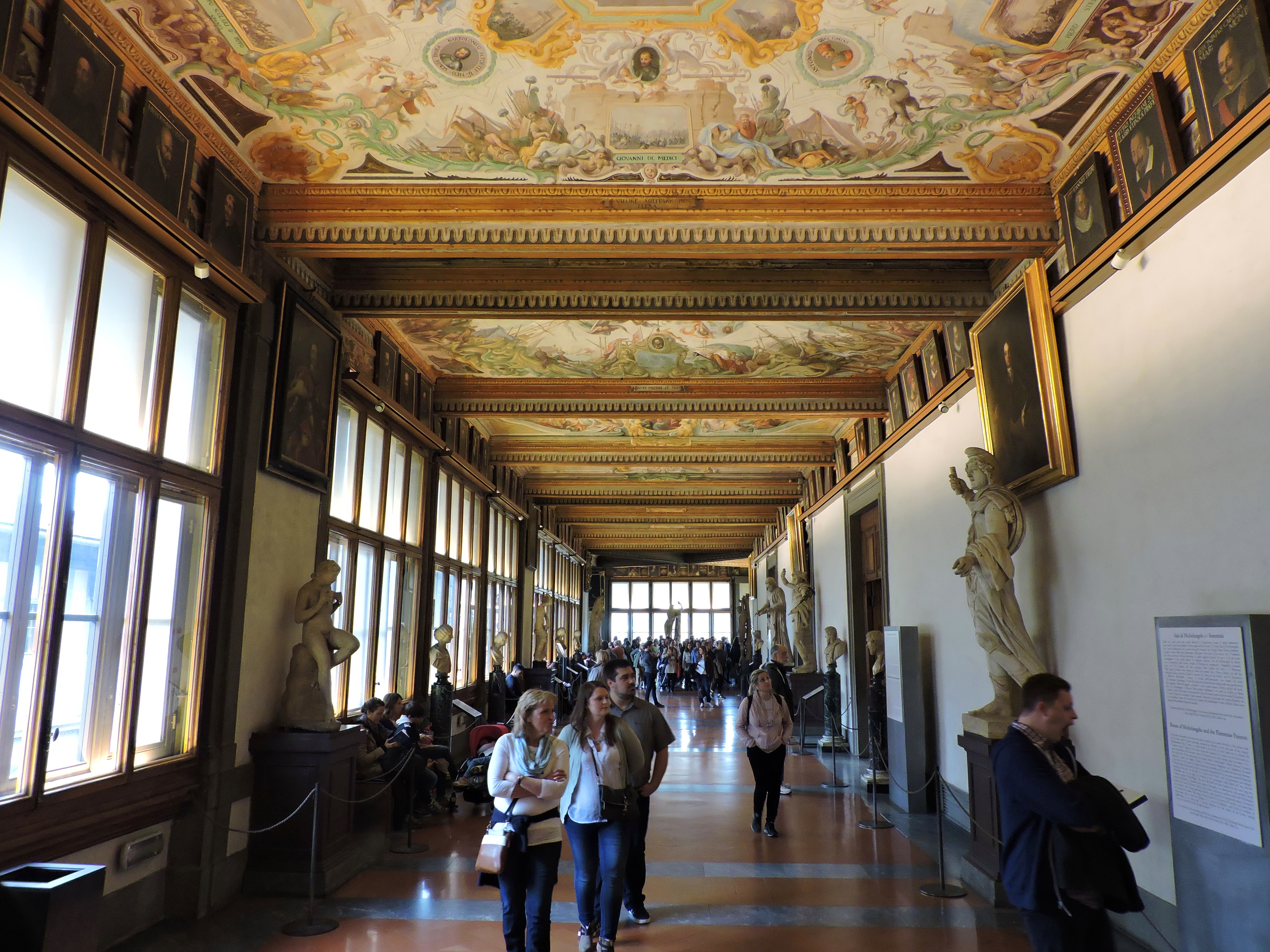 [credit](https://upload.wikimedia.org/wikipedia/commons/3/38/Galleria_degli_Uffizi%2C_Florence_%2826072960183%29.jpg), [licence](https://creativecommons.org/licenses/by/2.0) The iconography is dense and deeply personal to Francesco, who was a dedicated alchemist (much to his more pragmatic father's chagrin). Look closely and you'll see the work of the era's finest Mannerist painters. **Alessandro Allori** painted *The Pearl Fishers*, linking the bounty of the sea to princely wealth. **Giorgio Vasari** himself contributed *The Forge of Vulcan*, a direct metaphor for the alchemical process of transformation. **Agnolo Bronzino**, the master of icy elegance, is suspected to be behind several panels with his characteristically polished figures. The lower panels were cabinets that held Francesco's actual collection of rarities—fossils, gems, and exotic shells—making the painted allegories a direct mirror of his private world. But the real stroke of genius in the Studiolo is its programmatic coherence. The paintings aren't just random allegories; they're a carefully structured argument. You start with the base elements (the lower tier), see them transformed through mythical processes, which then support the higher arts and sciences (the upper tier). It's a visual thesis on how the raw material of the world is ultimately refined into culture, knowledge, and power. The room argues that a true prince, like Francesco, isn't just a political leader; he's a philosopher-king who understands the fundamental laws governing the universe. It's perhaps the most ambitious and intellectually dense work of art in the entire palace. This room is perhaps the ultimate expression of the Renaissance belief in the interconnectedness of all things. The painted allegory wasn't just a decoration; it was a philosophical statement. The *Pearl Fishers* isn’t just about harvesting wealth; it's about diving into the depths of the unknown (the sea, the unconscious) to retrieve precious knowledge. *The Forge of Vulcan* isn't just a classical myth; it's a direct reference to the alchemist's athanor (furnace), where base metals were believed to be transmuted into gold. This fusion of science and art wasn't just a hobby for Francesco; it was the central intellectual project of his life. Today, the cabinet doors are gone, the rare objects dispersed, leaving only the painted facades. We have to use our imagination to reconstruct the complete experience—the shimmer of a fossil, the glint of gold, the faint smell of polished stone mixing with the musty air. Yet, even in its current state, the Studiolo is breathtaking. It’s a portrait of a mind intoxicated by the possibilities of knowledge, a space where the line between rational inquiry and magical thinking blissfully dissolves.  [credit](https://upload.wikimedia.org/wikipedia/commons/d/d8/Paolo_uccello%2C_scene_della_crezione%2C_1430-32_ca.%2C_00.jpg), [licence](https://creativecommons.org/licenses/by/3.0) It feels like being inside a secret, a piece of art that’s also a code. It’s a room built for a prince to contemplate the hidden mechanics of the universe, a three-dimensional sonnet to the fusion of art and science. There's a quiet intimacy here that's completely absent from the grand public halls. This was a space for retreat, for solitary intellectual pursuit. The lack of windows isn't an architectural flaw; it's a deliberate choice to shut out the outside world, forcing the mind to turn inward. For any creative person, whether a 16th-century prince or a 21st-century [artist](/finder/page/how-to-write-an-effective-artist-bio), the idea of such a sacred, private space—a sanctuary dedicated entirely to the life of the mind and the act of creation—is incredibly powerful.  [credit](https://commons.wikimedia.org/wiki/File:Alte_Pinakothek.JPG), [licence](https://creativecommons.org/licenses/by-sa/3.0/deed.en) As a contemporary [artist](/finder/page/how-to-write-an-effective-artist-bio), I’m drawn to the idea of the Studiolo as a conceptual space. It’s a physical manifestation of the studio as a laboratory of ideas, a stark contrast to the gallery as a platform for public display. In a way, my own studio is my Studiolo—a place of trial, error, and contemplation, far from the pressures of the outside world. It’s a space dedicated not to the finished product, but to the messy, glorious process of discovery. The Palazzo Vecchio's Studiolo is a beautiful, 500-year-old reminder that every artist, regardless of medium, needs a place to simply think and create without an audience. ### The Loeser Collection: A Donation that Changed Everything Stepping out of the Renaissance and into the early 20th century, we encounter the generosity of [American](/finder/page/what-is-the-meaning-of-the-american-gothic-painting) art collector **Charles Loeser**. He fell in love with Florence and, upon his death in 1928, donated his exceptional collection to the city, on the condition it be housed in the Palazzo Vecchio. This isn't just a footnote in the building's history; it's a crucial chapter. Loeser, a wealthy American who was part of the intellectual circle of Bernard Berenson, wasn't just a random collector. He was a discerning connoisseur with a specific vision. His bequest was a carefully curated selection of paintings, sculptures, and decorative arts from the 14th to the 16th centuries, assembled to complement and complete the narrative already told within the Palazzo's walls. It was a remarkable act of patronage, a bridge between the age of the Medici and the modern era, ensuring that the Palazzo Vecchio would continue to live and breathe as a place of artistic importance, not just a historical monument.  [credit](https://images.pexels.com/photos/5035513/pexels-photo-5035513.jpeg), [licence](https://creativecommons.org/public-domain/) Loeser’s donation was revolutionary for its time. In an era when many collectors sought to amass treasures for their private mansions, he envisioned a public good, ensuring that these masterpieces would be accessible to the very citizens of the city that inspired them. He provided the palazzo with a 'collection within a collection,' filling gaps in its historical narrative and offering a perspective shaped not by Medici political needs, but by the connoisseurship of a modern, international art historian. 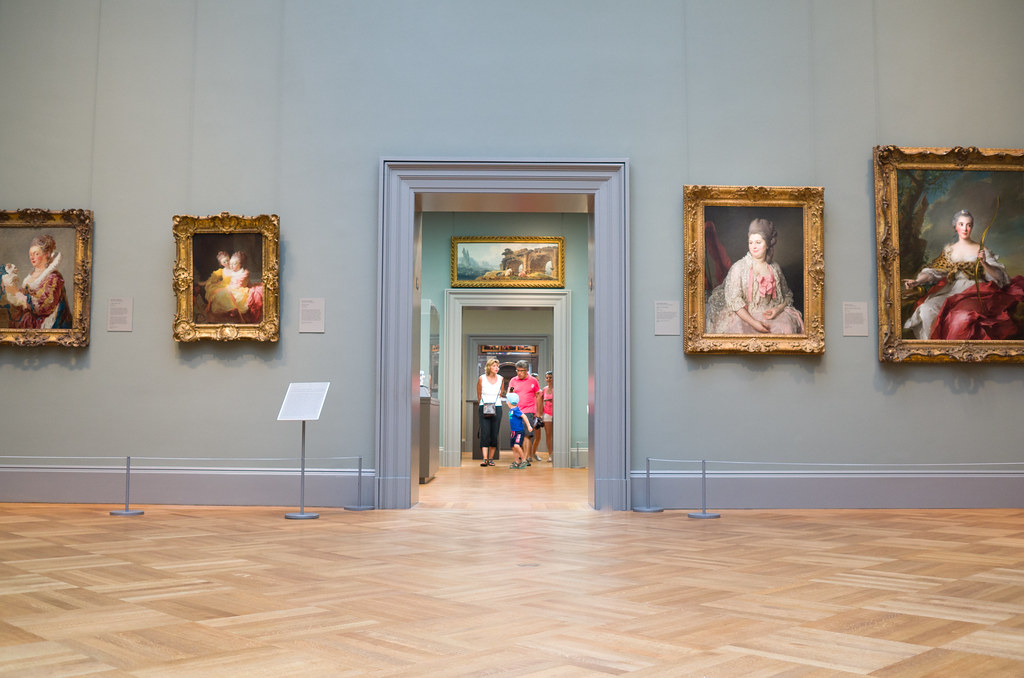 [credit](https://live.staticflickr.com/3866/14584653789_8e7d988c60_b.jpg), [licence](https://creativecommons.org/licenses/by/2.0/) The Loeser Bequest is a wonderful counterpoint to the grand, in-situ frescoes. It’s a walk through a connoisseur’s eye, featuring paintings, sculptures, and decorative arts from the 14th to the 16th centuries. This isn't just a random assortment of art; it's a focused collection meant to complement the Palazzo's existing decor and showcase Tuscan masters. The collection itself is a testament to evolving tastes. Loeser was particularly drawn to the earlier masters of the [Proto-Renaissance](/finder/page/the-influence-of-byzantine-art-on-renaissance-painting) and Quattrocento. Where the Medici favored the later, grander Mannerist style for their propaganda, Loeser filled his collection with more intimate works of serene piety and domestic elegance. Paintings by masters like Neri di Bicci and sculptures by the likes of Tino di Camaino show a different side of Florentine creativity—one focused less on dynastic boasts and more on personal devotion and civic virtue. It provides a quieter, more contemplative counter-narrative to the bombast of the Salone dei Cinquecento. 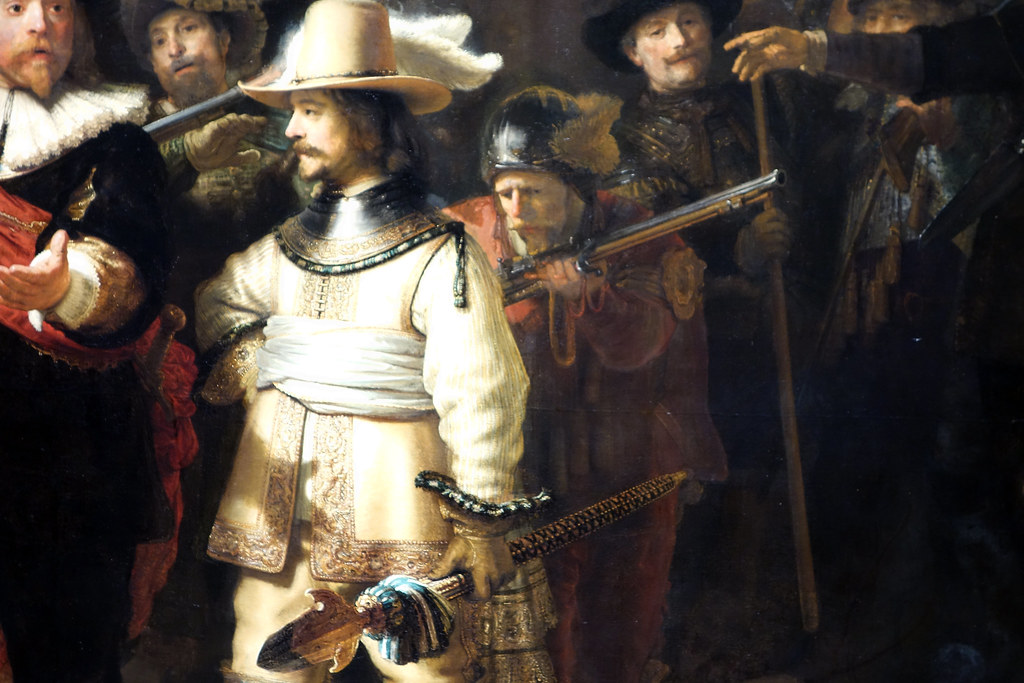 [credit](https://live.staticflickr.com/8651/16195556803_3f587498d2_b.jpg), [licence](https://creativecommons.org/licenses/by-nc-sa/2.0/) Among the treasures, you'll find an extraordinary range of artistic expression that moves far beyond the dynastic propaganda of the main halls. This is art collected for its aesthetic power and historical significance. 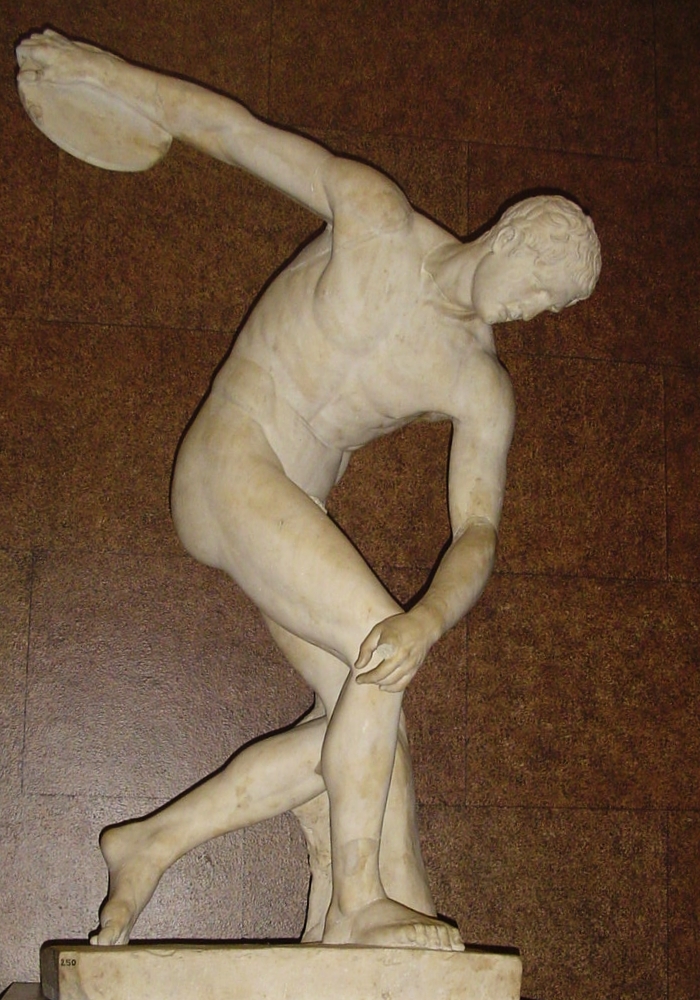 [credit](https://upload.wikimedia.org/wikipedia/commons/b/b8/Discobulus.jpg), [licence](http://creativecommons.org/licenses/by-sa/3.0/) - **Tino di Camaino's** serene and monumental [Gothic](/finder/page/art-for-gothic-interior-design) sculpture, *Madonna and Child*, showcasing a different, more ethereal style than the later Renaissance works. Carved with gravity and tenderness, it represents the profound spiritual current that ran through Florentine art long before the Medici. - **Andrea della Robbia's** glazed terracotta masterpieces, those instantly recognizable blue-and-white reliefs that bring a touch of sculptural color and pious beauty to the rooms. They represent a uniquely Florentine art form, one prized for its ability to bring a touch of divine grace into domestic spaces. - Mannerist paintings such as **Jacopo Pontormo's** *Portrait of a Young Man in a Red Cap*, a psychological study of a young Florentine noble, and **Agnolo Bronzino's** elegant and enigmatic *Portrait of Laura Battiferri*, the poet wife of sculptor Bartolomeo Ammannati. These are intensely personal works, focusing on the inner life and social identity of the individual—a stark contrast to the mythological pageantry of the state rooms. It adds a layer of texture to the Palazzo’s story, reminding us that the palazzo is not a frozen monument, but a living entity that has continued to collect and evolve. The Loeser collection provides a crucial external perspective. It's a 20th-century American's thoughtful commentary on 500 years of Florentine history, an act of reverence that allows us to see the main collection with fresh eyes. It completes the picture, adding a coda to the symphony. More importantly, Loeser understood what many modern visitors still struggle with: you can't truly appreciate Florence by focusing on a few famous names alone. The Palazzo Vecchio's collection, both original and donated, reminds us that the Renaissance was a chorus, not a solo performance. It was built on the foundations of earlier traditions and continued to evolve in unexpected ways long after the deaths of its most famous sons. This collection within a collection is a quiet argument for a richer, more complex understanding of [art history](/finder/page/intellectual-curiosity-art-history). 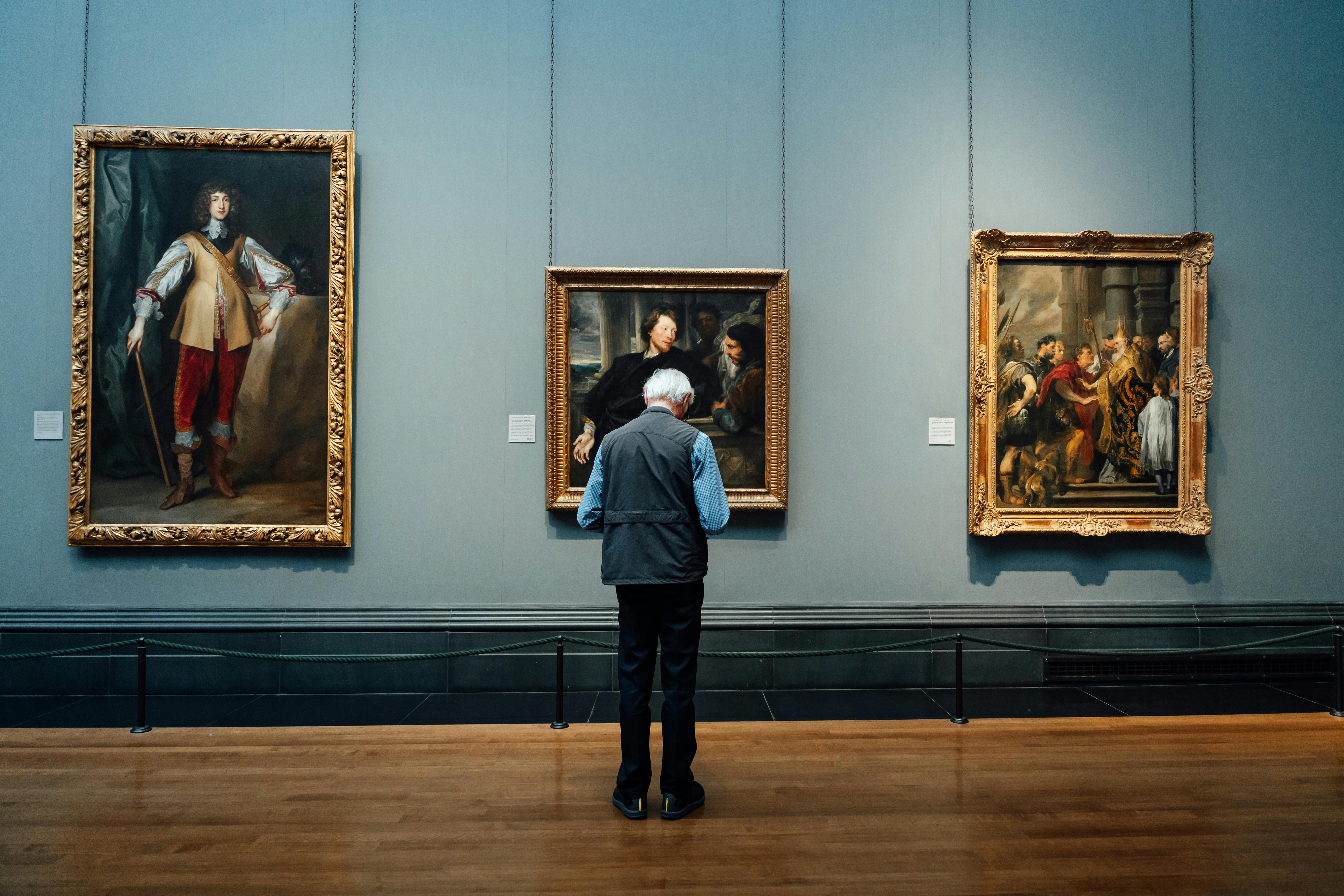 [credit](https://images.pexels.com/photos/30489691/pexels-photo-30489691.jpeg?cs=srgb&dl=pexels-mikegles-30489691.jpg&fm=jpg), [licence](https://creativecommons.org/public-domain/) ## Why This Palazzo Beats a Museum (Most Days) That personal connection is what sets the Palazzo Vecchio apart. It’s not a neutral space like a modern gallery. The art wasn’t brought here to be displayed; it was born here, commissioned here, and used here. The paintings on the walls are woven into the very fabric of the building’s history. You are standing in the heart of political power, surrounded by the propaganda that maintained it. It’s immersive history, not curated art. A museum asks you to look at art. The Palazzo Vecchio asks you to stand inside a painting and feel the politics, the ambition, and the sheer will to power radiating from the walls. It’s the difference between looking at a lion in a zoo and standing on the savannah as one roars. This distinction is critical. In a museum, a painting's frame marks a boundary, telling you, "This is an object separate from you." The white walls create a neutral void, forcing you to focus solely on the canvas. But in the Palazzo Vecchio, that separation doesn't exist. The frame is the room itself. The art is part of the architecture, which is part of the political history. The space itself is the complete work of art. You don't just see Vasari's ceiling; you are swallowed by it. You don't just look at a portrait in the Loeser collection; you encounter it in an intimate chamber that has been a backdrop for intrigues for 500 years.  [credit](https://images.pexels.com/photos/15925081/pexels-photo-15925081/free-photo-of-woman-looking-at-paintings-in-an-art-museum.jpeg), [licence](https://creativecommons.org/public-domain/) (That said, if you're interested in how historic spaces can be reimagined for contemporary art, I’ve written about another fascinating venue, the [Huis ter Heijden in the Netherlands](/den-bosch-museum).)  [credit](https://upload.wikimedia.org/wikipedia/commons/3/3f/Den_Haag_-_Mauritshuis_-_Johannes_Vermeer_%281632-1675%29_-_Girl_with_a_Pearl_Earring_c._1665.jpg), [licence](https://creativecommons.org/licenses/by-sa/4.0) ## The Architectural Canvas: How the Building Itself Became a Masterpiece We've talked about the paintings and the sculptures, but we can't ignore the canvas itself. The Palazzo Vecchio isn't just a neutral container for art; its very architecture is a political statement and a masterpiece of medieval engineering and Renaissance redesign. Constructed at the turn of the 14th century by the architect Arnolfo di Cambio, the building was originally known as the Palazzo della Signoria, the seat of Florence's republican government. Its design was a declaration of civic power: a fortress-like structure of massive rusticated stone that projected an image of impregnability and sober, republican virtue. It was meant to look serious and permanent, a stark contrast to the private palaces of the wealthy families it governed. Arnolfo di Cambio, the same man who designed the city's soaring cathedral, imbued the palazzo with a sense of unshakeable authority. The *bugnato*, or rusticated stonework, isn’t just for show; it’s a literal and symbolic gesture of weight, permanence, and military readiness. The two-tiered Gothic windows and the crenellated rooftop are direct borrowings from medieval fortress architecture, reinforcing the idea that this building wasn't a palace for pleasure, but a defensive bastion for the state. The message was clear to all, especially the city's arrogant nobles: the Republic is sovereign, and this building is its unbreakable foundation.  [credit](https://upload.wikimedia.org/wikipedia/commons/d/dd/Albrecht_D%C3%BCrer%2C_Peasant_and_His_Wife%2C_c._1497-1498%2C_NGA_6584.jpg), [licence](http://creativecommons.org/publicdomain/zero/1.0/deed.en) The most iconic feature, the 95-meter-tall **Torre d'Arnolfo**, is a marvel of precision. Look closely, and you'll notice it isn't perfectly centered on the building's main axis. This isn't a mistake; it's a brilliant piece of medieval engineering, designed to straddle the fortified walls of an older, ruined tower that was incorporated into the foundations. It's a literal and metaphorical layering of history. This off-center tower is more than just an interesting visual quirk. Its positioning required advanced engineering to ensure its stability, solving a structural puzzle that lesser architects might have avoided. By building this monumental belfry on the remnants of the old, it became a powerful symbol for the new Republic: a government built upon the past, but rising above it to see clearly across the city and the surrounding countryside. In a sense, the tower itself is the first act of Medici-like propaganda—not by the Medici themselves, but by the Republic they would eventually supplant.  [credit](https://encrypted-tbn0.gstatic.com/images?q=tbn:ANd9GcR0ItzCuspqmd_chh8jDEvifreUUH9H-NTP0NVY9szdS8hQuEbK5ku64DZv9hOEIzOyvgQ&usqp=CAU), [licence](https://creativecommons.org/licenses/by-sa/4.0) When the Medici took over, they didn't just repaint the walls; they fundamentally altered the building's relationship with the city. Cosimo I commissioned Vasari to create the **Uffizi** (literally "the offices"), a vast government administrative complex connected to the Palazzo by a secret elevated corridor. This was more than just a practical addition; it was a totalitarian gesture. The corridor, the **Vasari Corridor**, allowed the Duke to move unseen from his residence to his government offices, hovering symbolically above the heads of his subjects. The city was no longer something he lived within; it was something he controlled and moved over. The Vasari Corridor is the ultimate expression of Medici paranoia and power. Built in just five months in 1565 to celebrate the wedding of Cosimo’s son, Francesco, to Joanna of Austria, it allowed the Grand Duke to walk from his home in the Palazzo Pitti, across the river on the Ponte Vecchio, through the Uffizi, and into the Palazzo Vecchio, all without ever having to mingle with the public. It’s a piece of urban furniture that is also a political statement—the literal architecture of absolute power. It’s also where generations of Medici Grand Dukes would eventually place their most treasured self-portraits of artists, turning it into a gallery of artistic flattery where the greatest masters of the age paid homage to their patrons. [Read more about how these dynamic relationships can inspire contemporary art forms like the [abstract city map prints I create](/buy), where architectural space becomes a language of emotion and memory.] ### The Hall of Geographical Maps: The World at Cosimo’s Fingertips While the Salone dei Cinquecento shouted power through mythology and military might, another room in the Quartieri Monumentali whispered it through knowledge. The **Sala delle Carte Geografiche**, or Hall of Geographical Maps, is a world unto itself, both literally and figuratively. This long, narrow room, designed by Vasari in 1563, is lined with 53 large-scale painted maps, creating a three-dimensional atlas of the world as understood by 16th-century science. It’s a breathtakingly comprehensive project, showcasing coastlines, rivers, mountains, and cities with meticulous, albeit often fantastical, detail. For Cosimo, this room was more than just a library; it was a statement of global reach and intellectual mastery, a visual encyclopedia of his domains and the lands beyond. The maps were painted based on the most advanced cartographic knowledge of the time, much of it provided by the Dominican cartographer Ignazio Danti. They represent not just geographical places, but collections of human experience—navigational routes, strategic assets, and resources. For a ruler like Cosimo, this was the ultimate database, a physical manifestation of his ambition to understand and ultimately control everything under his purview. It was a direct continuation of the Studiolo’s obsession with knowledge, but scaled up for public consumption, proving to foreign visitors that the Medici were masters not just of art, but of science and statecraft. ### The Lost & The Found: The Mystery of the Leonardo Fresco No discussion of the Palazzo's architecture is complete without touching on one of the greatest art historical mysteries of all time: What happened to Leonardo's *Battle of Anghiari*? We know it was painted, or at least partially painted, on the east wall of the Salone dei Cinquecento. We know it began to decay almost immediately due to Leonardo's experimental technique. And we know that when Vasari was commissioned to redecorate the hall decades later, he covered it over with his own masterpiece, *The Battle of Marciano in Val di Chiana*. The question that has obsessed historians for centuries is: did Vasari destroy Leonardo's work, or did he, knowing its value, preserve it behind a new wall? The evidence is tantalizingly ambiguous. In his own writings, Vasari expresses profound admiration for Leonardo, which suggests he would have been reluctant to destroy a work by the master. More intriguingly, in the 1970s, art diagnostician Maurizio Seracini discovered a cryptic message in Vasari's fresco. Amidst a sea of waving green banners, two words are painted: *Cerca, Trova*—"Seek, and you shall find." And using endoscopic probes, he found a mysterious air gap and pigment residues consistent with Leonardo's original paint. This has led many to believe that Vasari, an architect as well as a painter, constructed a new wall in front of Leonardo's, a protective shell that ensured the survival of the older work for a future generation to discover. Recent non-invasive diagnostic surveys have continued to probe the wall, using thermography and radar to map the hidden structures behind Vasari’s painting. While these studies have confirmed the presence of an air gap and pigments not present in Vasari's visible layer, ethical and technical challenges have, for now, prevented any definitive confirmation or retrieval. This mystery continues to be a central part of the Palazzo's allure. Is it true? We may never know for certain. But the possibility that one of the greatest of all Renaissance masterpieces lies hidden, inches away from millions of visitors, is a ghost story that forever haunts the Salone dei Cinquecento. It transforms the room from a simple gallery into a time capsule, a riddle waiting to be solved. The story of the lost fresco represents the eternal conflict between preservation and progress, a theme that resonates deeply with any artist. We constantly paint over our old ideas, our failed experiments, building new visions on the foundations of the past. As someone who works with layers and textures, I find this idea incredibly powerful. The wall becomes a metaphor for the creative process itself—a constant act of revision and rediscovery. The Palazzo Vecchio, it turns out, is not just a Renaissance masterpiece; it is a living document of [art history](/finder/page/intellectual-curiosity-art-history)’s own messy, layered, and often hidden reality. ## Visitor's Guide to the Palazzo Vecchio Art Collection Planning a visit to this artistic powerhouse? Here’s a quick reference guide to make sure you don’t miss the highlights. Remember, this is a building where every corridor and every ceiling tells a story. _07.jpg) [credit](https://commons.wikimedia.org/wiki/File:Museo_Thyssen-Bornemisza_%28Madrid%29_07.jpg), [licence](https://creativecommons.org/licenses/by-sa/3.0/deed.en) | Element | Description & Art Highlights | What to Look For | | :--- | :--- | :--- | | **Salone dei Cinquecento** | The main council hall. Overwhelmingly decorated by Giorgio Vasari. | - **Ceiling Panels (*Apotheosis of Cosimo I*, etc.):** A dizzying display of Medici propaganda. Use binoculars or a zoom lens to appreciate the details. <br> - **Victory of Cosimo I at Marciano in Val di Chiana:** The massive, dynamic panel on the east wall. Look for the possible *Cerca, Trova* message. <br> - **The Genius of the Lost:** Spend a moment at the east wall and contemplate the ghost of Leonardo's unfinished masterpiece. | | **Quartieri Monumentali** | The private apartments, lavishly decorated. | - **Sala dei Gigli (Hall of Lilies):** Ghirlandaio's frescoes and altarpiece are a pre-Medici masterpiece of civic pride. <br> - **Sala di Ercole & Gualdrada:** Notice how Vasari's mythological scenes are carefully linked to Medici virtues. <br> - **Hall of Geographical Maps:** Often missed, this stunning room reveals the 16th-century worldview and the Medici's global aspirations. | | **Studiolo of Francesco I** | The small, hidden study of the Grand Prince. | - **Symbolism:** The paintings represent the four elements and the fusion of art and science. It's a riddle to be solved. <br> - **The Hidden Cabinets:** Imagine the rare objects that once filled the spaces behind the lower-tier paintings, turning the room into a true cabinet of curiosities. | | **Loeser Collection** | A donated collection from the 20th century. | - **Works by della Robbia:** The iconic blue-and-white glazed terracotta sculptures. <br> - **Sculpture by Tino di Camaino:** Masterpieces of serene Gothic beauty. <br> - **Paintings by Pontormo & Bronzino:** Look for the intense psychological realism in their Mannerist portraits. | !Exterior view of Villahermosa Palace (Thyssen-Bornemisza Museum)_07.jpg) [credit](https://commons.wikimedia.org/wiki/File:Museo_Thyssen-Bornemisza_%28Madrid%29_07.jpg), [licence](https://creativecommons.org/licenses/by-sa/3.0/deed.en)_07.jpg) [credit](https://commons.wikimedia.org/wiki/File:Museo_Thyssen-Bornemisza_%28Madrid%29_07.jpg), [licence](https://creativecommons.org/licenses/by-sa/3.0/deed.en) ### Quick Tips for the Art Lover - **Beat the Crowds:** The Salone dei Cinquecento is massive and absorbs people, but the Quartieri Monumentali can feel cramped. Visit the private apartments first thing in the morning when the light is best and the tour buses haven't arrived, then linger in the main hall. - **Visit on a Thursday Evening:** The Palazzo often offers extended hours on certain evenings in the off-season. Having the Salone dei Cinquecento almost to yourself as the light fades is an almost spiritual experience. - **Look Up (and Down):** The ceilings here are the main event, but don't forget the floors. Bring a pair of binoculars to appreciate the details in the Salone's coffered ceiling and the intricate inlaid stonework (*commesso fiorentino*) under your feet. Both are masterpieces in their own right, and the floors are often overlooked by visitors who are understandably overwhelmed by the walls and ceilings. I've spent hours just tracing the patterns in the marble. - **Don't Miss the Architectural Details:** Take time to appreciate the fine central Italian woodwork (*tarsia*), the gold leaf that animates every cornice, and the monumental fireplaces that were once the center of social life in these rooms. They're as much a part of the propaganda machine as the paintings. The doorways and their frames are also often overlooked masterpieces of stone carving, each one a deliberate act of framing and transition. ## Frequently Asked Questions (FAQ) ### Are the original Michelangelo and Leonardo battle paintings still visible in the Salone dei Cinquecento? Unfortunately, no. They were never finished and were eventually lost, likely painted over by Giorgio Vasari when he redecorated the hall for the Medici. In 1505, Leonardo abandoned his deteriorating *Battle of Anghiari* and Michelangelo was called to Rome by the Pope before he could even transfer his cartoon to the wall. For centuries, their presence was a ghost story. However, an intriguing project in the 1970s, led by art detective Maurizio Seracini, used endoscopic probes and radar scans behind Vasari's *Battle of Marciano*. They found a mysterious air gap and some pigment residues consistent with Leonardo's original paint. While tantalizing, no definitive proof has been recovered, and their lost status remains one of art history’s most enduring mysteries, a 'what if' that forever haunts the hall. The very absence of these works tells a powerful story about the nature of art, ambition, and the fragility of genius. ### Who was Giorgio Vasari, and why is he so important to the Palazzo? Giorgio Vasari was a painter, architect, and, most importantly for us, the first real **art historian**. He wrote *The Lives of the Artists*, the seminal book that defined the Renaissance for centuries. In the Palazzo Vecchio, he was far more than just the lead [artist](/finder/page/how-to-write-an-effective-artist-bio) and designer for Duke Cosimo I. He was the chief propagandist, the artistic director of the entire Medici image machine. He didn't just decorate rooms; he conceived and executed a total work of art, a Gesamtkunstwerk, where every fresco, stucco ornament, and architectural detail served the singular purpose of glorifying the Medici dynasty and legitimizing their absolute rule. He was, in effect, the Steve Jobs of Florentine statecraft—a brilliant designer with a singular, ruthless vision. Without Vasari, the Palazzo Vecchio as we know it simply wouldn't exist. ### What is Mannerism, the style seen in the Palazzo's later rooms? Think about it this way: the [High Renaissance](/finder/page/what-is-the-high-renaissance) of Leonardo, Michelangelo, and Raphael was all about perfect harmony, balance, and ideal beauty. How could you possibly follow that act? You couldn't. So [Mannerism](/finder/page/what-is-mannerism-art-movement), which came after, was a reaction. Artists like Bronzino (whose work is in the Studiolo), Pontormo, and Parmigianino started playing with elongated, serpentine figures, acidic or unnaturally refined colors, and complex, artificial compositions that prized elegance over naturalism. It’s sophisticated, often unsettling, and intellectually challenging, a self-aware style for a self-aware age. It's the visual equivalent of a jazz musician playing a complex improvisation on a simple tune—it takes the basic rules of the Renaissance and bends them into something new, strange, and incredibly elegant. Mannerism was a global phenomenon, as this guide to Asian art shows, often emphasizing symbolic complexity over realism. Absolutely. In fact, I think it’s essential. There’s a common misconception that to create something new, you have to ignore the old. I find the opposite is true. Standing in a place like the Studiolo, you realize that the *process*—the obsession with translating complex ideas into visual form—is what makes a studio a studio, whether it’s in 1570 or today. It’s not about copying the aesthetics. It’s about feeling that kinship with the creative struggle, the problem-solving, the translation of thought into line, color, and composition. Standing under Vasari's ceiling, you can't help but be impressed by the sheer audacity of it. Art as power. Art as persuasion. That's a timeless idea. Whether you're working with fresco or [creating an abstract print today](/buy), the fundamental goal is the same: to make a thought visible. That direct, unbroken line of creative problem-solving from the 16th century to the 21st is what keeps art alive.  [credit](https://upload.wikimedia.org/wikipedia/commons/b/bf/Fresco_depicting_Europa_and_the_bull_%2851357506898%29.jpg), [licence](https://creativecommons.org/licenses/by/2.0) But inspiration doesn't have to be so serious. For me, a modern abstract artist, being surrounded by so much *stuff*—all those frescoes, all that gold—makes me appreciate the power of restraint. It makes me want to return to my studio and explore the weight of a single line on an empty canvas. It’s a dialogue across the centuries, and like any good conversation, it challenges your assumptions and forces you to think differently about your own work. ## Conclusion: More Than a Museum The Palazzo Vecchio isn’t just a container for Renaissance art; it *is itself* a work of Renaissance art. It’s a story told in wood, stone, and paint, a testament to the political theater at the heart of the Renaissance itself, a period you can explore further in our [guide to Italian Renaissance art](/finder/page/italian-renaissance-art-beginners-guide). It forces you to see art not as something detached from life, but as something integral to it—a tool for persuasion, a source of power, and a manifestation of a society's deepest ambitions. As a contemporary artist, I find that the Palazzo’s influence goes beyond historical appreciation. There's a very real connection between the audacious, large-scale works produced there and the challenges artists face today with [large-scale abstract art](/finder/page/my-journey-with-large-scale-abstract-art-challenges-and-triumphs). The questions remain the same: How do you hold a vision together over a huge canvas? How do you create an environment that immerses the viewer completely? The solutions developed within these walls continue to inspire us, even if our palettes and purposes have changed. The journey through its halls is a journey through the very soul of the Renaissance. We begin with the grand, public spectacle of the Salone, a room born from the ambitions of a republic and transformed by the ego of a duke. We move through the intimate, coded language of the private apartments, where power is expressed through elegance and erudition. We step into the hidden mind of a prince in the Studiolo, and we receive a final, thoughtful commentary from a modern collector in the Loeser rooms. This complex layering of periods and programs is what makes the Palazzo Vecchio an unparalleled document of Western art history.  [credit](https://images.pexels.com/photos/8096480/pexels-photo-8096480.jpeg), [licence](https://creativecommons.org/public-domain/) It's a cliché to say you can feel the history in a place, but here, it’s true. You can almost hear the rustle of silk, the whispers of intrigue in the Salone, the clink of alembics in the Studiolo, and the confident stroke of a master’s brush defining the world as his patron wished it to be seen. Today, the palazzo continues to evolve, hosting contemporary exhibitions that can feel just as radical in their own way, like the works shown at the [Huis ter Heijden](/den-bosch-museum). This, perhaps, is the ultimate lesson of the Palazzo Vecchio: that art is never just an object on a wall. It is an act, a declaration, a power play. And in these halls, you are not just a spectator; you are standing right in the middle of it. Art is an act of persuasion. It is a declaration of identity. It is a power play. The Palazzo Vecchio teaches us that these three things are inseparable. In a world saturated with digital imagery, visiting a place like this is a physical, almost demanding experience. It forces you to confront art not as pixels on a screen, but as a monumental, tangible force that has shaped the course of human history. The stones, the paintings, the very air you breathe inside the Palazzo Vecchio all tell the same story: art is not a luxury. It is, and has always been, a matter of power. So, the next time you walk past that stern, frowning facade in the [Piazza della Signoria](/finder/page/piazza-della-signoria-art-history-guide), remember that it's all a performance. It was built to be one. And the greatest show on earth—the drama, the intrigue, the raw, untamed ambition of the Renaissance—is still playing out, right there inside.