Applying lean principles to manage your art studio: A practical guide for artists
Discover how applying lean principles from manufacturing can revolutionize your art studio, eliminating waste and boosting creative flow. It's about working smarter, not harder.

The Studio as a Factory: What a Realist Painter Taught Me About Running an Art Business
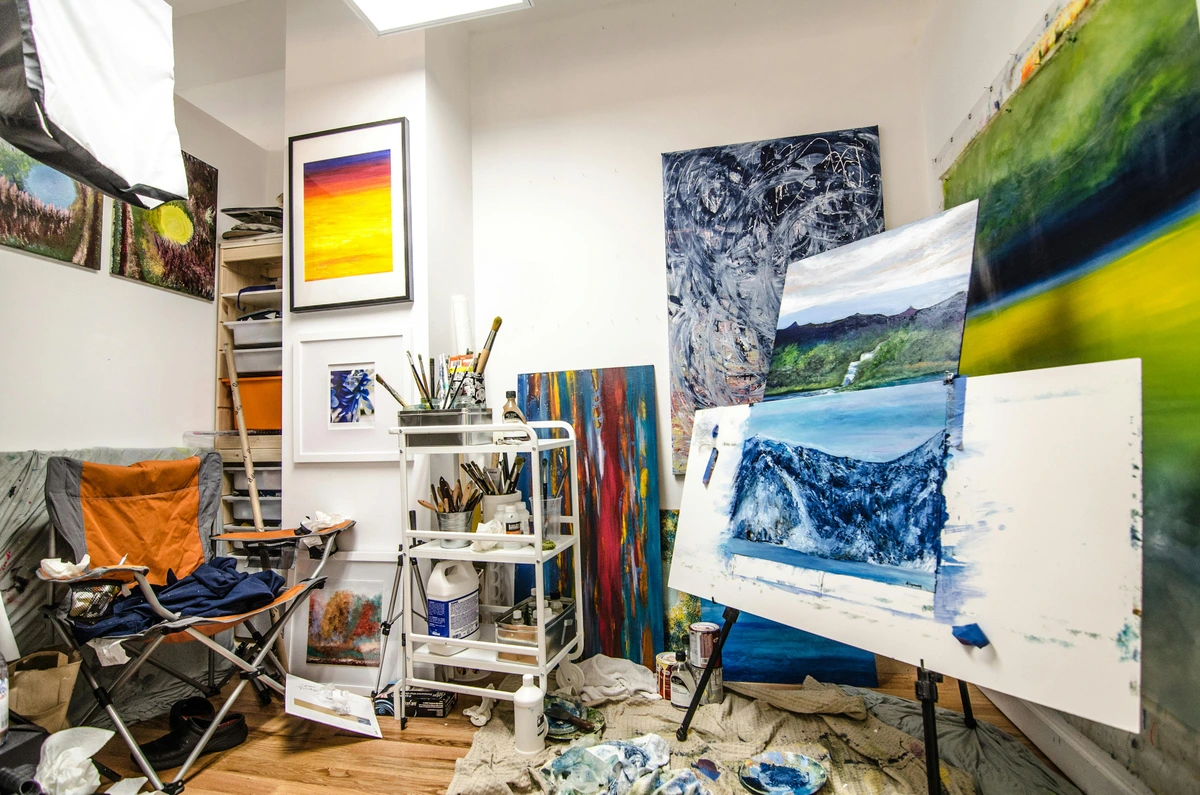
I have a confession to make. For years, the business side of my art practice was a chaotic mess. Canvases piled up in corners, materials were always just slightly out of reach, and I’d waste precious creative hours hunting for a specific shade of cadmium red. My studio wasn't a sanctuary for creativity; it was a very expensive, very messy storage unit where art occasionally happened.
It took a disastrous commission for a local coffee shop—a still life that just wouldn't sing, no matter how many hours I fiddled with the lighting and composition—to finally force a change. I was paralyzed. Not by a lack of skill or vision, but by the sheer friction of my own environment. Every step towards creation was a battle against entropy. That’s a battle you’re destined to lose unless you fundamentally change the rules of engagement.
I know what you’re thinking: isn’t some degree of chaos just part of the artistic soul? Maybe. But feeling overwhelmed by your own workspace isn't a personality trait, it’s a logistical failure. I learned this the hard way, and I learned it because of a failed still life.
That’s when I stumbled—quite literally, tripping over a box of old brushes—into the world of lean principles. It sounds about as un-artistic as it gets, doesn’t it? Lean manufacturing. Toyota factories. The words themselves feel sterile. But bear with me, because this is not about turning your sacred creative space into a soulless assembly line. It’s about something much more profound: it’s about removing the mundane friction that prevents you from making your best work.
Think of it this way: an artisan and a factory worker might seem worlds apart, but both are engaged in a process of transformation. The difference is that one process is optimized to death, while the other is often left to chance. What if we stole the best ideas from the factory floor and brought them back to our sanctuaries? What we'd find is that removing wasteful, non-value-added activities doesn't kill creativity—it unleashes it. It clears the mental and physical debris, allowing a state of deep focus where the real magic happens.
What Are Lean Principles, and Why Should an Artist Care?
The core idea of lean thinking is devastatingly simple: relentlessly pursue the elimination of Muda (無駄)—the Japanese word for waste. In a factory, waste might be excess inventory, unnecessary motion, or waiting for a machine. In the studio, waste is all the stuff that isn't painting, drawing, or creating. It’s the hour you spend reorganizing before you can start. It's the paint you let dry out because you can't find the cap. It's the mental energy you burn just trying to remember where you put that reference photo.
It's easy to dismiss this as just "being more organized," but that misses the point entirely. A messy artist who intuitively knows where everything is can be more efficient than a "tidy" artist with a poorly thought-out system. The goal here isn't tidiness for its own sake. The goal is to build a system that creates flow. It's about designing your physical space and your daily habits so that creative work becomes the path of least resistance. When you no longer have to fight your studio to make art, you've won.
This isn't about squeezing every second of productivity out of your day. It’s about identifying the invisible speed bumps that slow down your creative momentum. When your tools are organized, your supplies are visible, and your process has a rhythm, you free up an incredible amount of mental RAM. That newfound clarity can then be channeled directly into your art.

Two other key pillars of lean thinking—often overshadowed by the relentless focus on waste—are just as critical for an artist: Mura (斑), the elimination of unevenness, and Muri (無理), the elimination of overburden.
Mura is about creating a steady pace. It's the unevenness of frantic, deadline-driven work followed by weeks of creative drought. It's the stop-start rhythm of a hobbyist. The lean solution is Takt Time—the steady, rhythmic heartbeat of your practice. It might be a commitment to three hours of focused work, five days a week, irrespective of "inspiration." It's about showing up and keeping the engine warm, so you're not always starting from a cold start.
Muri is asking yourself or your tools to do the impossible. It happens when you take on a commission with an unrealistically tight deadline, forcing you to rush a process that demands patience. Or when you push a brush to its physical limits, trying to get a sharp line from a worn-out, splayed filament. It's forcing a solution instead of respecting the natural properties of your materials and your own creative pace. Lean asks us to recognize these unreasonable demands ahead of time and design systems to prevent them.
The Seven Wastes of the Modern Art Studio
The original lean framework identified seven types of waste (Muda). Let's translate them from the factory floor to the painter's palette. Understanding these categories isn't an academic exercise; it's like learning to diagnose an illness. Once you can name the problem—ah, this is the waste of motion—you can begin to formulate a cure and build a more resilient, more joyful artistic practice.

1. The Waste of Overproduction: Making Stuff Nobody Asked For
In art, this is the compulsion to create on spec or far ahead of demand. Do you really need to print fifty giclée copies of a piece before you know if anyone even wants one? I fell into this trap. I’d create a small series and immediately think, "I need prints!" only to have them sit in a portfolio for a year. It's a form of creative gambling, betting on a future demand that may never materialize.
Lean solution: The modern antidote is print-on-demand. It eliminates the waste of money on un-sold inventory and the physical waste of space. More profoundly, it frees you to focus on the next original piece instead of managing a stockroom. It’s a pull, not a push, system. Your customers “pull” a print into existence by ordering it. You don't "push" a stack of inventory into the world hoping it will sell.
But overproduction isn't just about physical goods. It's also about creating digital content nobody asked for. Are you spending hours on social media posts that don't connect with anyone? That's a digital form of overproduction. The lean approach would be to track your engagement (the "pull" signal) and focus your content creation efforts where you see the most genuine response.

2. The Waste of Inventory: Stuff Just Sitting Around
This is the mountain of materials we all accumulate. That impulse buy of a dozen canvases because they were on sale, the "artist-grade" paints you’ve been "saving for a special project" for three years, the rolls of unused paper. This excess is dead capital. It's money that could be reinvested, taking up space that could be used for creation.

Lean solution: Embrace the practice of Just-in-Time (JIT) inventory. Buy materials for the project you are currently working on or the one you will start next week. Not for the hypothetical masterpiece you might paint next summer. This tiny shift forces you to be more intentional with your purchases and keeps your studio light and uncluttered.
3. The Waste of Motion: Your Studio is Not a Gym
Every step you take to find a tool, a solvent, or a clean brush is a moment of friction. How many times have you walked from your easel to the sink, then to the drying rack, then back to the easel? This constant, inefficient movement adds up, draining your energy and breaking your concentration.
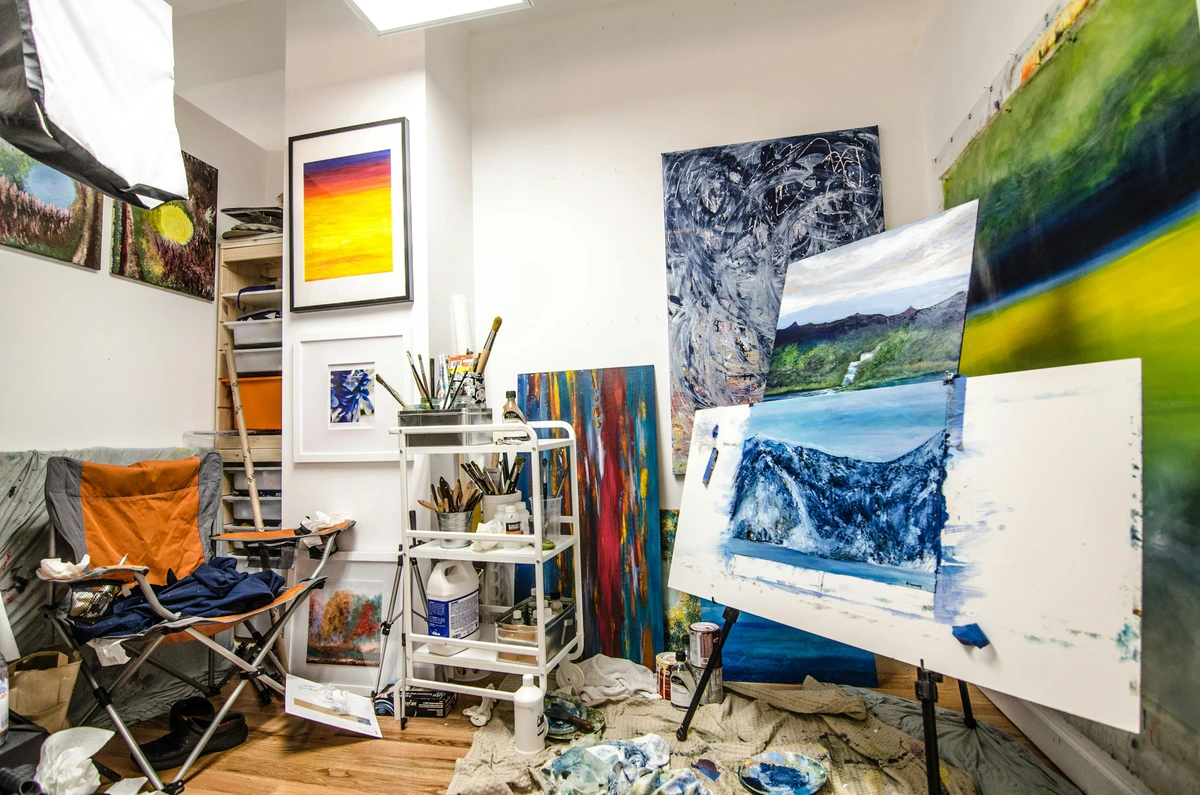
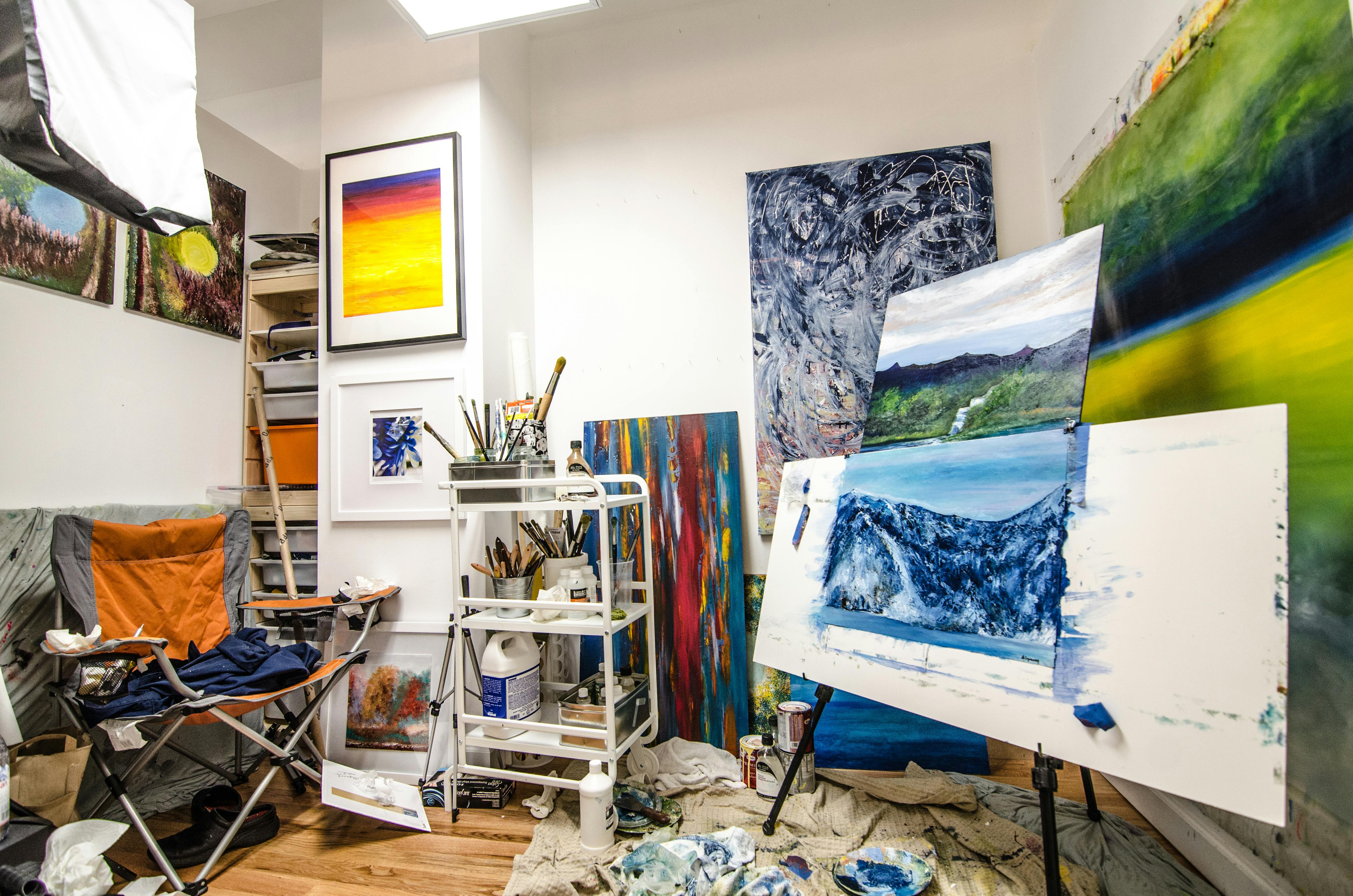
Lean solution: Think like a chef designing a kitchen. Arrange your most-used tools and materials in a tight orbit around your main workspace. Keep your solvents, mediums, and rags within arm's reach. Store brushes you use daily in a jar on your taboret, not in a drawer. The goal is to create a U-shaped cell where everything you need is right there.
4. The Waste of Waiting: The Creator's Enemy
Waiting is agony for a creative mind. Waiting for paint to dry, for a canvas to be primed, for a varnish to cure. While some of this is unavoidable chemistry, we often create our own waiting periods. We wait for "inspiration" to strike. We wait until we feel motivated to order supplies. This idle time is the killer of momentum.
There's a subtle but pernicious form of waiting I call the "inspiration tax." It's the time spent staring at a blank canvas, waiting for a fully formed idea to download into your brain. The lean mindset reframes this completely. You don't wait for inspiration; you build a system that makes inspiration more likely. You prepare the ground, plant the seeds, and trust that action will precede clarity, not the other way around.
Lean solution: Introduce parallel processing into your workflow. While one piece is drying, why aren't you sketching compositions for the next one? While you're waiting for an order of linen to arrive, why not prepare the stretcher bars so they're ready the moment it does? Lean is about keeping energy and ideas flowing, not waiting for the perfect moment to act. A great way to work on something new while a piece is in progress is to create small studies, which you can often find for sale in my gallery here: /buy.
Develop a "work-in-process" (WIP) queue. The rule is simple: you must always have at least two or three pieces in different stages of completion. One might be in the initial sketching phase, another might be mid-way through painting, and a third might be drying before its final glaze. This structure ensures that there's always something you can be productively working on. The painter's version of "a place for everything and everything in its place" is "a task for every stage and every stage has a task."

5. The Waste of Overprocessing: Gold-Plating the Brush
This is the artist’s perfectionism trap. You keep fussing, tweaking, adjusting, and re-working a piece long after it was finished. Is that 30th glaze really adding something essential, or are you just scared to call it done? Overprocessing saps the life and energy from a piece.
Lean solution: I'm not saying you should rush your work. I'm saying you need a system to know when it's done. My rule of thumb is a simple checklist adapted from lean’s Jidoka (automation with a human touch): Does it fulfill the initial vision? Have I solved the main compositional problem? Do any more brushstrokes actively make it better? If I can answer yes, yes, and no, it's time to sign it and move on.
6. The Waste of Defects: Creating for the Bin
Ah, the failed paintings. The ones that end up painted over or, worse, in the trash. This is the most painful form of waste—a direct loss of time, materials, and creative spirit. But here's the thing the lean perspective forces you to confront: the true cost isn't the canvas or the paint. It's the time you spent not learning.
A "defect" isn't just a bad painting. It could be a mis-shipped order, a poorly primed canvas that you only discover halfway through, or a typo on your artist statement. It's any failure in your process that requires rework or leads to an unhappy customer (even if that customer is you).
Lean solution: The goal isn't to prevent all failures; that's impossible. The goal is to fail fast and learn. This is where Kaizen (改善), or continuous improvement, comes in. Instead of getting discouraged, treat each failed piece as a data point. Why did it fail? Was the initial sketch flawed? Did the colors not work? Keep a simple log of these "defects" and their root causes. You’ll quickly see patterns emerge that you can correct in your next piece, dramatically increasing your success rate over time.
The most important lean tool here is the Andon Cord. It sounds complex, but it's just a system for stopping the process when a defect is found. In your studio, your "andon cord" might be a simple rule: if you realize a piece is fundamentally flawed (the composition is unsalvageable, the drawing is wrong), you must stop immediately. Don't waste another five hours trying to fix it. Acknowledge the failure, mark it as a lesson in your log, scrape the canvas, and move on. This prevents compounding wastes of time and materials.
7. The Waste of Transportation: The Hidden Costs of Moving Things
This is the effort it takes to move your work and supplies around. Carrying finished canvases to a storage rack, transporting work to a gallery, or even just walking dirty brushes to the cleaning station. Every transfer is an opportunity for damage and a tax on your time.



Lean solution: Minimize the