ASTM Testing: The Science Keeping Art Alive
A detailed analysis of how scientific ASTM testing provides the measurable, repeatable foundation for art conservation, demystifying how conservators use standards to arrest decay.

# The Secret's in the Numbers: How ASTM Testing Quietly Saves Our Art
You’ve probably never heard of [ASTM International](/finder/page/astm-standards-art-materials), and honestly, before I started digging into the back-end of museum conservation, neither had I. It’s not the kind of thing that makes for a thrilling artist’s biography. But I've come to realize it's one of the most critical, unspoken guardians of the art we love. Imagine a world where the materials used to restore a [Rembrandt](/finder/page/ultimate-guide-to-rembrandt-van-rijn) were a shot in the dark, or where the plastics in a contemporary print yellowed and cracked within a decade because nobody had a reliable way to measure their stability. That’s the world we’d be living in without the quiet, methodical, and frankly, brilliant work codified by [ASTM](/finder/page/astm-standards-art-materials-explained) standards. It’s a world of rigorous, repeatable truth in a field often governed by subjective genius, and it's what allows that genius to endure.
Consider this: every time you use a pencil, you're relying on a standard that defines its hardness. The "2" in a 2B pencil isn't arbitrary; it's a quantifiable measure of the graphite-to-clay ratio, ensuring that a 2B from one brand behaves almost identically to a 2B from another. Now, extrapolate that level of precise, methodical, and almost boring consistency to the most valuable objects humanity has ever produced, and you begin to understand the quiet revolution that ASTM has brought to art. It's the difference between a workshop recipe passed down through generations ("a pinch of this, a dash of that") and a pharmaceutical-grade formula where every variable is measured, every impurity is known, and every batch is tested. This is the unseen infrastructure of permanence.
This isn't about rigid rules stifling creativity. It’s the exact opposite. It's about building a foundation of certainty so strong that conservators can make their creative, problem-solving choices with confidence. It’s the scientific bedrock that lets them play the long game against time, humidity, and entropy. Let’s pull back the curtain. This foundation is built on a simple, profound idea: that to protect something as invaluable as art, we need to replace uncertainty with data, folklore with physics, and hope with hard evidence. It's the difference between trusting a single testimonial and demanding a double-blind, peer-reviewed study. It's the reason a museum in [New York](/finder/page/art-lovers-guide-to-new-york-city) can trust a restoration done in [Florence](/finder/page/best-galleries-in-florence), because the adhesives, the tests, and the very language of material science are all speaking the same, rigorously defined dialect.

[credit](https://live.staticflickr.com/6194/6053042920_f5d01173fb_b.jpg),
[licence](https://creativecommons.org/licenses/by-nd/2.0/)
## What Exactly Is ASTM, and Why Should an Artist Care?
[ASTM](/finder/page/astm-art-materials-standards) International—which stands for the American Society for Testing and Materials, a name so straightforward it’s almost quaint—is a non-profit organization that develops and publishes voluntary consensus technical standards. Think of them as the recipe writers for materials science. But instead of a recipe for chocolate chip cookies, they write the recipe for how to test if a new varnish will protect a [painting](/finder/page/what-is-action-painting) for 200 years, or if an adhesive used in a paper restoration will fail catastrophically in high humidity.
The process itself is fascinating. It's a living example of democracy applied to science and industry. These aren't rules handed down from a government agency. They are living documents forged by a committee of—and this is the crucial part—volunteers. These committees are composed of producers (the material manufacturers), users (the conservators and artists), and general interest members (academics, consultants). This democratic process for creating technical truth means a proposed standard might be debated for years before it's approved, ensuring it's not just technically sound but also practically useful. This collaborative model is why these standards have such immense global buy-in. It's science by consensus, not by decree. It's the reason a museum in [New York](/finder/page/art-lovers-guide-to-new-york-city) can trust a restoration done in Florence, because the adhesives, the tests, and the very language of material science are all speaking the same, rigorously defined dialect.
Founded in 1898 to prevent rail failures by standardizing steel, its scope has exploded. From ensuring literal tons of steel don't fail catastrophically on a bridge to ensuring a single, delicate brushstroke doesn't flake off a canvas, the core idea is the same: trust, but verify with data. It's an invisible shield, forged in laboratories and committee meetings, that allows art's emotional fire to keep burning for centuries.
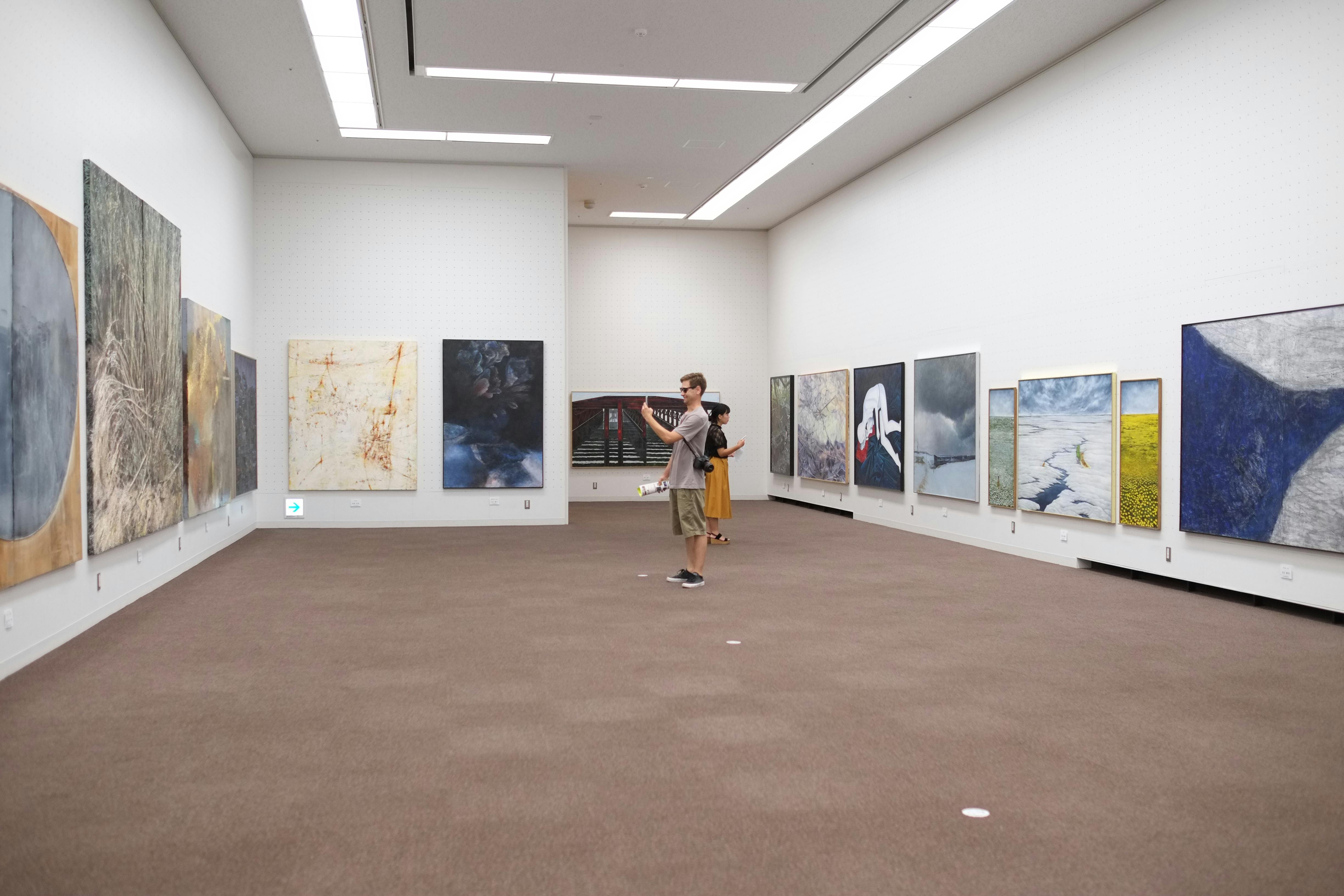
[credit](https://images.pexels.com/photos/16201759/pexels-photo-16201759/free-photo-of-people-taking-photos-in-an-art-gallery.jpeg),
[licence](https://creativecommons.org/public-domain/)
Founded in 1898, it started with a simple goal: to prevent rail failures by standardizing the steel used in train tracks. Over a century later, its reach has expanded into almost every industry you can imagine—from aerospace to consumer products—and its quiet, systematic approach has become the bedrock of modern conservation science. It’s a fascinating journey: from ensuring literal tons of steel don't fail catastrophically on a bridge to ensuring a single, delicate brushstroke doesn't flake off a canvas. The core idea is the same: trust, but verify with data.

[credit](https://live.staticflickr.com/2777/4273968004_4a7b1490c0_b.jpg),
[licence](https://creativecommons.org/licenses/by/2.0/)
## A Tale of Two Papers: My “Aha!” Moment
My first real “aha” moment with this came when I was researching archival papers for my own prints. I kept seeing terms like "**acid-free**" and "**lignin-free**." Those sound great, right? The marketing is certainly convincing. But it’s one thing to claim it, and another entirely to prove it. I had two seemingly identical sheets of [white paper](/finder/page/best-paper-for-charcoal-drawing) in my studio. One was a cheap, store-brand "sketch" paper, the other a pricey, artist-grade sheet labeled "100% rag, acid-free." To my eye and hand, they were nearly the same. The real difference was invisible, lying dormant in their chemical makeup.
Lignin, a natural polymer that acts as the "glue" in wood-based paper, is the enemy of longevity. Over time, it breaks down and releases acids, causing the paper to yellow and become brittle—a process you've seen in old newspapers. The claim "lignin-free" is a promise that this process has been arrested. But how do you trust it? It’s like the difference between a chef claiming a sauce is hot and actually measuring it with a thermometer. The number doesn't lie.

[credit](https://live.staticflickr.com/7843/32715738628_5c2e221061_b.jpg),
[licence](https://creativecommons.org/licenses/by-nc/2.0/)
This is where the invisible hand of ASTM starts to become visible. I discovered that paper manufacturers rely on standards (like **D2176** for testing paper folding endurance, and **D4443** for its susceptibility to light!) to put real numbers to those claims. These aren’t opinions; they’re repeatable, verifiable measurements. The test for acidity, for example, isn't a marketing manager's hunch. It's likely **ASTM D778**, a standardized method using a pH meter on a precisely prepared sample. A paper can only be called acid-free if it hits a specific, measurable pH level. As an artist, that knowledge transforms a marketing buzzword into a quantifiable reality. It gives me profound peace of mind. It means I'm not just relying on a company's good intentions. Their data has to pass a test that's bigger than their brand.

[credit](https://live.staticflickr.com/3236/2977858484_cfbb1c6823_z.jpg),
[licence](https://creativecommons.org/licenses/by-nc-sa/2.0/)
## From Paintings to Plastics: Where ASTM Standards Come to Life
ASTM standards touch nearly every corner of [art conservation](/finder/page/definitive-guide-to-art-conservation). They provide the common language and toolkit that allows a [conservator](/finder/page/qa-with-an-art-conservator-preserving-your-valuable-art-collection) in Tokyo to understand and trust the materials used by a colleague in Amsterdam. This global consistency is the cornerstone of modern, collaborative conservation science.
But the influence of these standards begins long before a [conservator](/finder/page/qa-with-an-art-conservator-preserving-your-valuable-art-collection) ever touches a damaged artwork. It starts with you, the artist, choosing materials in a studio or store. When a paint manufacturer claims their pigment has "excellent lightfastness," that claim is made credible through rigorous adherence to **ASTM D4303**, which establishes standardized methods for determining the lightfastness of artists' paints under specific lighting conditions. This isn't a guess; it's a measurement. A tube of paint that earns a Lightfastness I rating has been tested to resist fading for decades, if not centuries, under museum-quality lighting. It empowers you to become the first guardian of your work's longevity. This is how a brand's promise becomes a quantifiable guarantee, a contract with the future.
[credit](https://images.pexels.com/photos/12488407/pexels-photo-12488407.jpeg),
[licence](https://creativecommons.org/public-domain/)
### Propping Up the Masters: Structural Stability
I remember standing in front of a massive canvas at the [Van Gogh Museum](/finder/page/best-galleries-in-the-netherlands), the paint thick and energetic. All I could think was, "That thing is heavy." The structural integrity of a [painting](/finder/page/what-is-action-painting)—the canvas, the stretcher bars, the glue—is a constant battle against gravity. The wood in the stretcher bars themselves isn't immune to time; it can warp, twist, or introduce acids into the canvas. This is where standards like **ASTM D1037** come in, evaluating the physical and mechanical properties of wood-based materials to ensure they won't degrade in ways that damage the painting.
Think of it like building a house. You wouldn't use a wood that you know will warp in five years; you'd demand lumber graded for its stability. A [conservator](/finder/page/qa-with-an-art-conservator-preserving-your-valuable-art-collection) is a cosmic architect, building a structure—a restoration—designed to last for centuries, not just decades. They need to know the load-bearing capacity of an adhesive under high humidity, or the dimensional stability of a piece of canvas under tension, and standards like **ASTM D5034** (tensile strength of fabrics) and **ASTM F1252** (properties of linings for paintings) give them that data.

[credit](https://live.staticflickr.com/8299/27757322384_b54aae6e10_b.jpg),
[licence](https://creativecommons.org/licenses/by-nc-sa/2.0/)
Conservators use standards like **ASTM D5034** (for testing tensile strength of fabrics) to assess the [canvas itself](/finder/page/what-is-raw-canvas-a-guide-for-artists). Before applying a new adhesive, they’ll test it using methods from **ASTM D3432** to measure its shear strength. This tells them, with scientific certainty, if their patch will hold the weight of the paint without failing. It’s engineering, plain and simple, applied to protect aesthetic genius. Each test is a small act of future-proofing, a bet on permanence in a world of entropy. These empirical tests replace a dangerous cocktail of guesswork and hope with hard data, ensuring the repair will outlast us all.

[credit](https://upload.wikimedia.org/wikipedia/commons/3/34/Collections_Storage_Archives_of_American_Art.jpg),
[licence](https://creativecommons.org/licenses/by-sa/2.0)
### The Chemistry of the Invisible: Adhesives and Solvents
This is where the magic gets really subtle. A [conservator](/finder/page/qa-with-an-art-conservator-preserving-your-valuable-art-collection) often needs to remove old, discolored varnish without touching the original paint underneath. It's like trying to peel a sunburn without disturbing the healthy skin. They can't just use any old cleaner. A wrong choice could irreversibly soften a priceless brushstroke, leaching out pigments and turning genius into mud. The margin for error is effectively zero. Every solvent application is a calculated risk, governed by data from tests like **ASTM D5401**. This is where standards like **ASTM D5401** are life-savers. It provides a detailed guide for testing the solubility of resins and polymer-based coatings. A conservator can test a mild solvent against both the varnish and a tiny, hidden sample of the original paint to find the perfect chemical key—one that dissolves the gunk but leaves the masterpiece untouched. It transforms guesswork into a precise science. Imagine having to defuse a bomb where the red wire is a 500-year-old resin and the blue wire is the original glaze. This is that level of precision, but with molecules instead of explosives.
This process, known as solubility testing, involves applying minute amounts of different solvents—from gentle aqueous solutions to carefully buffered ethanol mixtures—to discreet test patches, often under a microscope. The conservator is looking for the perfect 'dissolution window': a solvent that acts on the varnish but is inert to the original medium. It's a chemical negotiation, and ASTM D5401 provides the rulebook.

[credit](https://upload.wikimedia.org/wikipedia/commons/e/e9/Judy_Chicago_with_flight_hood.jpg),
[licence](https://creativecommons.org/licenses/by-sa/4.0)
Beyond cleaning, when a tear needs mending or a flake needs re-adhering, the choice of adhesive is another high-stakes decision. A bad adhesive can discolor, become brittle, or fail unexpectedly, or even leach plasticizers that stain the original canvas. Standards like **ASTM D816** (Standard Test Methods for Rubber Cements) and **ASTM D3432** (Standard Test Method for Compressive Strength of Adhesive Bonds) directly relate to the performance of adhesives. They help a conservator select an adhesive with the correct strength, flexibility, and long-term stability, ensuring it won't outlive its usefulness and become a future problem for another conservator to solve. The goal is reversibility—a core ethical tenet of modern conservation—so that future generations with better technology can undo our work if necessary. This principle dictates that any material added to an artwork must be removable without damaging the original, a safeguard against both past mistakes and the future's unknown needs.
### Into the Light: The Battle Against Fading
If adhesives are the structural engineers of conservation, solvents the chemists, then the fight against light is pure physics. Light is both the revealer of art and its most relentless, patient destroyer. It's a form of energy, and when it strikes a pigment molecule, that energy has to go somewhere. Too much, and the molecule breaks down, its structure altered, its color forever changed. The vibrant crimson of a rose in a still life slowly bleeds out to a dull, lifeless pink.
This is where standards like **ASTM D4303** become the non-negotiable guardians of an artwork's visual soul. It's the test that gives meaning to the 'lightfastness' ratings you see on tubes of paint. The process is brutal in its honesty: paint samples are exposed to a controlled, high-intensity light source—either a xenon-arc lamp that mimics full-spectrum sunlight or a fade-o-meter. They are left to bake for hundreds or even thousands of hours, a forced march through simulated decades of gallery exposure. After this ordeal, the samples are compared to a protected control sample. The color difference is measured with a spectrophotometer, a device that sees color more objectively than the human eye ever could.
Only a paint that shows minimal to no change earns the coveted Lightfastness I (Excellent) rating. A paint experiencing slight fading gets a II (Very Good). Anything less is, for a serious artist, a liability. This isn't just a theoretical concern. Have you ever seen an old movie poster that's been in a shop window? The colors are ghosts of their former selves, the blues and yellows having surrendered to the constant barrage of photons. That same process is happening to every artwork on every wall, just at a slower rate. **ASTM D4303** is our time machine, letting us peer into that possible future and choose the colors that will have the courage to stand their ground.
Interestingly, this battle isn't just fought on the canvas. As artists, we decide how much energy hits the work in the first place. Museum lighting is a masterclass in controlled minimalism. Ever wonder why flash photography is forbidden? It's not just about copyright; it's about physics. A camera flash is an intense, point-source burst of energy, a tiny act of accelerated aging with every pop. Standards like **ASTM E2649** (Guide for Control of Routine Maintenance in Museums) and **CIE 157:2004** (a non-ASTM standard from the International Commission on Illumination, but used globally) recommend exposure levels. For extremely light-sensitive works like watercolors or textiles, the recommendation can be as low as 50 lux (about the level of a dim home living room). For more stable oil paintings, it might be a cautious 200 lux. This is the constant, low-level warfare waged in every museum: a fight for permanence, one photon at a time.

[credit](https://live.staticflickr.com/1679/25230769303_9b38b97a3f_b.jpg),
[licence](https://creativecommons.org/licenses/by-nc-nd/2.0/)
### Bracing for the Future: Modern Materials and Accelerated Aging
For [contemporary art](/finder/page/how-do-you-define-contemporary-art), the challenges are different but no less daunting. My own work, and the work of many artists, uses synthetic materials, plastics, and complex media. These have unknown long-term trajectories. We are, in effect, running a long-term experiment every time we use a new acrylic medium or a novel synthetic varnish. A piece might look pristine today, but will the plasticizer in the vinyl leach out in 50 years, causing it to crumble? Will that vibrant magenta acrylic fade to a dull mauve? This is the central paradox of preserving the new: we are using materials with no historical record of failure, or success.
ASTM standards for **accelerated aging** are how we get a sneak peek at the future, turning decades of real-time decay into weeks of controlled laboratory simulation. Tests like **ASTM F1980** (which simulates the effects of time and environment on packaging, but is used for art materials too) and **ASTM G155** (which uses xenon-arc light to simulate years of gallery lighting in a few weeks) allow scientists to predict material stability. It’s a controlled, if slightly terrifying, glimpse into the lifespan of a work of art.

[credit](https://live.staticflickr.com/2739/4188216142_f77d710904_b.jpg),
[licence](https://creativecommons.org/licenses/by-nc-nd/2.0/)
The process is ingenious. A material sample is placed in a chamber where temperature and humidity are cranked up to extreme levels, simulating decades of degradation in a matter of weeks. By measuring changes in the material’s color, flexibility, and strength, scientists can extrapolate its expected lifespan under normal museum conditions. It's a form of material soothsaying, a scientific crystal ball. They are, in essence, creating a time machine that runs in fast-forward. The crucial standard for this in art is **ASTM D4785** (Practice for Testing the Performance of Accelerated Aging for Clear Coatings), which outlines specific parameters for simulating exposure to heat, light, and moisture. Similarly, tests based on **ASTM D4459** (Accelerated Aging of Adhesives by Oxygen-Pressure Method) can predict how glues and consolidants will behave over time. This is the ultimate act of long-term thinking, sacrificing a small sample in the present to save the larger work in the future.

[credit](https://live.staticflickr.com/2696/4101134176_fd82946a75_c.jpg),
[licence](https://creativecommons.org/licenses/by-nc-sa/2.0/)
This data allows a collector to make an informed decision, and it pushes material manufacturers to innovate. For an artist, understanding these tests can influence the very materials we choose to bring into our studio. These tests don’t just predict failure; they also validate success. When a manufacturer claims their new pigment is 'museum-grade,' it’s because it has likely survived a grueling battery of these tests with its chroma intact. It's an arms race against time, and ASTM provides the standard for victory.
[credit](https://upload.wikimedia.org/wikipedia/commons/9/91/Hudson_River_Scene_MET_DT2891.jpg),
[licence](http://creativecommons.org/publicdomain/zero/1.0/deed.en)

[credit](https://live.staticflickr.com/8208/8185829539_c527bed5af_b.jpg),
[licence](https://creativecommons.org/licenses/by-nc/2.0/)
## The Conservator’s Toolkit: A Real-World Workflow
We often think of a conservator’s work as a solitary, almost monastic practice of careful cleaning. But a major part of it is being a meticulous data analyst, interpreting a story told by the material itself. A typical conservation lab is a hybrid space, part artist's studio and part scientific laboratory, filled with microscopes, spectrophotometers, and sample vials alongside brushes and scalpels. The work is a constant dialogue between the object and the data. The art object is a witness, a piece of evidence; the conservator is the detective and the translator, and the [ASTM standard](/finder/page/astm-standards-art-materials) is the grammar of their scientific testimony.
Here’s a simplified look at how ASTM standards might guide the restoration of an old oil painting with surface grime and flaking paint. This table represents a typical, high-level workflow—in reality, every artwork presents a unique constellation of problems, and the conservator must be a master of adapting these standardized methods to specific, often unprecedented, challenges.
| Step | Conservator's Action | Relevant [ASTM Standard](/finder/page/astm-standards-art-materials) & Its Role |
| :--- | :--- | :--- |
| **1. Assessment** | Documents the painting's condition, noting areas of paint loss, cracking, and discoloration. A conservator might use a microscope to analyze paint layer cross-sections or employ UV light to reveal old restorations. | Standards like **[ASTM D4236](/finder/page/choosing-certified-art-materials-astm-guide)** (for labeling chronic health hazards of art materials) might be referenced to understand the safety profile of original materials like lead white or cadmium pigments. **ASTM E280** (Standard Guide for Examining Cross-Sections of Paint Coatings) is another crucial tool used here to analyze layer structures. |
| **2. Surface Cleaning** | Tests various cleaning agents on small, unobtrusive areas using cotton swabs. This is the most delicate stage of the process. | **ASTM D5401** (solubility testing) provides a methodical, scientific way to find a solvent that removes dirt and degraded varnish without affecting the original paint's binding medium. The tests measure parameters like evaporation rate and solution power to build a custom solvent blend. |
| **3. Consolidation** | Re-adheres flaking or lifting paint to the canvas. A consolidant (often a dilute adhesive) is carefully introduced under the paint flake with a fine brush. | Standards like **ASTM D816** (for testing rubber cements) and **ASTM D3432** (tensile adhesion properties) inform the choice of consolidant. The goal is to find an adhesive with enough strength to secure the flake but with long-term stability and, crucially, the potential for reversibility. |
| **4. In-painting** | Fills areas of paint loss and applies new paint to reintegrate the image. This is done with meticulous care, always on top of the original paint layer, never covering it. | While artistic skill is key here, the materials chosen for in-painting must be stable and, above all, reversible. Principles from **ASTM D4303** (ensuring the new paint doesn't discolor) and **ASTM D5401** (ensuring it can be safely removed in the future) guide the choice of media. The guiding principle is that any intervention must be detectable and undoable by future generations. |

[credit](https://live.staticflickr.com/4037/4602806776_cac981339c_b.jpg),
[licence](https://creativecommons.org/licenses/by-nc-nd/2.0/)
As you can see, it’s a process of constant, methodical verification. Every step is a question, and **ASTM standards provide the framework for getting a reliable, repeatable answer**. It's a dialogue between the conservator's expertise and the objective reality of the materials.

[credit](https://heute-at-prod-images.imgix.net/2024/08/12/d3295cb3-df28-46d0-9b0a-0af4d3141ee7.jpeg?rect=0%2C155%2C4000%2C2250&auto=format),
[licence](https://creativecommons.org/licenses/by/4.0/)
## The Invisible Environmental Control: How ASTM Tames Climate
Think about the last time you walked into a museum. It probably felt quiet, maybe a little cool. But what you were actually standing in was a highly controlled environment, a carefully tuned ecosystem designed to slow down time. This isn't just about comfort for visitors; it's a direct, calculated intervention against entropy, and ASTM standards provide the blueprint.
Temperature and relative humidity (RH) are the twin titans of material decay. High heat can speed up chemical reactions, causing paints to crack and adhesives to fail. Fluctuating humidity is even more insidious, making wood and canvas swell and shrink, which can lead to cracks, warping, and flaking paint. To combat this, museums aim for a "Goldilocks" zone. The standard often cited for this is **ASTM E2649** (Standard Guide for Control of the Routine Maintenance of Museums). While it allows for some flexibility, it typically points towards a stable environment of around $ 70^{\circ}F $ ($ 21^{\circ}C $) and 50% RH, with minimal fluctuation.
But simply setting a thermostat isn't enough. How do you know your climate control system is actually working? That's where standards like **ASTM D4023** (Standard Practice for Measurement of Humidity in Gases with a Lithium Chloride Moisture Cell Hygrometer) and principles from **ASTM E337** (Standard Test Method for Measuring Humidity) come in. They provide the precise methods for calibrating and using the monitoring equipment that ensures the museum's environment stays within the acceptable range. It's one thing to aim for 50% RH; it's another to be able to prove you're hitting it, day in and day out, thanks to a standardized measurement. For institutions storing priceless works on paper or sensitive photographs, this isn't a suggestion—it's a mandate.
To me, the most profound takeaway from understanding ASTM testing is philosophical. Art is fundamentally an emotional, subjective, and deeply human endeavor. It’s about feeling, expression, and the ineffable. Conservation, in its ideal form, is a discipline that honors that essence. It grounds the sacred act of preservation in objective, verifiable reality. It acknowledges that true reverence for the past requires an unflinching commitment to the facts of the present.
I see it as a covenant with time. We are temporary custodians of objects that will almost certainly outlast us. ASTM standards are the technical language of that covenant. They represent a promise made to the future: "We have done our best. We have used materials whose behavior we understand. We have documented our processes. We have ensured our 'mistakes' can be undone.' This practice of radical empiricism is, ironically, an expression of profound humility: admitting we don't have all the answers, but we have developed the tools to ask the right questions. It's how we navigate the beautiful, impossible task of making the fleeting permanent.

[credit](https://images.pexels.com/photos/12991866/pexels-photo-12991866.jpeg),
[licence](https://creativecommons.org/public-domain/)

[credit](https://live.staticflickr.com/8478/8276223634_41d9941416_b.jpg),
[licence](https://creativecommons.org/licenses/by-nc/2.0/)
## Digital Art and Data Integrity: A New Frontier for Standards
For centuries, the enemies of art have been physical: light, humidity, acid, and physical stress. But what happens when the art is a block of code, a digital photograph, or a virtual reality simulation? The physical substrate—a hard drive, a server, a network—is just the vessel; the art itself is information, a pattern of bits. Here, the challenge of preservation shifts from material science to data science, yet the core philosophical need for standards remains. We're no longer fighting decay; we're fighting obsolescence and data corruption.

[credit](https://upload.wikimedia.org/wikipedia/commons/9/9d/Charleston%2C_Firle.jpg),
[licence](https://creativecommons.org/licenses/by-sa/4.0)
How do you prove a digital artwork hasn't been tampered with? How do you ensure a JPEG file will still be readable in 50 years when the software to open it may not exist? These are the new, urgent questions facing the conservation world. And while ASTM standards are just beginning to formalize in this area, the principles they embody are more relevant than ever. We have to create new libraries of Alexandria, but for digital artifacts.

[credit](https://live.staticflickr.com/7324/8718727327_4076c0db8c_o.jpg),
[licence](https://creativecommons.org/licenses/by-sa/2.0)
No, a conservator isn't 'certified' in ASTM standards like a doctor is board-certified. Instead, these standards are tools they learn to use during their extensive training, which includes rigorous graduate-level programs and years of supervised practice. A professional conservator will have a deep working knowledge of the relevant standards for their specialty (paintings, paper, textiles, etc.) and how to apply them in practical, ethical decision-making. However, the **American Institute for [Conservation (AIC](/finder/page/extreme-caution-art-conservation))** provides a code of ethics and guidelines that professional conservators adhere to, and these guidelines heavily reference the importance of using scientifically valid, tested, and reversible materials, which is the entire *point* of relying on ASTM standards. When you're looking for a conservator, asking about their familiarity with testing methodologies is a great way to gauge their commitment to best practices and their understanding of the scientific principles that underpin their work. It's a sign that a conservator doesn't just rely on received wisdom, but actively participates in the scientific process of preservation. They bridge the gap between art history and practical chemistry.
### Recruit: Q&A with a Professional Conservator
To ground all this theory in reality, I wanted to bring in a voice from the front lines. Dr. Anya Sharma is a Senior Paintings Conservator at a major metropolitan museum, where she navigates the intersection of art, science, and ethics every day.
**Q: When you're facing a complex cleaning problem, what's your actual step-by-step process using these standards?**
"Honestly, it's like being a detective building a case. The [ASTM D5401](/finder/page/astm-standards-art-materials) standard is my partner. First, I identify the varnish I need to remove and the underlying paint medium. Then, I create a 'solubility map.' I'll take tiny, invisible samples and test a range of solvents under the microscope, starting with the mildest—distilled water, perhaps buffered to a specific pH—and work my way up. The standard gives me the methodology, but my eyes and experience tell me when a solvent is starting to affect the paint binder. It's never about finding the *strongest* solvent; it's about finding the *smartest* one. Sometimes the winning formula is a carefully calibrated mix of three different agents. The standard provides the language; I write the specific sentence."
**Q: Can you share an example where a standard led you astray, or you had to go beyond it?**
"All the time! Artworks are individuals. I once worked on a 19th-century landscape that had been heavily retouched in the 1950s. The standard solubility tests suggested a particular solvent blend would be safe for those retouches. But a small test patch revealed the solvent was slowly mobilizing a lead-white underpainting, creating a halo of tiny, whitish specks. The standard couldn't predict that specific historical interaction. We had to abandon that route and develop a completely different, far more laborious method using gelled solvents that could be applied with more localized control. The standard told me what *should* happen in a controlled environment. The painting told me what *was* happening in the real world. My job is to listen to the painting."

[credit](https://live.staticflickr.com/8813/17025685767_1b0202997d_b.jpg),
[licence](https://creativecommons.org/licenses/by/2.0/)
**Q: What's one thing you wish every artist understood about the long-term life of their work?**
"Ground your work in stable foundations. That's it. The biggest problems I see are from artists using materials with conflicting chemistries. An oil painting on top of a cheap, acidic cardboard, or an [acrylic painting](/finder/page/how-to-varnish-an-acrylic-painting) with a fugitive, unvarnished "glaze" made from a thin layer of inkjet printer ink. Ask questions. Choose a support that's stable and well-prepared. And please, for the love of all that is holy, don't varnish your acrylic paintings with a spray varnish designed for oil paints. The different flexibility will cause it to craze and crack over time, and the solvents in the spray can can re-wet and damage the acrylic layer. Understand the basic nature of the materials you're marrying together. It's like building a house on a good foundation versus a pile of sand. The grand architecture is irrelevant if the ground gives way."

[credit](https://images.pexels.com/photos/16960922/pexels-photo-16960922/free-photo-of-woman-in-a-museum-looking-at-paintings.jpeg),
[licence](https://creativecommons.org/public-domain/)
### How do these standards affect the value of art?
Indirectly, but profoundly. A work of art that has been conserved using documented, best-practice methods is seen as more stable and authentic, giving it what's often called "strong provenance of care." Its future condition is more predictable. This lowers the perceived risk for collectors and institutions, which can positively influence the work's value and desirability. Think of it this way: a collector is an owner and a custodian. They are buying a piece of the past and taking responsibility for its future. Detailed conservation reports that reference specific ASTM test methods provide a clear, understandable history of care. Provenance isn't just about who owned a painting; it's also about *how* it has been cared for. Proper, scientifically-backed conservation is a crucial, and increasingly demanded, part of that story in major auction house listings and museum acquisitions. A well-conserved piece isn't just more beautiful; it's a safer, more responsible investment. It assures a potential buyer that the artwork is a viable time capsule, not a ticking time bomb.
[credit](https://images.pexels.com/photos/3635417/pexels-photo-3635417.jpeg),
[licence](https://creativecommons.org/public-domain/)
### As an artist, how can I use this knowledge?
This is my favorite question. You don’t need to read the actual ASTM documents (they are drier than week-old toast), but understanding their existence is a superpower. It's a secret decoder ring for deciphering marketing claims and investing in the future of your own work. Every painting you make is a collaboration across time with an unknown future restorer. ASTM standards are how you leave them good notes. When you’re buying materials—paint, paper, canvas, adhesives—look for manufacturers who talk about the testing they do. A product that is certified **ASTM D4236** for health and safety is a good start. For materials that will see light, looking for **ASTM D4303** lightfastness ratings means your colors are less likely to fade. Paints rated I (Excellent) or II (Very Good) for lightfastness are your best bet for lasting work.
But let's get really practical. Here’s how you can apply this knowledge to your practice:
| Your Goal | What to Look For | The [ASTM Standard](/finder/page/astm-standards-art-materials) at Work |
| :--- | :--- | :--- |
| **Creating Long-Lasting Paintings** | Artist paints with explicit lightfastness ratings (I or II). | **D4303** (Lightfastness) |
| **Choosing an Archival Drawing Paper** | Papers made from 100% cotton or rag, marked acid-free and lignin-free. | **D3290** (Permanent Paper), **D778** (pH testing) |
| **Using Safe Materials in a Studio** | Art materials with the **AP (Approved Product) Seal**. | **D4236** (Labeling of Art Materials for Chronic Health Hazards) |
| **Selecting a Varnish that Won’t Yellow** | Synthetic resin varnishes from reputable brands that mention aging tests. | Principles of **G155** (Xenon-Arc Light Exposure) and **D4785** (Accelerated Aging) |
There's more you can do, however, that goes beyond simply reading labels.
#### DIY Testing: Demystifying Materials at Home
You don't have a xenon-arc lamp in your studio. I get it. But you do have access to the most powerful tool of all: the sun. It's possible to conduct your own rudimentary, yet surprisingly insightful, lightfastness tests. The goal here isn't to get a scientific rating, but to separate the obviously terrible materials from the probably good ones. It builds an intuitive sense for the permanence of your palette. Here's a simple weekend project that can radically change how you see your paints.
**The Under-the-Glass Lightfastness Test**
1. **Prepare Your Swatches:** On a piece of the actual canvas or paper you use, create two identical sets of paint swatches. Paint them as thickly as you would in a real painting. Label each color.
2. **Control and Test:** Place one set (the "control") in a completely dark drawer or a light-proof portfolio. Take the other set (the "test") and stick it to the inside of a south-facing window that gets direct sunlight. To simulate the damage from UV light, humidity, and heat that a painting might experience over decades, some of this will happen naturally.
3. **Install the "Time Machine" Apparatus:** The secret ingredient is a piece of clean, clear glass separating your swatches from the outdoors. Glass filters out most of the UV-C radiation (the most dangerous kind), which more closely approximates the UV exposure through a typical picture frame glazing or a gallery window. It turns your window into a gentler, more realistic "fade-o-meter."
4. **Wait. Then Wait Some More.** Leave the swatches for at least a month. Three months is better. Six months will tell you a lot.
5. **The Reveal:** Bring the test swatches inside and compare them directly to the control swatches that lived in the dark. Lay them side-by-side in good, neutral light.
You will be shocked. Some colors will look exactly the same. Those are your soldiers, your reliable warriors. Others might have shifted hue or become noticeably duller. A vibrant magenta might have lost its punch, a certain yellow might have browned slightly. These are the materials you now know to treat with caution—perhaps using them only in layers that will be protected by a good varnish, or for works that you know will live in low-light environments. This simple act transforms you from a passive consumer of marketing into an active, knowing participant in your work's longevity.
[credit](https://images.pexels.com/photos/7218533/pexels-photo-7218533.jpeg),
[licence](https://creativecommons.org/public-domain/)
By making these informed choices, you become the first and most important guardian of your work's future. It connects the act of creation to the work of preservation, making you a partner in your art’s legacy. It's an act of profound optimism.

[credit](https://images.pexels.com/photos/14527125/pexels-photo-14527125.jpeg),
[licence](https://creativecommons.org/public-domain/)
## A Global Alphabet of Preservation
If you think ASTM is just an American affair, think again. Its influence is part of a global conversation. While ASTM is a dominant force, other countries have their own world-class institutions doing similar work. The key players often collaborate, creating a truly international safety net for our shared cultural heritage.
Here's a quick look at some of the other major players:

[credit](https://live.staticflickr.com/65535/54023611087_5109c3e5ff_b.jpg),
[licence](https://creativecommons.org/licenses/by-nc/2.0/)
- **ISO (International Organization for Standardization):** Based in Geneva, ISO creates standards that are truly global. For art conservation, **ISO 18902** (Imaging materials - Processed imaging materials - Albums, framing and storage materials) is a critical standard for how we store photographs and works on paper. They also work on standards for digital archiving, a field growing in importance.
- **DIN (Deutsches Institut für Normung):** Germany's national standards body is renowned for its rigorous engineering standards. Their work heavily influences European conservation practices, particularly concerning materials for restoring furniture and architectural elements.
- **BSI (British Standards Institution):** As one of the world's oldest standards bodies, the BSI has a long history of developing standards for everything from archival folders (like **BS 4971**) to the practice of conservation itself.
A conservator today is a cosmopolitan scientist. They might use an [ASTM standard](/finder/page/astm-standards-art-materials) for testing an adhesive's strength, an ISO standard for choosing archival storage materials, and a DIN standard for a piece of conservation hardware. These documents form a shared global language of preservation, ensuring that whether an artifact is in Cairo, Kyoto, or Cleveland, it is being cared for according to the best, most rigorously tested methods humanity has yet devised. It's a global brain trust, engineering immortality, one standard at a time.