The Multifaceted Mirror: Approaching Art from Every Angle
Explore how shifting perspectives unlocks deeper understanding and creative freedom in art. Practical techniques for artists and enthusiasts.

# The Multifaceted Mirror: Approaching Art from Every Angle
I remember staring at Jackson [Pollock](/finder/page/ultimate-guide-to-jackson-pollock)’s *Number 1A* for 15 solid minutes in a crowded museum. My brain screamed, "But where’s the subject?!" – yet my soul felt strangely soothed. Ever wonder why that happens? Approaching [art](/finder/page/history-of-art-guide) isn’t a door you push open once; it’s a kaleidoscope. Every twist reveals a new pattern, a new truth. And honestly? Most of us barely scratch the surface. We walk past masterpieces like commuters catching trains – efficient, blind to the magic.

[credit](https://live.staticflickr.com/7324/8718727327_4076c0db8c_o.jpg),
[licence](https://creativecommons.org/licenses/by-sa/2.0)
## What Does "Different Angles" Actually Mean?
Let’s break it down: approaching art from different angles is simply **perspective-shifting**. It’s how you interact with art beyond the first glance. Like solving a Rubik’s cube, there’s no "correct" way – just endless possibilities that reveal the whole picture. Imagine seeing Van Gogh’s *Starry Night* first as a swirl of paint tubes (technique), then as a neurologist analyzing brushstrokes (psychology), and finally as a window into spiritual awe (philosophy). Same art. Three universes.
| Perspective Type | Core Question It Asks | Example With Mondrian | Artwork Insight |
|-------------------|------------------------|------------------------|-----------------|
| **Technical** | "How was this made?" | How thick are the black lines? | Reveals mastery of geometric abstraction |
| **Emotional** | "How does this make me feel?" | Does the red grid feel energizing? | Uncovers color psychology in action |
| **Historical** | "What events shaped this?" | How did WWII influence this style? | Connects art to cultural context |
| **Personal** | "What does this remind me of?" | Childhood building blocks | Creates unique emotional anchors |
| **Cultural** | "What symbols and traditions are at play?" | How does this reflect Dutch design principles? | Reveals universal human patterns and cultural identity |
| **Philosophical** | "What big ideas does this explore?" | Does this represent the search for universal order? | Connects art to fundamental questions of existence |
| **Scientific** | "What principles of nature or physics are evident?" | How does this relate to mathematical precision? | Shows the intersection of art and natural laws |
## Why This Matters More Than You Think
Here’s the brutal truth: most art **stagnates** when approached with a single lens. I’ve seen talented artists hit creative walls because they only painted what they saw – not what they felt or remembered. When you start weaving perspectives? That’s when your voice becomes unmistakable. Think of Picasso’s *Les Demoiselles d’Avignon*. Was it about geometry? [African](/finder/page/the-influence-of-african-art-on-modernism-a-curatorial-perspective) masks? Feminine rage? All of it. And that’s why it broke art history’s spine.

[credit](https://live.staticflickr.com/65535/54023611087_5109c3e5ff_b.jpg),
[licence](https://creativecommons.org/licenses/by-nc/2.0/)
### Breaking Creative Blocks: The Secret Formula
Ever stare at a blank canvas until your eyes burn? That’s your brain shouting for a new viewpoint. Here’s my emergency toolkit:
1. **The Upside-Down Method**<br> Literally hang your drawing upside down. Suddenly your brain stops naming things ("nose," "eye") and sees only **relationships** – shapes, spaces, textures. I once took a week-long portrait course where we only drew upside down. By the end, my strokes breathed.
2. **Color Storytelling**<br> Assign emotions to swatches of color. Cobalt blue isn’t blue – it’s melancholy mixed with hope. This works wonders for abstract pieces feeling flat. We explored this in our [Den Bosch museum exhibit](/den-bosch-museum) where we mapped visitor emotional responses to color fields.
3. **Invisible Interviews**<br> Ask the art questions: "Where have you been? Who have you loved? What scares you?" Write the answers. Sounds nuts? Try it with my *Fernweh* series next time. The forest started answering back by the third draft.
## The Skeptic’s Corner: NFTs & Digital Detours
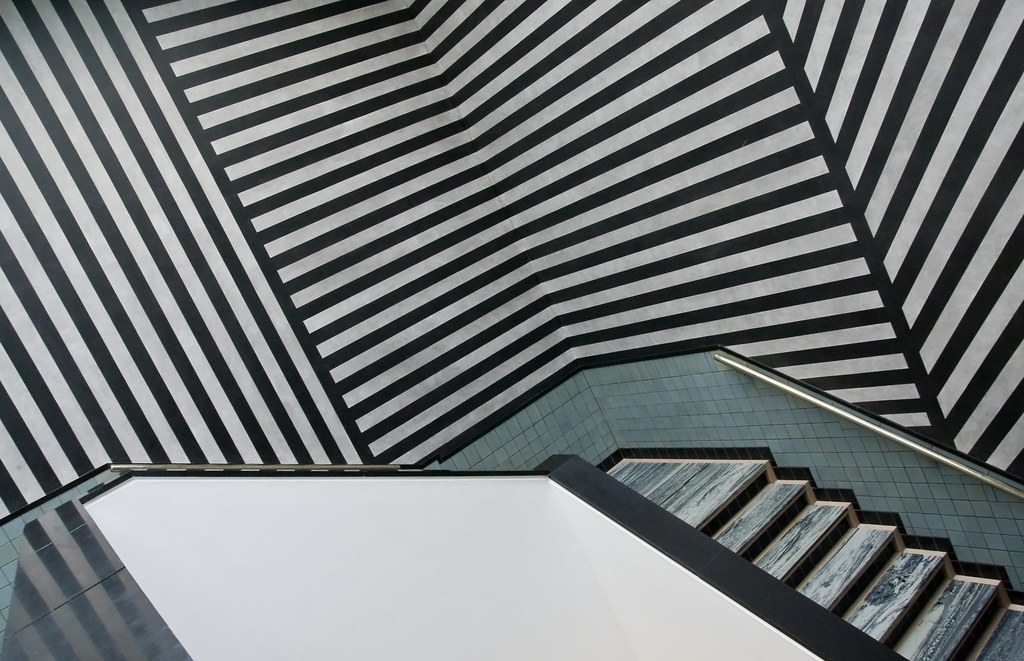
Look, blockchain art? I’m wary. The volatility reminds me tulipmania – more about trading cards than creativity. But I’ll say this: angles matter here too. If **interaction** is your angle (like digital collectors collaborating on pieces), okay. If you’re chasing quick flips? That’s not [art appreciation](/finder/page/is-art-subjective) – it’s stock trading with JPEGs. Perspective: the thing that turns speculation back into creation.
[credit](https://live.staticflickr.com/5208/5349040301_d80dd3a5cd_b.jpg),
[licence](https://creativecommons.org/licenses/by-nc-sa/2.0/)
## Frequently Asked Questions
**Q: I’m not an artist. Is this just for creators?** <br>A: *Absolutely not.* This is for anyone who’s ever been moved by art but felt puzzled. Think of it like music – you don’t need to play piano to feel Beethoven’s rage. We often discuss this during [our studio visits](/timeline).
**Q: How do I avoid over-analyzing a piece to death?** <br>A: [Balance](/finder/page/understanding-balance-in-art-composition) is key. Start with your gut reaction. Then pick *one* new angle for 5 minutes. Return to your feeling. Analytical tools should be binoculars, not blinding headlights.
**Q: Can you recommend art that naturally lends itself to multiple readings?** <br>A: Start with anything by [Kandinsky](/finder/page/ultimate-guide-to-wassily-kandinsky) (pure emotion meets geometry), Basquiat (layers of race/history), or my personal favorite: [the "Horizon" pieces](/buy) that let your own horizon fill the canvas.
## The Art of Seeing Whole
[Art appreciation](/finder/page/is-art-subjective) isn’t a crossword puzzle with one solution. It’s a living dialogue. Remember that Pollock I mentioned? Years later, I realized I’d been looking for trees and mountains when the painting was a map of human vulnerability. Every angle you try polishes the lens through which you see *everything* – your own life included. That’s the real masterpiece: not the wall-hanging, but the way your heart finally learns to read the sky.
[credit](https://upload.wikimedia.org/wikipedia/commons/1/17/Frank_Lloyd_Wright_-_New_York%2C_NY_-_Solomon_R._Guggenheim_Museum_%28A%29.jpg),
[licence](https://creativecommons.org/licenses/by/4.0)
## Practical Exercises for Perspective-Shifting
Ready to put these concepts into practice? Here are some specific exercises you can try right now:
### Exercise 1: The Five-Minute Switch
1. Choose any artwork (online or in person)
2. Spend 5 minutes viewing it through your "default" perspective
3. Pick a completely [different perspective](/finder/page/different-artistic-perspectives) from the table above
4. Spend another 5 minutes viewing it through that new lens
5. Write down how your understanding changed
### Exercise 2: Perspective Mapping
Take a piece of paper and draw circles for each perspective you want to explore (Technical, Emotional, Historical, Personal, etc.). Draw lines connecting them. In each circle, write down observations about the artwork from that perspective. The connections between circles represent how different interpretations might relate to each other.
[credit](https://upload.wikimedia.org/wikipedia/commons/6/60/Frank_Lloyd_Wright_-_New_York%2C_NY_-_Solomon_R._Guggenheim_Museum_%28R%29.jpg),
[licence](https://creativecommons.org/licenses/by/4.0)
### Exercise 3: The Artist\'s Hat Game
Imagine putting on different "hats" when approaching art:
- **The Scientist Hat**: What can I observe about materials, techniques, and processes?
- **The Poet Hat**: What emotions, metaphors, and stories emerge?
- **The Historian Hat**: What context and background information is relevant?
- **The Child Hat**: What would a child notice or feel about this work?
Switch between hats and see how your experience shifts.
[credit](https://upload.wikimedia.org/wikipedia/commons/7/7b/2003-03-New-York-Guggenheim-Museum-Frank-Lloyd-Wright.jpg),
[licence](https://creativecommons.org/licenses/by-sa/4.0)
### Exercise 4: Reverse Engineering Masterpieces
Choose a famous artwork you admire. Try to work backward to figure out how the artist might have approached it from multiple perspectives:
- What technical challenges did they overcome?
- What emotional state might they have been in?
- What cultural influences shaped their vision?
- What personal experiences informed their choices?
This exercise helps you understand that even masterpieces are the result of multiple considerations.
## Common Pitfalls and How to Avoid Them
Even with the best intentions, we can fall into patterns that limit our [art appreciation](/finder/page/is-art-subjective). Here are some common traps to watch out for:

[credit](https://live.staticflickr.com/2806/9872398176_01cd72b26d_b.jpg),
[licence](https://creativecommons.org/licenses/by-nc-sa/2.0/)
### The Expert Trap
**Problem**: Trying to sound knowledgeable by using art jargon you don\'t fully understand.
**Solution**: Focus on genuine observation over terminology. It\'s better to say "I notice the brushstrokes [create](/finder/page/how-to-create-siqueiros-inspired-murals) movement" than to incorrectly name a technique you\'re not familiar with.
### The Emotional Trap
**Problem**: Letting initial emotional reactions prevent deeper exploration.
**Solution**: Acknowledge your first feelings, but don\'t let them be the final word. Ask yourself "Why do I feel this way?" and "What else might be happening here?"
### The Intellectual Trap
**Problem**: Over-intellectualizing art to the point where you lose the [emotional connection](/finder/page/from-my-studio-to-your-sanctuary:-the-emotional-journey-of-a-painting).
**Solution**: Balance analysis with feeling. After analyzing a work for 10 minutes, put away your analytical brain and just experience it as a human being.
### The Comparison Trap
**Problem**: Judging art based on how it measures up to other works or artists.
**Solution**: Try to appreciate each work on its own terms. Ask "What does this artwork want to communicate?" rather than "Is this as good as [famous artist]\'s work?"
## The Future of Multi-Perspective Art Appreciation
As technology continues to evolve, so do our ways of experiencing and creating art. Virtual reality, augmented reality, and interactive installations are opening up entirely new possibilities for perspective-shifting:
- **VR experiences** can place you inside the artwork or let you walk around it in impossible ways
- **AR applications** can overlay additional information and context onto physical artworks
- **Interactive installations** change based on viewer movement, emotion, or input
These technologies don\'t replace traditional [art appreciation](/finder/page/is-art-subjective), but they add new dimensions to it. The core principle remains the same: the more ways you can approach an artwork, the richer your experience becomes.
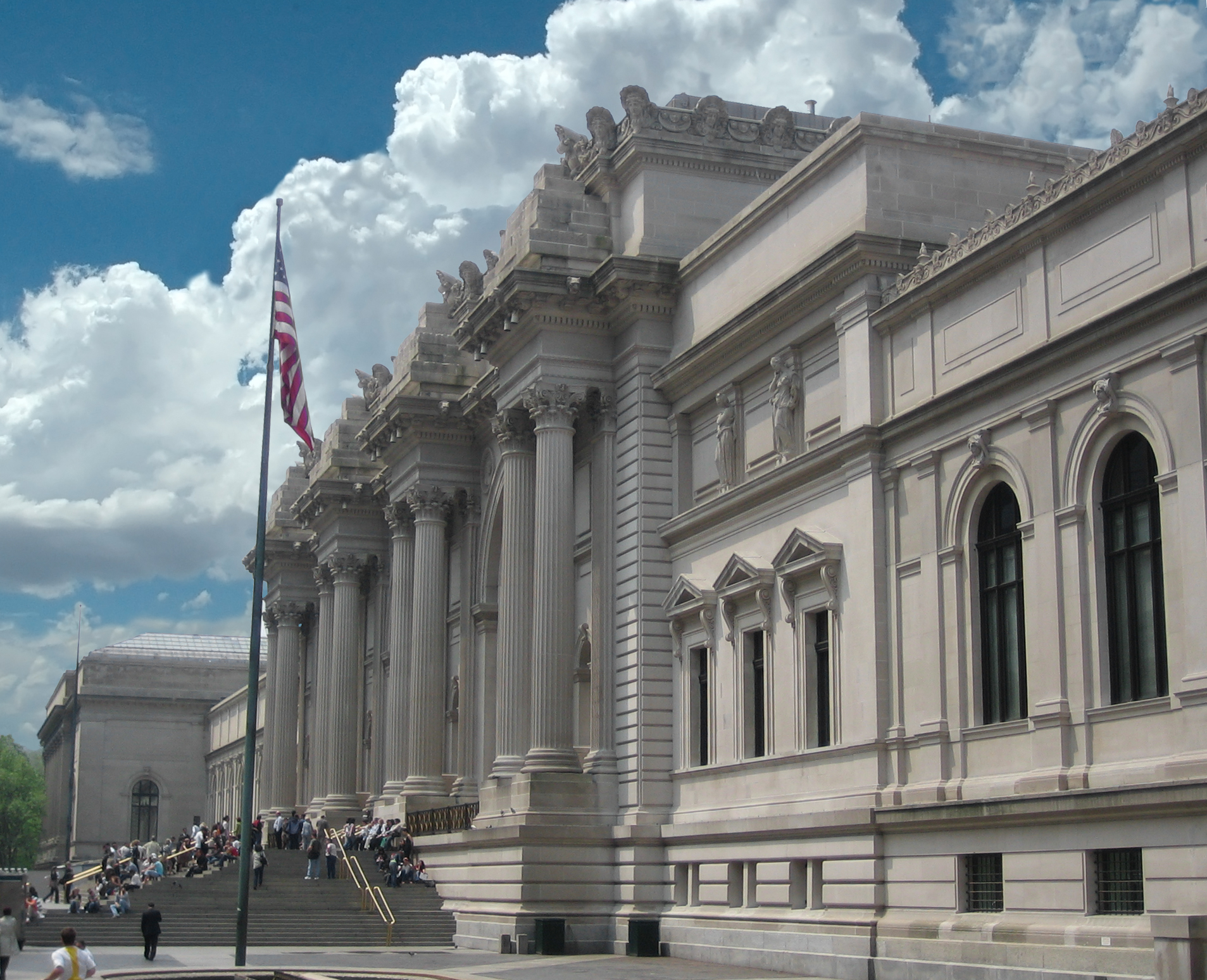
[credit](https://upload.wikimedia.org/wikipedia/commons/1/15/Metropolitan_Museum_of_Art%2C_New_York_City_NY%2C_entrance.jpg),
[licence](http://creativecommons.org/licenses/by-sa/3.0/)
### Finding Community in Perspective-Shifting
One of the most rewarding aspects of developing multiple perspectives is sharing them with others. Consider:

[credit](https://www.publicdomainpictures.net/pictures/200000/nahled/metropolitan-museum-of-art-1475137205ajh.jpg),
[licence](https://creativecommons.org/publicdomain/zero/1.0/)
- Joining art discussion groups or forums
- Taking museum tours with different guides (each will bring their own perspective)
- Starting your own "perspective club" where you explore art together
- Participating in art criticism workshops or classes
When you share your perspective with others, you\'ll often discover insights you missed on your own – and help others see things in new ways too.
## Conclusion: A Lifetime of Discovery
Approaching art from multiple angles isn\'t about becoming an art expert. It\'s about becoming a more fully human being – someone who can see complexity, appreciate nuance, and find meaning in unexpected places. The skills you develop through this practice – empathy, creativity, [critical thinking](/finder/page/role-of-art-education-in-fostering-critical-thinking), and open-mindedness – serve you well in every area of life.
Remember that there are no "wrong" perspectives in [art appreciation](/finder/page/is-art-subjective). Your unique combination of experiences, knowledge, and sensibilities gives you a viewpoint that no one else can replicate. That\'s what makes your engagement with art valuable.
So next time you stand before a painting, sculpture, or installation, don\'t just look at it. Approach it from multiple angles. Let it surprise you. Let it challenge you. And most importantly, let it teach you something new – not just about the art, but about yourself and the beautiful, complex world we inhabit together.

[credit](https://images.pexels.com/photos/30341658/pexels-photo-30341658.jpeg?cs=srgb&dl=pexels-julia-maks-1791244309-30341658.jpg&fm=jpg),
[licence](https://creativecommons.org/public-domain/)
The journey of perspective-shifting is never-ending, and that\'s exactly what makes it so rewarding. Every new artwork, every new perspective, every new insight adds another layer to your understanding of art – and life itself.
---
[Explore how artists develop these perspectives in our timeline](/timeline) or find your own starting point with [limited edition prints](/buy).